

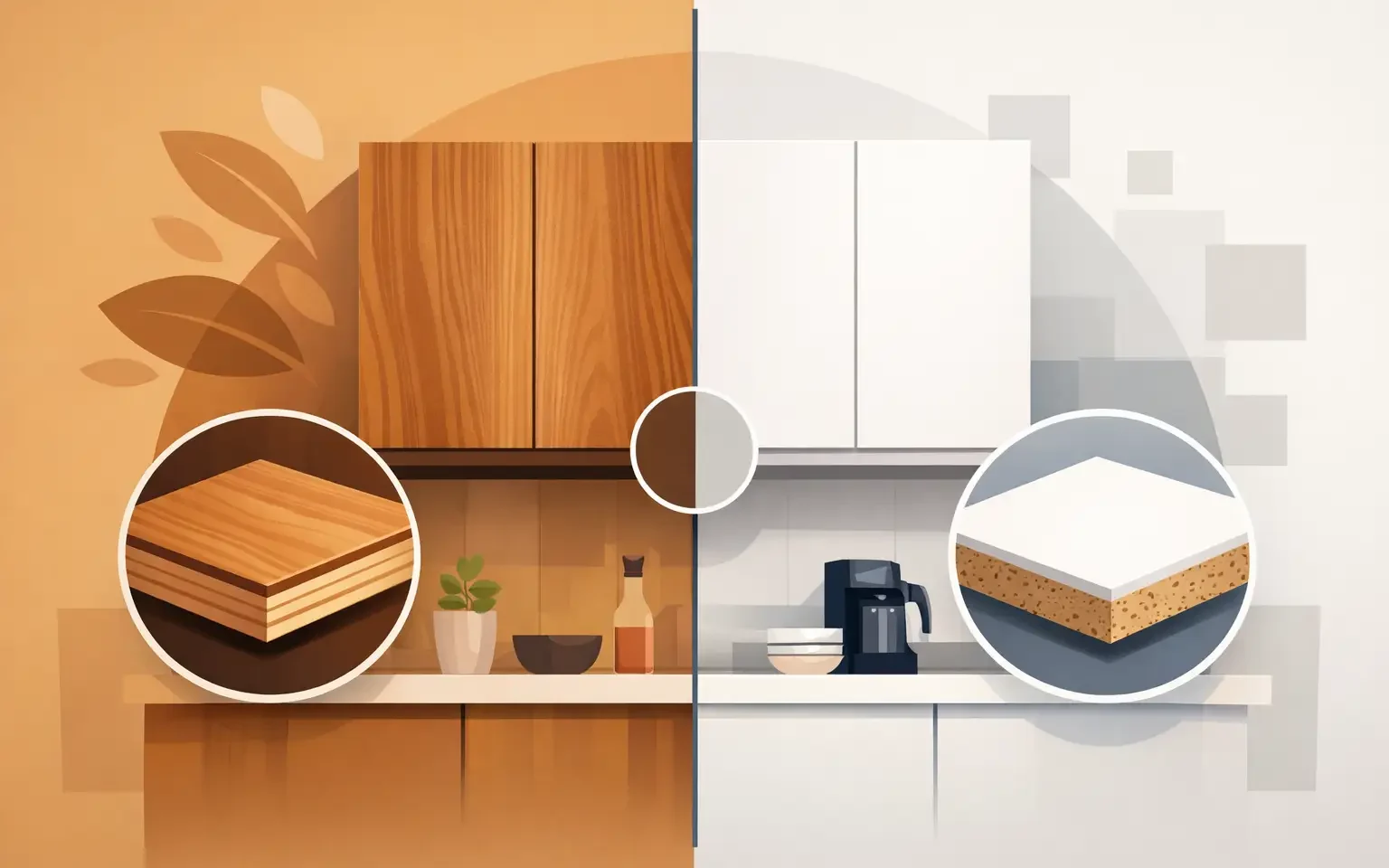
Wood Veneer Versus Melamine Cabinets Compared
A material sample can look decisive under showroom lighting, then feel very different once it becomes 40 cabinet fronts across an open-plan kitchen. That is why the choice between wood veneer versus melamine cabinets deserves more than a quick preference for grain or color. Both can support a refined, modern European kitchen. The better option depends on how you want the room to feel, how the kitchen will be used, and where you want to place your investment.
For many Houston homeowners, this is not simply a question of natural versus manufactured material. It is a decision about visual warmth, durability, maintenance, budget, and the level of variation that belongs in a carefully designed home.
What separates wood veneer from melamine?
Wood veneer cabinet fronts use a thin layer of genuine wood applied to a stable engineered core, often MDF or particleboard. The face can be finished in a wide range of stains, tones, and sheens, from pale oak and walnut to dark smoked finishes. Because it is real wood, every panel carries natural shifts in grain, mineral streaks, and color.
Melamine is a decorative surface made by fusing resin-treated paper to a board substrate under heat and pressure. High-quality melamine is not the glossy, generic material many homeowners associate with older budget cabinetry. Modern European melamine collections can reproduce wood textures, linen effects, concrete, stone, and ultra-matte solid colors with remarkable precision. They are engineered for consistency and everyday performance.
The cabinet’s internal construction still matters in either case. A premium kitchen is not defined by a door surface alone. Board quality, edge treatment, hardware, fitting precision, ventilation planning, and installation all influence how cabinetry performs over time.
Wood veneer versus melamine cabinets: the visual difference
Wood veneer offers depth that is difficult to duplicate. Light moves across the grain, and the wood has a tactile irregularity that makes a kitchen feel composed rather than manufactured. In a contemporary home with natural stone, wide-plank flooring, or architectural millwork, veneer can create a quiet connection between the kitchen and the rest of the interior.
That character also means variation. Adjacent veneer fronts are selected and sequenced carefully, but they will not be identical. A homeowner who appreciates organic materials may see this as part of the luxury. Someone seeking a highly uniform wall of cabinetry may find it distracting.
Melamine delivers control. A matte taupe, soft white, charcoal, or wood-look finish can remain visually consistent from one door to the next. This is particularly effective in large kitchens, floor-to-ceiling pantry walls, and minimalist compositions where clean geometry is central to the design. It also makes it easier to pair cabinets with dramatic veined stone, polished metal, or patterned tile without competing for attention.
The strongest modern kitchens often use both. A melamine perimeter in a calm neutral can be paired with walnut veneer on an island, tall cabinet niche, or integrated dining storage. The contrast adds warmth while keeping the overall composition disciplined.
Durability is about the details, not just the surface
Melamine is valued for its resistance to routine wear. Its nonporous face generally stands up well to household stains, moisture, and cleaning, making it a practical choice for busy family kitchens, secondary prep areas, and laundry rooms. A quality melamine finish also holds its color well and does not require the same ongoing care as natural wood.
Its primary vulnerability is at the edges and joints. If a cabinet edge is poorly sealed, damaged by impact, or exposed to repeated moisture, the substrate underneath can be affected. This is why precision edge banding and professional installation matter. Well-made European cabinetry uses carefully engineered edge treatments to protect the panel and preserve a crisp visual line.
Wood veneer requires a more considered approach, but it is far from fragile. Quality veneer fronts receive durable protective finishes designed for kitchen use. They can perform beautifully for years when spills are wiped promptly and the room is maintained within normal indoor humidity conditions. Veneer is more likely than melamine to show the effects of direct impact, strong sunlight, or aggressive cleaning products.
Neither material should be judged in isolation. A poorly built veneer cabinet will not outperform a well-engineered melamine cabinet. Conversely, a premium veneer kitchen with precise hardware and proper installation can be an exceptional long-term choice for a primary residence.
Consider Houston’s climate and daily use
Houston’s heat and humidity make climate-aware design especially relevant. Indoor conditioning protects cabinetry, but kitchens should still be designed with proper ventilation, appropriate clearances around appliances, and prompt attention to leaks. This applies to every cabinet finish.
For a household that cooks often, has young children, or entertains frequently, melamine’s low-maintenance surface can offer welcome peace of mind. For a quieter household or a design-forward renovation where natural materiality is a priority, veneer may be well worth the additional care.
Cost and value in a high-end kitchen
Wood veneer is typically the higher-cost selection because genuine wood must be sourced, cut, matched, finished, and inspected. Certain species, special stains, horizontal grain matching, and large continuous veneer runs can raise the investment further. The result is a finish with an unmistakably natural presence and strong design value.
Melamine is often more cost-efficient, particularly across large expanses of cabinetry. That does not make it a compromise by default. Selecting melamine can allow more of the project budget to support other meaningful upgrades, such as integrated appliances, interior drawer organizers, premium worktops, lighting, or concealed storage solutions.
Value should be measured against the whole project rather than the cabinet front alone. A high-end kitchen needs to function beautifully as well as photograph well. If a durable, precisely matched melamine finish allows you to include the storage, hardware, and appliance integration your household needs, it may be the stronger investment. If veneer is the element that gives the room its architectural identity, reducing it to save a modest amount may leave the finished kitchen feeling less personal.
Maintenance expectations for each finish
Melamine is straightforward to maintain. A soft microfiber cloth, warm water, and a mild household cleaner are generally sufficient. Avoid abrasive pads, harsh solvents, and excessive water around seams. Grease near cooking zones should be removed regularly rather than allowed to build up.
Veneer benefits from the same gentle daily routine, with additional care around standing water and harsh chemicals. Use a soft, slightly damp cloth followed by a dry cloth when needed. Avoid waxes, furniture polishes, and cleaners not intended for finished wood cabinetry, as they can leave residue or alter the surface appearance.
For both materials, the best long-term maintenance habit is simple: address spills, leaks, and appliance steam promptly. Cabinetry lasts longer when the surrounding kitchen is thoughtfully planned and properly cared for.
How to choose the right cabinet finish
Choose wood veneer when the goal is visible authenticity. It is particularly compelling in homes with a warm modern, transitional, or architectural aesthetic, where the cabinet finish should contribute texture and natural variation. Veneer can turn a functional cabinet wall into a defining interior element.
Choose melamine when you want a clean, consistent finish with excellent practical performance. It is a natural fit for minimal contemporary kitchens, monochromatic palettes, active households, and projects where storage scale is substantial. It can also be the ideal choice when the visual focus belongs to a sculptural island, striking stone, or a view beyond the kitchen.
At Häcker European Collection, a material decision is best made after reviewing full-size samples alongside countertop selections, flooring, lighting, and the actual room plan. A small swatch cannot show how a wood grain will read across a tall pantry wall or how a matte melamine will change under morning and evening light.
The right finish should make daily life easier while giving the kitchen a sense of lasting intention. Bring your inspiration, plans, and questions to a design consultation, then let the materials be evaluated in the context where they matter most: your home.

