

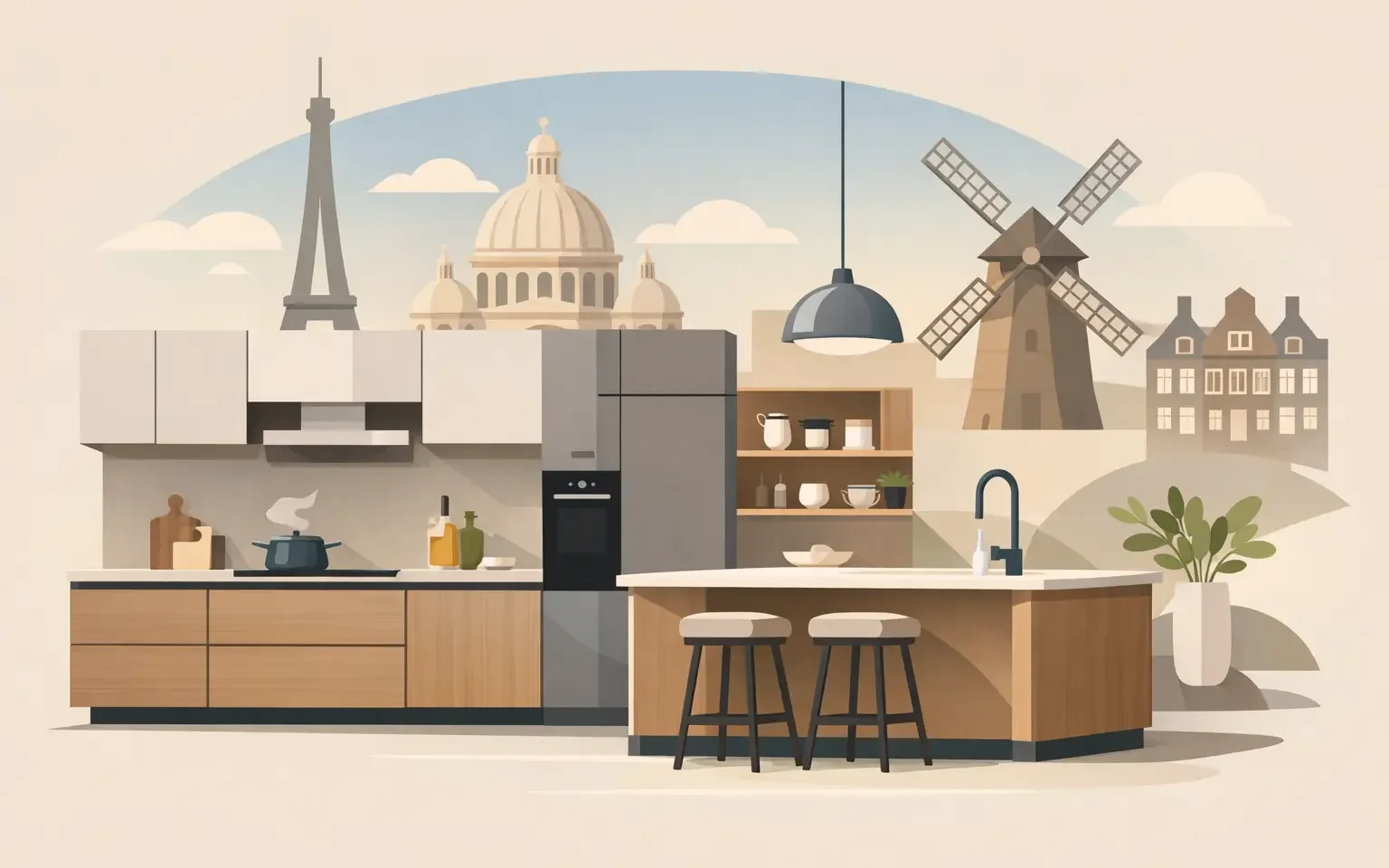
What Is a European Kitchen? Design Defined
A European kitchen is not defined by a single finish, color, or appliance package. It is defined by a design philosophy: precise cabinetry, efficient planning, integrated technology, and a distinctly modern approach to how a kitchen looks and works. For homeowners planning a high-end renovation or custom home in Houston, this distinction matters. The cabinetry is not simply a backdrop for the room – it is the architecture of daily life.
What Is a European Kitchen?
At its core, a European kitchen is a highly considered kitchen system built around clean-lined, frameless cabinetry and tailored storage. It typically prioritizes visual continuity, practical ergonomics, and durable materials over decorative excess. Doors often sit flush or nearly flush with the cabinet structure, hardware is discreet, and appliances can be integrated behind matching panels for a composed, furniture-like appearance.
The term is broad. Italian kitchens may be known for expressive finishes and sculptural proportions, while German-made kitchens are often recognized for engineering, technical precision, and disciplined organization. Both can be contemporary, warm, minimalist, or richly textured. What they share is an emphasis on intentional design rather than off-the-shelf construction.
A well-designed European kitchen should feel calm at first glance, then increasingly intelligent as it is used. Storage is positioned where it is needed. Drawers open fully. Interior accessories bring order to cookware, spices, utensils, and provisions. Every detail is expected to earn its place.
The Cabinet Construction Behind the Look
The most recognizable feature of a European kitchen is usually frameless cabinetry. Unlike traditional framed cabinets, which have a face frame attached to the front of the cabinet box, frameless cabinets use a thicker cabinet box with doors and drawers mounted directly to it. This construction creates a more streamlined façade and provides generous usable interior space.
The result is not just aesthetic. Frameless cabinets allow for wide, full-extension drawers and more accessible storage, particularly in base cabinets. A deep drawer can organize pots, small appliances, or serving pieces more effectively than a cabinet with fixed shelves. In a kitchen used every day, that difference is substantial.
Precision also defines the category. Tight reveals between doors, aligned horizontal lines, and consistent panel proportions depend on careful manufacturing and exact installation. Premium European cabinetry is engineered as a system, with components designed to work together rather than assembled from unrelated parts. This is one reason the installation process deserves as much attention as the cabinetry selection itself.
Design That Favors Clean Lines and Visual Continuity
European kitchen design often begins with restraint. Rather than using ornate door profiles, heavy crown molding, or visible hinges, it relies on proportion, material, and light. Flat-panel doors are common, but the style is not limited to high-gloss white cabinetry. Matte lacquer, textured wood, natural veneer, soft neutral tones, stone-inspired surfaces, and deeply saturated colors can all belong in a European kitchen.
The defining quality is coherence. Tall pantry cabinets may align with integrated refrigeration. Base cabinets may create a continuous horizontal plane beneath a stone countertop. A vent hood can be concealed within cabinetry, and a dishwasher can disappear behind a matching front. When done well, these choices allow the kitchen to relate naturally to the rest of the home, especially in an open-concept plan.
This does not mean a European kitchen must feel stark. Warm oak finishes, fluted glass, metal accents, and layered lighting can add character without losing the clarity of the overall composition. The best approach depends on the home’s architecture, natural light, and the owner’s preferences. A modern European kitchen can be minimal, but it should never feel impersonal.
Storage Is Designed Around Real Life
A premium kitchen earns its value long after the first impression. European cabinetry is especially respected for its approach to storage because it treats organization as part of the original design, not an accessory added later.
Full-extension drawers are a central feature. They bring contents into view, reduce bending and reaching, and make the lower cabinets more useful. Internal drawer dividers, pull-out pantry systems, recycling centers, tray storage, corner solutions, and concealed charging areas can be specified around the way a household cooks and entertains.
The planning process should account for habits that are easy to overlook at first. Where will coffee equipment live? Is the kitchen used for serious cooking, frequent entertaining, or quick family meals? Should everyday dishes be near the dishwasher? Does a walk-in pantry make sense, or would tall integrated cabinetry offer a cleaner and more efficient solution?
A European kitchen succeeds when these answers shape the layout. Beautiful cabinetry is essential, but a kitchen that makes morning routines and dinner preparation easier is the real luxury.
Materials and Manufacturing Matter
Not all cabinetry described as European-style is manufactured to the same standard. Some products borrow the appearance of a modern European kitchen while relying on lighter construction, limited finish options, or less refined hardware. For a long-term renovation, it is worth looking beyond the door sample.
High-end German-made cabinetry is valued for disciplined production methods, durable cabinet components, sophisticated hardware, and controlled quality standards. The finish should be selected for more than its appearance. A matte surface may offer a soft, contemporary look, while a textured wood finish can introduce warmth and depth. Lacquered doors can provide a refined, uniform surface, while melamine and laminate options may offer excellent durability and a wide range of convincing textures.
Material selection is also about maintenance. A household with young children may prefer a forgiving matte finish and practical work zones. A couple creating an entertaining-focused kitchen may place greater emphasis on integrated appliances, a statement island, and display storage. There is no universally correct specification. The right one balances visual ambition with the way the room will be used.
Why European Kitchens Work Well in American Homes
European kitchen design is especially compelling for American homeowners because it can solve the challenges of larger, more open living spaces without making them feel crowded. Tall cabinetry creates storage without adding visual clutter. Integrated appliances help the kitchen feel more like part of the interior architecture. Large islands can be designed as both work surfaces and social centers.
It also offers a level of customization that is difficult to achieve with standard cabinet lines. Cabinet heights, widths, finishes, drawer configurations, and accessory choices can be coordinated to suit the room and the homeowner. This flexibility is valuable in renovations, where existing windows, ceiling heights, structural elements, and appliance requirements often call for a tailored solution.
There are trade-offs to consider. Premium European cabinetry requires careful lead-time planning, especially for imported products. Its refined installation tolerances also call for experienced measurement, site coordination, and installation. A kitchen that appears effortless is often the result of detailed decisions made well before construction begins.
Planning a European Kitchen With Confidence
A successful project begins with a design conversation, not a cabinet quote. The layout should address circulation, appliance placement, storage needs, lighting, countertop selections, and the relationship between the kitchen and adjoining spaces. It should also consider the practical realities of the renovation, from electrical and plumbing changes to flooring transitions and wall conditions.
At Häcker European Collection, this process brings German-made kitchen cabinetry together with design guidance and installation coordination, helping homeowners make informed decisions from the showroom through completion. The goal is not to force a predetermined look. It is to create a kitchen with the right balance of modern aesthetics, lasting performance, and personal function.
A European kitchen is ultimately an investment in a more ordered way of living. Choose the details that support your routines, and the room will feel considered every time you use it.

