

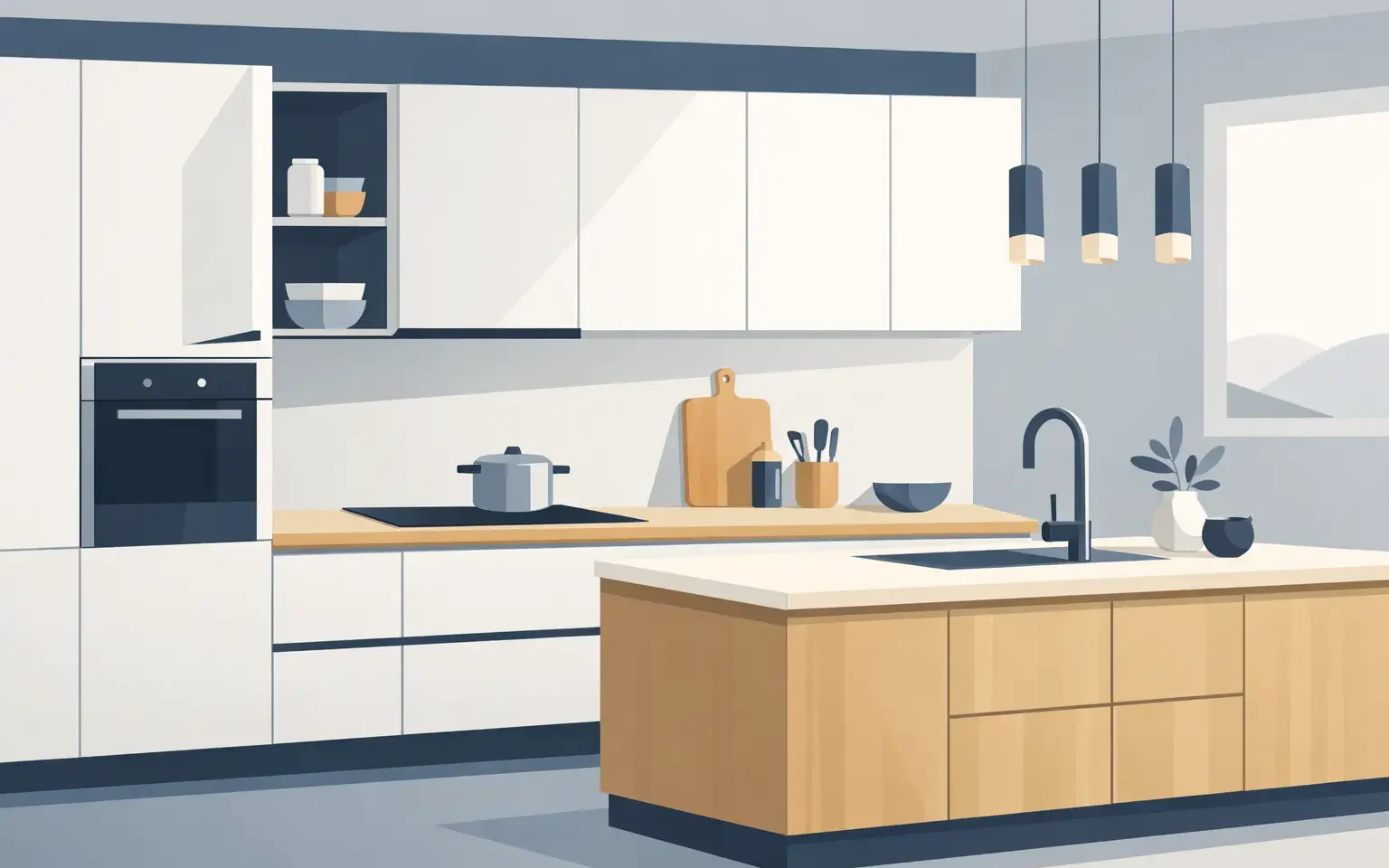
What Are European Style Kitchen Cabinets?
If you have been comparing premium cabinetry options for a remodel, you have likely asked: what are European style kitchen cabinets? The short answer is that they are modern, frameless cabinets designed for clean lines, efficient storage, and a highly tailored look. The better answer is that they represent a different philosophy of kitchen design – one shaped by precision engineering, minimal visual clutter, and everyday function.
For homeowners investing in a high-end kitchen, that distinction matters. European style cabinetry is not simply a trend or a cosmetic finish. It changes how the kitchen looks, how it stores, and how it performs over time.
What are European style kitchen cabinets?
European style kitchen cabinets are typically frameless cabinets built with full-access box construction. Unlike traditional American framed cabinetry, which uses a face frame attached to the front of the cabinet box, European cabinetry eliminates that frame. The doors and drawers attach directly to the cabinet box, creating a sleeker appearance and allowing easier access to the interior.
This construction method supports the aesthetic most people associate with modern European kitchens: flat-panel doors, refined materials, integrated handles or handleless profiles, and a more architectural feel. The look is often minimal, but the engineering behind it is exacting.
That is why the term “European style” refers to more than appearance alone. It describes a combination of design language, manufacturing standards, and functional priorities.
The defining features of European style cabinets
The most recognizable trait is the frameless cabinet box. Because there is no face frame, openings are slightly wider, which improves access and maximizes usable storage. In a kitchen where every inch matters, that difference is practical, not just technical.
European style cabinets also tend to use full-overlay doors and drawer fronts. This means the fronts cover most of the cabinet box, leaving minimal visible gaps between components. The result is a smooth, consistent surface across the kitchen.
Another common feature is contemporary door styling. Slab fronts are especially popular because they reinforce the clean geometry of the design. Textured wood veneers, matte lacquers, glass accents, and sophisticated laminates are often used to create depth without excess ornament.
Hardware is handled differently as well. Many European kitchens favor recessed pulls, channel systems, or push-to-open mechanisms rather than decorative knobs and exposed handles. This keeps the visual lines uninterrupted and gives the cabinetry a more custom, high-end expression.
Why frameless construction matters
Frameless construction is central to understanding what makes European cabinetry different. In framed cabinetry, the face frame can slightly restrict the opening of drawers and cabinet interiors. In frameless cabinetry, the entire front opening is more accessible.
That allows for larger drawers, better internal organization, and a more efficient use of space. For homeowners who want a kitchen that feels visually calm but works hard behind the scenes, this is one of the biggest advantages.
There is also a quality consideration. Well-made frameless cabinets depend on precise manufacturing, durable materials, and properly engineered hardware. When executed at a premium level, the result is cabinetry that feels substantial, operates smoothly, and maintains alignment over years of daily use.
Aesthetic differences from traditional American cabinets
Traditional American cabinetry often emphasizes decorative detailing. Raised-panel doors, ornate moldings, visible hinges, and more formal trim work are common. That style can be beautiful, especially in classic or transitional homes, but it creates a different visual effect.
European style kitchen cabinets are more restrained. They favor horizontal lines, flush surfaces, and integrated design. Instead of drawing attention to embellishment, they highlight proportion, finish, and composition.
This does not mean they are cold or one-note. In fact, some of the most sophisticated European kitchens mix warm woods, soft matte surfaces, stone textures, and subtle metallic accents. The difference is that every detail is intentional, and very little is purely decorative.
For many upscale homeowners, that balance feels more current and more enduring. A well-designed European kitchen can look highly modern without feeling temporary.
Materials and finishes in premium European cabinetry
One reason European cabinetry appeals to design-conscious homeowners is the quality and variety of finishes. Premium manufacturers often offer a wide range of engineered surfaces, high-performance laminates, lacquer systems, wood veneers, and specialty textures.
These materials are selected not only for appearance but also for consistency and durability. High-end European manufacturing places strong emphasis on finish stability, color control, moisture resistance, and long-term performance. That is especially important in kitchens, where cabinetry must withstand heat, humidity, and constant use.
Matte finishes are particularly popular because they soften the overall look and pair well with modern architecture. Natural oak, walnut, and ash veneers bring warmth. Darker finishes create drama, while lighter palettes can make a kitchen feel open and refined.
It depends, of course, on the home and the client. A minimalist new build may suit a handleless lacquer kitchen, while a renovated residence may benefit from warm wood tones and a softer modern profile. European style cabinetry is flexible enough to accommodate both.
Storage and function are a major part of the appeal
The visual simplicity of European kitchens sometimes leads people to assume they prioritize form over function. In reality, the opposite is often true. European cabinetry is deeply focused on usability.
Deep drawers are a hallmark of the style because they improve access and visibility compared with lower cabinets that rely heavily on doors and shelves. Internal accessories can be tailored for cookware, cutlery, spices, pantry items, recycling, and small appliances. Lift-up wall cabinet systems, corner solutions, and integrated organizers help reduce clutter and improve workflow.
This is where premium design service becomes especially valuable. The cabinetry itself provides the framework, but the layout and specification determine how well the kitchen performs. Storage should be planned around the way the household actually cooks, entertains, and lives.
Are European style kitchen cabinets better?
For the right home and homeowner, they can be an exceptional choice. They are especially well suited to people who value modern design, efficient organization, and a more custom architectural feel.
That said, better is not universal. If you prefer ornate detailing or a traditional kitchen with visible craftsmanship in moldings and framing, a European style may not be the most natural fit. If you want a kitchen that feels edited, contemporary, and highly functional, it often is.
Quality also varies. Not every frameless cabinet on the market delivers the same level of engineering, finish quality, or durability. True premium European cabinetry tends to stand apart through manufacturing precision, hardware performance, environmental standards, and finish sophistication.
Why homeowners choose European cabinets for luxury remodels
In upscale renovations, cabinetry is one of the most important design decisions in the home. It shapes the appearance of the kitchen, but it also affects storage, movement, and long-term value.
European style cabinets appeal to homeowners who want more than a generic showroom look. They want cabinetry that feels considered. They want materials that look elevated, drawers that glide properly, finishes that hold up, and layouts that support daily life without visual noise.
That is why German-made cabinetry, in particular, has earned such a strong reputation in the premium market. It is associated with disciplined manufacturing, technical reliability, and refined modern design. For clients who want a kitchen that feels luxurious but also practical, that combination is compelling.
At Häcker European Collection, this is exactly where European cabinetry stands apart: not just in style, but in how design, engineering, and installation come together as one complete solution.
Who should consider European style kitchen cabinets?
They are a strong fit for homeowners planning a full kitchen renovation, building a custom home, or upgrading a primary residence with long-term quality in mind. They also work particularly well in open-concept homes where the kitchen is fully visible and needs to feel integrated with the surrounding architecture.
They are equally well suited to clients who appreciate customization. European systems often offer flexible sizing, finish coordination, and storage planning that go well beyond stock cabinetry. That makes it easier to create a kitchen that feels tailored rather than pieced together.
If your goal is a kitchen that looks modern, functions intelligently, and reflects premium craftsmanship, European style cabinetry is worth serious consideration.
The right kitchen should feel effortless once it is installed. That usually comes from careful design choices made early, with cabinetry that is built to support both the look of the home and the way you live in it.

