

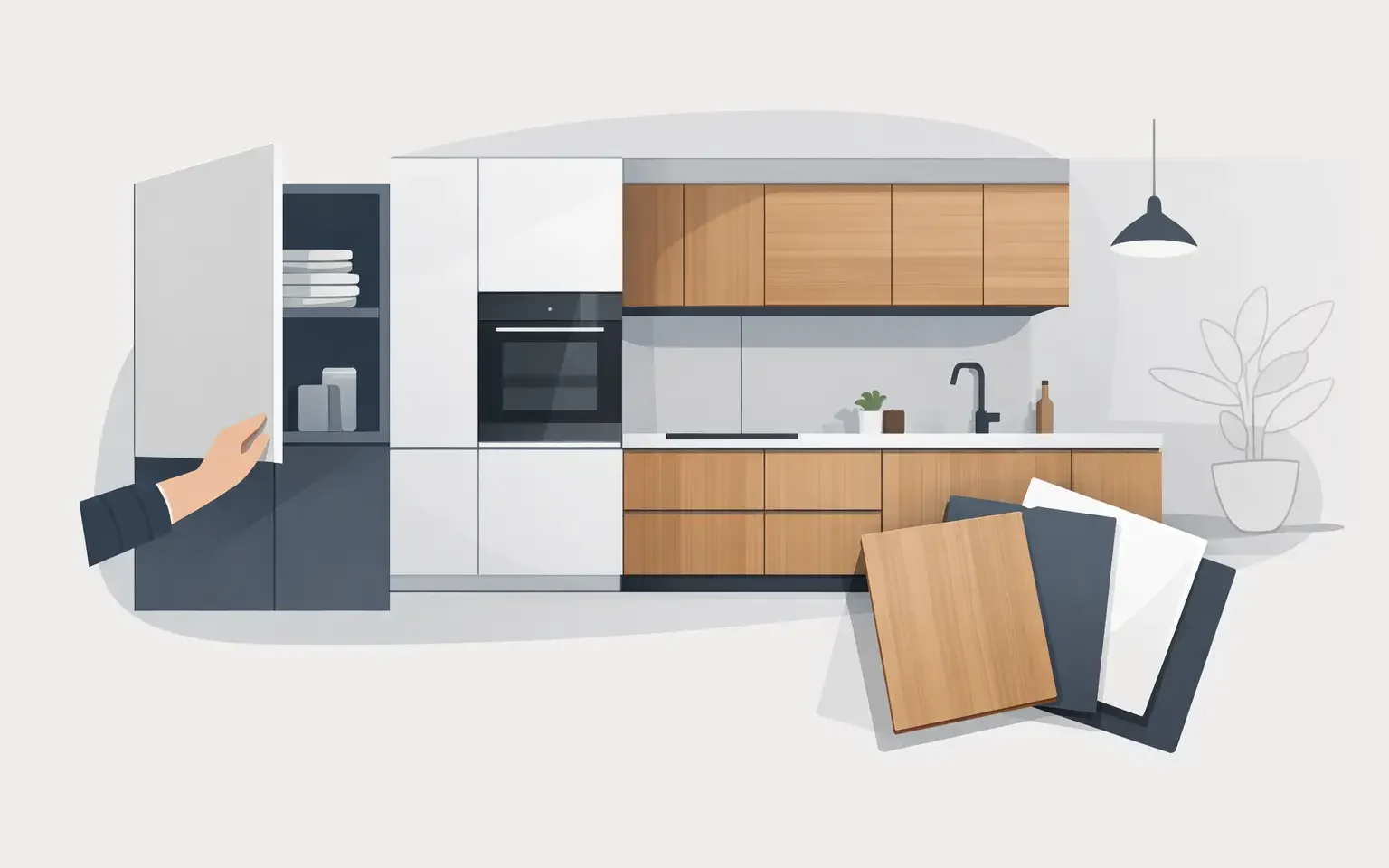
What Are European Cabinets? A Design Guide
A kitchen can look beautifully minimal and still work exceptionally hard. That balance is the reason homeowners often ask, what are European cabinets when planning a high-end renovation. European cabinetry is defined by its clean-lined appearance, highly efficient frameless construction, precision manufacturing, and sophisticated approach to storage. It is not simply a style choice. It is a system designed to make daily life more organized, durable, and considered.
For homeowners investing in a primary residence, European cabinets offer a distinctive alternative to conventional American cabinetry. They bring a modern architectural presence to the room while providing the flexibility to tailor layout, finishes, and interior organization around the way a household actually lives.
What Are European Cabinets?
European cabinets, sometimes called frameless cabinets, are built without the front face frame commonly found on many traditional American cabinet boxes. Instead, the doors and drawer fronts attach directly to the cabinet sides. This construction creates a refined, continuous look with narrow, consistent gaps between components.
The absence of a face frame also changes how the cabinet performs. The opening is wider and more accessible, giving drawers and pull-out storage more usable interior space. In a kitchen where every inch matters, that added capacity can make a meaningful difference.
European cabinetry is also closely associated with a modern design language: flat or subtly detailed door fronts, integrated hardware, large uninterrupted surfaces, and carefully coordinated finishes. Yet it should not be reduced to one look. A European kitchen can be sleek and minimalist, warm and wood-forward, softly transitional, or richly textured. The construction is the foundation; the visual expression is highly customizable.
Frameless Construction Creates a More Refined Look
With framed cabinetry, a solid wood face frame sits on the front of each cabinet box. It is a familiar construction method and can be an appropriate choice for traditional kitchens. European cabinetry takes a different approach, using a full-access frameless box that allows doors and drawers to sit closer together.
This produces the precise, furniture-like alignment that many homeowners associate with German-made kitchens. Tall pantry doors can run in long, elegant planes. Base cabinets can be configured with broad drawers rather than a collection of small doors. Wall cabinetry can appear lighter and more integrated into the architecture of the home.
The visual restraint is intentional. Rather than asking ornamentation to carry the design, European cabinets rely on proportion, material quality, and meticulous detailing. A matte lacquer door, natural wood veneer, ceramic surface, or textured laminate has room to be appreciated without visual clutter.
Storage Is Designed Around Everyday Use
The most compelling quality of European cabinetry is often discovered after installation. Its real value is not limited to the exterior finish. It is found in the way the kitchen functions on an ordinary Tuesday morning.
Deep, full-extension drawers make cookware, dishes, and pantry goods easy to see and reach. Interior dividers can organize cutlery, spices, utensils, and serving pieces. Pull-out systems can turn a narrow cabinet into useful storage for oils, dry goods, or cleaning supplies. Integrated waste and recycling units keep essential functions out of view while remaining close at hand.
This planning is especially valuable in open-concept homes, where the kitchen serves as both a working space and a central visual feature. When storage is thoughtfully designed, countertops stay clearer, appliances can be concealed or integrated, and the room feels more composed.
European kitchen design also tends to use vertical space well. Floor-to-ceiling pantry cabinetry, appliance garages, and tall storage walls can provide extensive capacity without filling the room with disconnected furniture pieces. The result is a kitchen that feels calm without sacrificing practicality.
Materials and Hardware Matter as Much as the Door Style
Not every cabinet marketed as European-style delivers the same level of quality. Authentic premium European cabinetry is distinguished by the materials, engineering, and production standards behind the finished surface.
German-made kitchen cabinetry is known for rigorous manufacturing processes, consistent tolerances, and durable cabinet construction. High-quality boards, edge treatments, hinges, drawer runners, and suspension systems are selected to withstand frequent use. Doors should feel substantial, drawers should operate quietly and smoothly, and alignment should remain reliable over time.
Finishes deserve equal attention. Premium options may include durable lacquer, melamine, laminate, wood veneer, glass, metal-effect surfaces, and ultra-matte materials. Each has a different visual character and maintenance profile. A natural veneer brings warmth and variation, while a super-matte finish offers a soft, contemporary appearance. A designer can help determine which material suits the room’s light, the household’s use, and the desired level of upkeep.
Hardware is another quiet indicator of quality. Soft-close hinges and drawer systems are expected in this category, but the best systems also provide stable operation under weight and allow fine adjustments during installation. These details are rarely the first thing a guest notices, but they shape the daily experience of owning the kitchen.
European Cabinets Are Not Always Fully Custom
A common misconception is that European cabinets are either completely custom or too standardized to accommodate an individual home. In reality, most premium European kitchen systems are highly configurable rather than built one cabinet at a time by a local shop.
That distinction is valuable. A well-developed modular system offers a wide range of cabinet widths, heights, depths, finishes, and storage components. It allows a designer to create a tailored composition while benefiting from factory-controlled quality and engineering. Filler panels, custom-sized elements, specialty cabinetry, and careful installation details help adapt the system to the architecture of the room.
For many homeowners, this offers a strong balance of customization, reliability, and value. A truly bespoke solution may be appropriate for unusually complex spaces or highly specific material requirements. But a premium European system can achieve an exceptionally personalized result with predictable quality and a more disciplined design process.
How European Cabinets Compare With Traditional American Cabinets
The right cabinet style depends on the home, the architecture, and the homeowner’s priorities. Traditional American framed cabinets are often well suited to formal, decorative kitchens with raised-panel doors, ornate moldings, or a historic aesthetic. They can be beautiful and appropriate in the right setting.
European cabinets are typically the stronger fit when the goal is a clean, modern kitchen with efficient storage and precise visual continuity. Their frameless construction supports wider drawer boxes and a more streamlined exterior. They also pair naturally with integrated appliances, handleless profiles, and large-format surface materials.
The trade-off is that a minimalist kitchen requires disciplined planning. Small alignment issues are more visible when door reveals are narrow and surfaces are uninterrupted. Walls, floors, and appliance specifications must be measured carefully, and installation must be carried out by professionals familiar with the system. This is not an area where quality design and precise field coordination should be treated as optional.
Planning a European Kitchen for Your Home
A successful project begins well before selecting a door color. Start by considering how the kitchen needs to perform: who cooks, how often the room entertains, which appliances are essential, and what currently causes frustration. A family that cooks daily may prioritize oversized drawers and pantry storage. A frequent host may prefer a discreet beverage station, concealed refrigeration, and an island designed for both preparation and conversation.
Then consider the surrounding architecture. European cabinetry can create a striking contrast in a more traditional home, but the transition should be intentional. Wood finishes, warm lighting, natural stone, and carefully chosen hardware can make a modern kitchen feel inviting rather than stark. In a contemporary home, cabinetry may be designed to visually recede, allowing the island, views, or architectural details to take focus.
Working with an experienced kitchen designer is particularly useful when integrating premium cabinetry. The designer coordinates cabinet sizes with appliances, plumbing, ventilation, lighting, countertops, and installation conditions. That process protects the investment and helps ensure the finished kitchen performs as elegantly as it looks.
Häcker European Collection brings this design-led approach to homeowners seeking authentic German-made cabinetry and a complete renovation experience. From initial planning through installation, the objective is not to select cabinets in isolation, but to create a kitchen with lasting visual clarity and intelligent function.
A well-planned European kitchen should feel effortless long after the renovation is complete. If you are considering one for your home, schedule a consultation with a designer who can translate your routines, architectural goals, and storage needs into a cabinetry plan built for the way you live.

