

12 Top Modern Kitchen Storage Ideas That Work
A beautiful kitchen can lose its appeal quickly when the counters become a landing place for appliances, pantry goods, and everyday clutter. The best top modern kitchen storage ideas address that reality at the cabinetry level, creating a place for each item without compromising the clean architectural lines homeowners expect from a high-end remodel.
For a custom kitchen, storage should not be an afterthought added once finishes are selected. It should shape the plan from the first design conversation: how you cook, what you keep close at hand, how many people use the room, and which visual elements you prefer to keep concealed. Modern German-made cabinetry is especially well suited to this approach because its precision engineering supports slim profiles, generous interior capacity, and highly customizable organization.
Top Modern Kitchen Storage Ideas for a Cleaner Plan
1. Favor deep drawers over lower cabinets
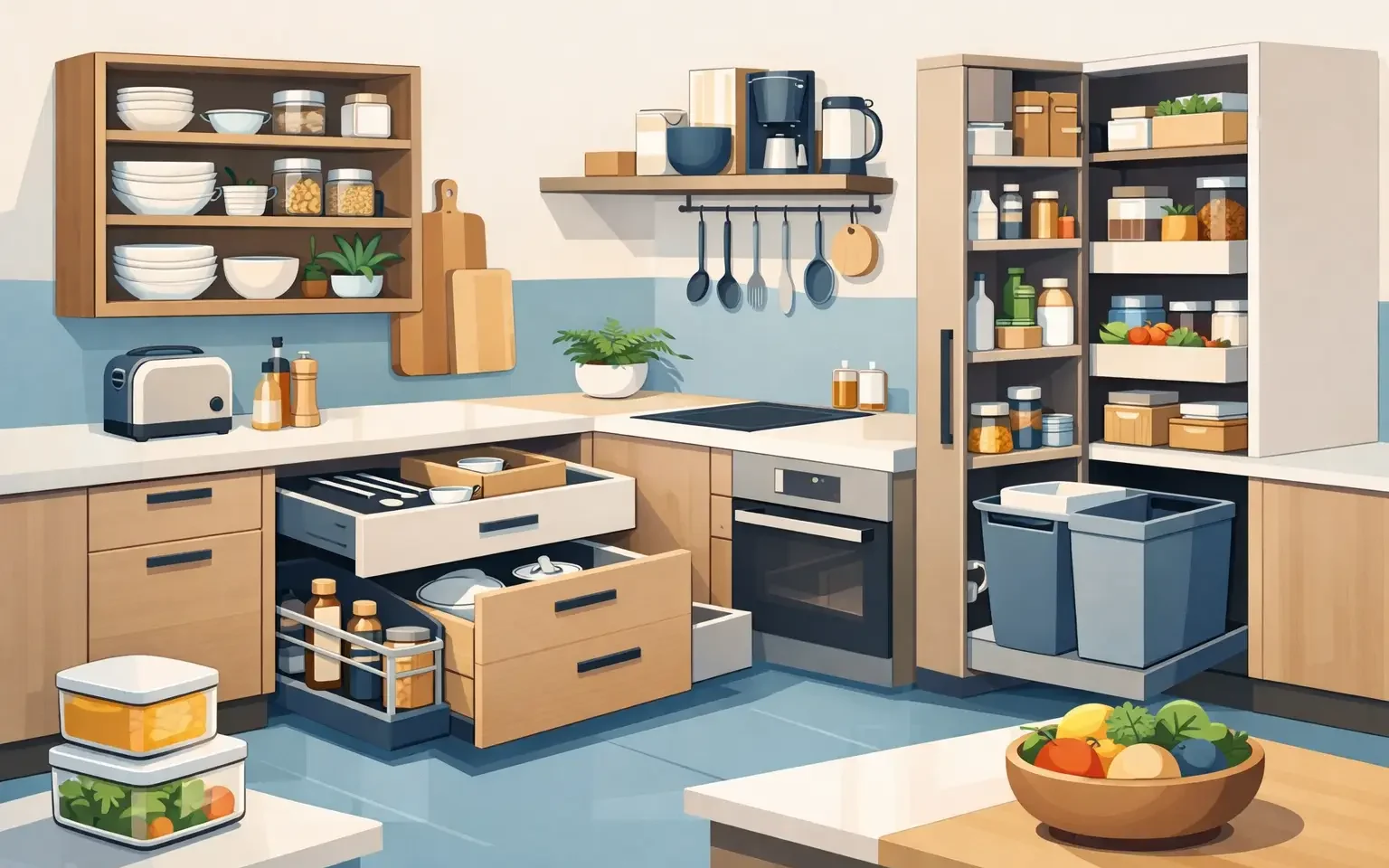
Traditional base cabinets with fixed shelves make everyday tools difficult to reach. Deep, full-extension drawers bring cookware, serving pieces, dry goods, and small appliances into view from above. Rather than bending into a dark cabinet or moving several items to reach one pan, homeowners can see the contents at a glance.
A refined drawer system is not simply a large box. Interior dividers can create dedicated zones for lids, utensils, dishes, spices, and cookware. Choose drawers with quality runners and soft-close hardware, particularly in busy kitchens where they will be opened many times each day.
2. Design a pantry around the way you shop
A full-height pantry cabinet can deliver significant capacity without the footprint of a walk-in pantry. Tall pull-out shelves, internal drawers, and adjustable shelving make it possible to store everything from cereal and snacks to oversized serving platters in a single, organized wall.
The right configuration depends on household habits. A family that buys in bulk may need deeper pull-outs and wider shelves, while an avid cook may benefit more from narrow, easily visible zones for oils, grains, and spices. In a luxury kitchen, the exterior can remain perfectly aligned with the surrounding cabinetry while the interior works exceptionally hard.
3. Include an appliance garage or pocket-door cabinet
Coffee makers, toasters, blenders, and mixers earn their counter space through frequent use, but they can interrupt the calm appearance of a modern kitchen. An appliance garage conceals these essentials behind a lift-up, retractable, or pocket door while keeping them accessible near an outlet.
For larger projects, a dedicated breakfast or beverage cabinet can function as a complete hidden work zone. Consider internal lighting, a stone or porcelain work surface, and outlets positioned for daily use. The trade-off is that these cabinets require careful planning for ventilation, clearance, and door operation, so they should be resolved early in the design process.
4. Use a tall utility cabinet for cleaning supplies
Cleaning products often end up scattered under the sink, where plumbing reduces usable space. A tall utility cabinet with internal shelves, pull-outs, and space for a vacuum or mop creates a more orderly solution. It can also keep chemicals separate from food storage.
If a full-height cabinet is not practical, a pull-out beside the sink can hold towels, cleaning bottles, and a slim waste bin. The most useful option is the one that matches the route these items take through the kitchen, not the one with the most accessories.
5. Make the island work on both sides
An island is often the largest piece of cabinetry in the room, yet its storage potential is frequently underused. The working side can hold cookware, dishes, recycling, and prep tools. The seating side can incorporate shallow cabinets for linens, entertaining pieces, cookbooks, or items used less often.
This strategy is particularly effective in open-concept homes, where a well-organized island reduces the need for additional upper cabinetry. It also preserves a more furniture-like composition facing the living area.
6. Specify drawer inserts for the items you actually own
Generic tray dividers and utensil inserts are helpful, but tailored interiors produce a noticeably better result. Measure your knives, spices, cooking tools, wraps, and food containers before finalizing the cabinet plan. A custom insert can prevent the familiar cycle of buying organizers that do not fit the drawer or the objects inside it.
Wood, metal, and high-quality composite inserts each create a different visual effect. The best choice should complement the cabinetry finish while remaining easy to clean. For most households, flexibility matters as much as precision, so adjustable dividers are often preferable in drawers that may change purpose over time.
7. Add a dedicated recycling and waste center
A concealed waste center is one of the most practical details in a modern kitchen. Position it near the primary prep area rather than wherever there happens to be an open base cabinet. Separate bins for trash, recycling, and compost make daily routines easier and keep bags out of sight.
Capacity deserves attention. Small bins may look neat on a floor plan but can be frustrating for a household that cooks often or entertains regularly. A designer can balance bin size with the drawer space needed for adjacent storage.
8. Turn corners into usable storage
Corner cabinets can become inefficient dead zones when treated as standard boxes. Modern solutions include angled drawers, pull-out shelving, swing-out mechanisms, and corner drawers designed to use the full depth of the cabinet.
Not every corner needs expensive hardware. In some kitchen layouts, a simple accessible shelf is the more durable and cost-conscious decision. The key is to reserve high-performance mechanisms for corners that are central to the kitchen’s workflow, rather than adding them merely because they are available.
9. Build a purposeful beverage station
A beverage station keeps the morning coffee routine, afternoon drinks, and entertaining supplies from taking over the main prep area. It may include a coffee machine, undercounter refrigeration, glassware drawers, mugs, tea storage, and a filtered-water point.
When placed just beyond the primary cooking zone, it allows guests and family members to help themselves without crossing into the cook’s workspace. Concealed doors can make the station disappear when not in use, preserving the restrained look associated with premium European design.
10. Use interior lighting where it adds value
Interior cabinet lighting is more than a decorative upgrade. It improves visibility in deep drawers, pantries, and tall cabinets, especially in kitchens with darker finishes or limited natural light. Sensor-activated lighting is an elegant option because it operates only when the cabinet is open.
Lighting should be selective. Illuminating every cabinet can add cost without improving function. Prioritize the areas where you need to identify small items, read labels, or access storage early in the morning or late at night.
11. Create a slim pull-out for spices and oils
Narrow pull-outs beside the cooktop can be valuable in compact kitchens, where every inch must earn its place. These cabinets keep oils, vinegars, spices, and cooking essentials upright and visible, eliminating clutter from the countertop.
Avoid placing heat-sensitive ingredients too close to an oven or range. A designer can locate the pull-out within easy reach of the cooking surface while accounting for appliance clearances and the heat generated during use.
12. Plan storage for the items that do not look decorative
The most successful kitchens make room for the unglamorous essentials: pet food, lunch boxes, paper towels, chargers, medications, school supplies, and oversized platters. These categories are often overlooked during early planning, then migrate to counters and open shelves after installation.
During a consultation, inventory the items that currently create friction in your kitchen. This practical exercise often reveals the need for a charging drawer, a message center, a tall cabinet for trays, or a low drawer for pet supplies. At Häcker European Collection, that level of planning is central to creating cabinetry that feels as considered inside as it does from across the room.
Storage Should Support the Architecture
Modern kitchen storage is most effective when it feels invisible from the outside and effortless from within. A wall of precisely aligned cabinetry, a quiet drawer that closes with control, and a pantry organized for real grocery habits all contribute to a kitchen that remains composed long after the renovation is complete.
Before selecting finishes or finalizing a layout, consider how you want the room to perform on an ordinary Tuesday morning. A thoughtful design consultation can turn those daily routines into the details that make a high-end kitchen genuinely enjoyable to live with.

