
How to Organize Pantry Pullout Cabinets Beautifully
A pantry should not require you to crouch, reach into a dark back corner, or buy duplicates because an ingredient has disappeared behind larger packages. When you organize pantry pullout cabinets with intention, the cabinetry becomes more than storage. It becomes a precise, elegant system that supports how your household actually cooks, shops, and entertains.
Pullout pantry cabinetry is especially effective in modern European kitchens because it brings the full depth of the cabinet forward. Every shelf is visible, every category can have a defined home, and the visual calm of a well-designed kitchen can extend behind closed doors. The key is not simply filling the shelves. It is establishing a layout that respects proportion, frequency of use, and the dimensions of the products you keep on hand.
Begin With the Cabinet Interior, Not the Groceries
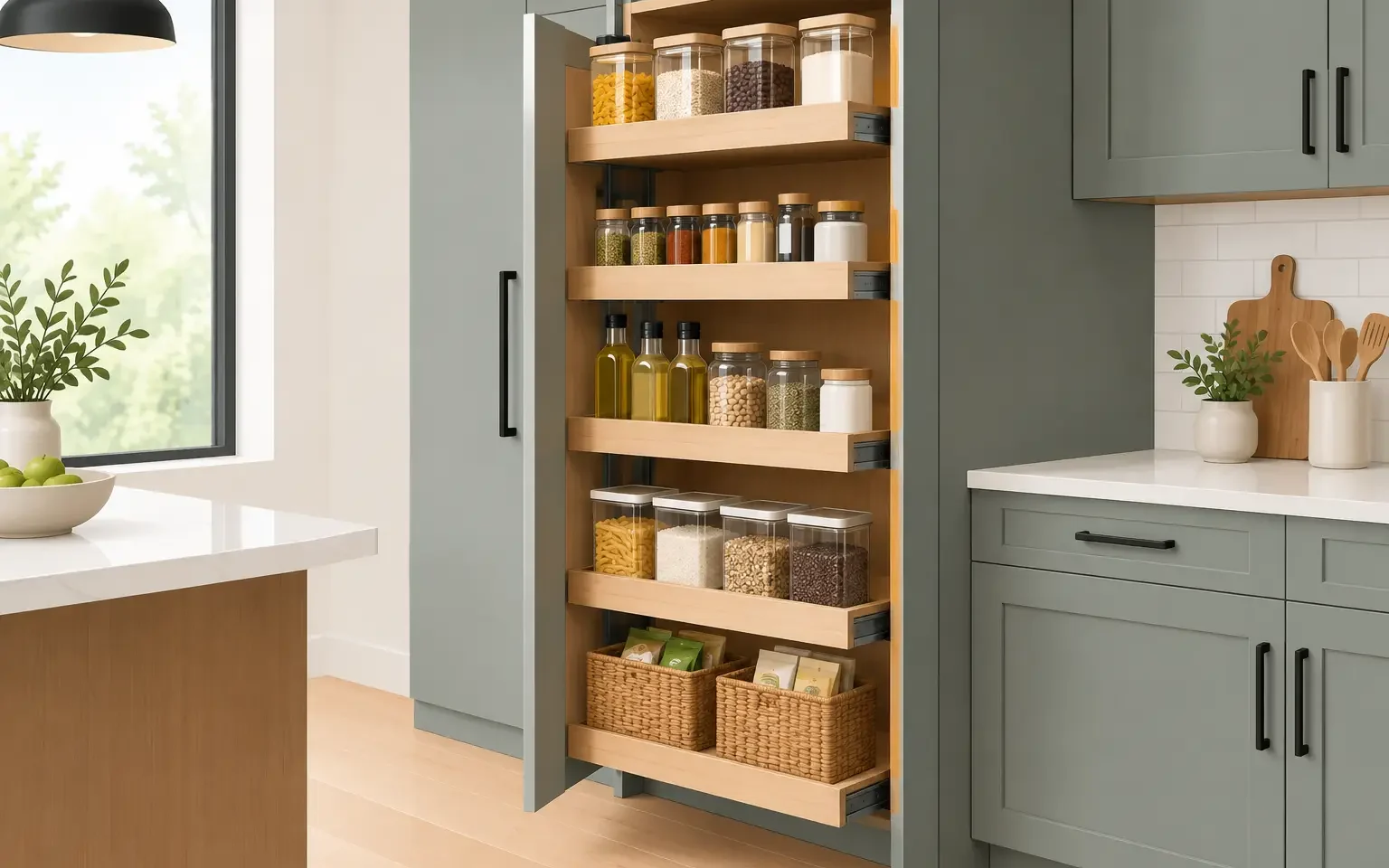
A successful pantry plan starts with the cabinet itself. Before placing a single jar or box inside, consider the width, depth, shelf spacing, and weight capacity of each pullout. Tall pantry pullouts often include adjustable shelves, allowing the interior to be tailored to everything from spice jars and tea tins to cereal containers, oils, and small appliances.
This is where premium cabinetry offers a meaningful advantage. Well-engineered pullout systems operate smoothly under daily use and provide full access to items stored at the rear. Instead of organizing around poor visibility, you can organize around a clear hierarchy.
Measure your most frequently purchased items before deciding shelf heights. A shelf that is just slightly too low for a favorite olive oil bottle or cereal container creates visual disorder quickly. Conversely, shelves with excessive unused space can make small packages feel scattered. The goal is a tailored fit, with enough room to remove items easily without leaving large gaps.
Create Pantry Zones That Match Your Routine
The most refined pantry organization is not based on a generic social-media layout. It is based on the rhythm of your household. A family that prepares weekday breakfasts at home needs a different arrangement than a couple who frequently hosts dinner parties or relies on specialty ingredients.
Place everyday essentials at the most accessible levels, typically between waist and eye height. This is the right location for breakfast items, snacks, pasta, grains, canned goods, coffee, tea, and frequently used baking ingredients. Keeping these categories visible reduces unnecessary searching and makes restocking easier.
Use the higher shelves for backstock, entertaining supplies, or products used less often. Seasonal baking items, extra paper goods, serving accessories, and specialty ingredients can live above the primary reach zone. The lowest shelves are best for heavier products such as bottled water, large bags of flour, bulk dry goods, and cookware that needs pantry storage.
Design a Dedicated Cooking Zone
A cooking zone should contain ingredients that naturally work together during meal preparation. Oils, vinegars, salt, pepper, spices, sauces, pasta, rice, and canned tomatoes are logical neighbors. In a pullout cabinet, arranging these items by height creates a clean sightline when the unit is extended.
Keep oils and taller bottles toward the lower portion of a shelf or within a dedicated bottle area, if available. Smaller seasonings should be grouped in shallow rows rather than placed randomly behind one another. If your household cooks with a substantial spice collection, consider whether a separate shallow drawer near the cooking surface may serve it better. Pantry pullouts are highly capable, but they should not be asked to solve every storage need in the kitchen.
Give Breakfast and Snacks Their Own Address
Breakfast is often the most time-sensitive moment in the kitchen. Group coffee, tea, cereal, granola, nut butters, and shelf-stable milk alternatives together so the morning routine has a single destination. If children or guests regularly access snacks, position those items on a lower, easy-to-reach shelf.
Avoid mixing snacks with baking supplies simply because both come in small packages. Categories may look similar in scale but perform differently in daily life. A pantry that supports habits is more likely to remain organized than one arranged only for appearance.
Use Containers Selectively, Not Excessively
Decanting can create a polished, consistent pantry, but it is not mandatory for every product. The most effective approach is selective. Transfer dry goods that are purchased often and benefit from visibility, such as flour, sugar, rice, oats, nuts, and cereal. Clear, airtight containers protect freshness while making it easy to see when supplies are running low.
For items with variable packaging, such as crackers, chips, protein bars, and specialty ingredients, attractive open bins may be more practical. They keep like items together without forcing you to remove every product from its original package. Choose bins with low sides in narrow pullouts so labels remain visible and items can be lifted out without disruption.
There is a trade-off: uniform containers create a serene look, but they require more maintenance and can make it harder to retain expiration dates and preparation instructions. Keep labels from original packaging inside the container when useful, or mark the decanted item with its name and best-by date. A beautiful pantry should also be a reliable one.
Make Pullout Shelves Work Harder
Pullout cabinets offer exceptional access, but their movement should shape how you load them. Keep fragile glass containers and tall, unstable bottles in positions where they are less likely to shift as the cabinet opens and closes. Do not overload one side of a pullout while leaving the other side empty. Balanced weight supports smooth operation and protects the hardware over time.
Store shorter items in the front only when they will not conceal taller products behind them. In many cases, arranging items from low to high, front to back, offers the clearest view. For categories with many small products, use a shallow organizer or bin rather than building several loose rows that can topple during use.
Consider visual restraint as well. Pullout cabinetry reveals its contents in full, which means overfilled shelves can make even the most sophisticated kitchen feel crowded. Leave a small amount of open space on each shelf. This provides room for groceries between shopping trips and makes the cabinet easier to maintain.
Plan for Backstock Without Letting It Take Over
Buying in quantity can be efficient, especially for staples, but backstock should have boundaries. Dedicate one or two upper shelves to extras rather than spreading duplicate products throughout the pantry. When the active container is empty, bring the replacement forward and add it to the shopping list.
This simple rotation prevents a common problem: three open bags of the same ingredient, each forgotten behind something else. It also helps reduce food waste, which matters in a high-end kitchen designed for long-term, considered use.
If the pantry is narrow, limit bulk purchases to products you consistently use. A larger pullout cabinet can accommodate more backstock, but capacity alone does not justify storing items that will expire before they are needed. Cabinetry performs best when it reflects a disciplined edit, not an accumulation of excess.
Maintain the System With a Light Touch
A pantry does not need a full reset every month. A brief check after grocery shopping is usually enough. Return misplaced items to their zone, bring older products forward, and discard anything expired or no longer wanted. This takes minutes when the initial layout is sound.
Twice a year, review shelf heights and category assignments. Household habits change, particularly after a renovation, a move, or a shift in how often you entertain. Adjustable European cabinetry is designed to evolve with the home, so use that flexibility. A shelf configuration that worked beautifully two years ago may no longer suit the way you live now.
Consider Storage During the Kitchen Design Process
The best time to organize pantry pullout cabinets is before the cabinetry is installed. During kitchen planning, a designer can determine whether a tall pullout pantry, paired pantry cabinets, interior drawers, or a combination of storage solutions will best serve your inventory and floor plan.
For example, a narrow pullout can be ideal for oils, spices, and dry goods near the cooking zone, while a wider pantry cabinet may better support family-size staples and entertaining supplies. In a larger kitchen, separating daily food storage from a secondary beverage or serving pantry can preserve a more composed main kitchen.
At Häcker European Collection, the design conversation considers both the external architecture of the kitchen and the cabinetry experience behind each door. German-made systems are at their best when their internal organization is planned with the same care as the finish, layout, and appliances.
A pantry should feel quiet, ordered, and effortless to use. When every shelf has a purpose and every category has a place, opening a pullout cabinet becomes a small daily reminder that thoughtful design can make ordinary routines feel exceptionally well considered.