

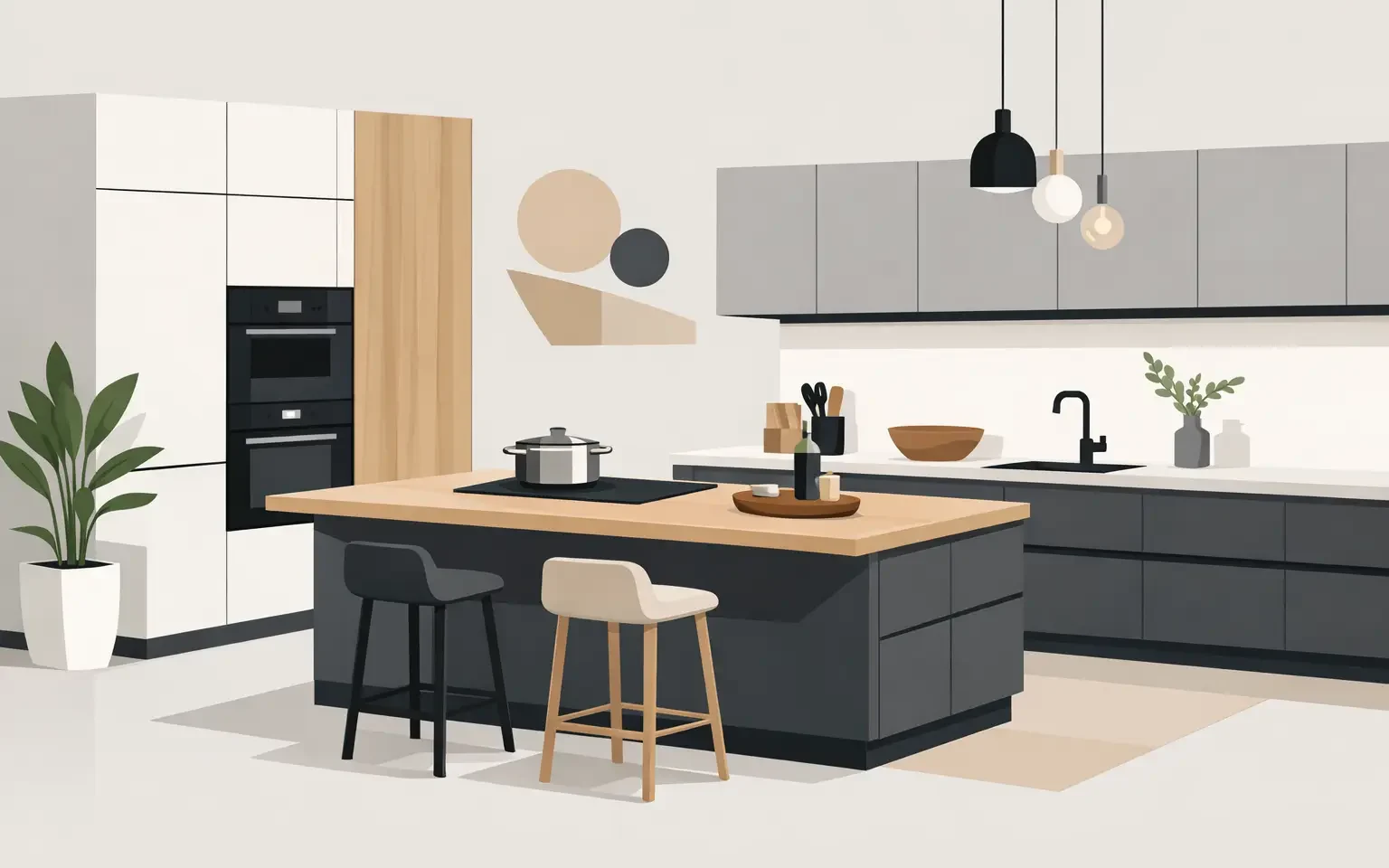
Modern German Kitchen Cabinets Explained
A kitchen can look sleek in a photo and still disappoint in daily use. Doors drift out of alignment, storage feels awkward, finishes show wear too quickly, and what seemed streamlined starts to feel limiting. That is exactly why modern German kitchen cabinets continue to stand apart in premium remodels. They are designed not only to look refined, but to perform with consistency, precision, and long-term durability.
For homeowners investing in a serious renovation, cabinetry is not a minor finish selection. It shapes how the kitchen works, how it ages, and how confidently the entire space comes together. German-made cabinetry has earned its reputation because it treats design and engineering as equally important.
What sets modern German kitchen cabinets apart
The difference begins with manufacturing standards. Modern German kitchen cabinets are built within a system that prioritizes exact tolerances, tested hardware, efficient production, and material consistency. That means panels align cleanly, drawer action feels controlled, and storage components integrate with purpose rather than as afterthoughts.
This approach also supports the visual language most clients are looking for in a high-end kitchen. You see slimmer profiles, crisp lines, thoughtful proportions, and finishes that feel contemporary without looking trendy. The result is a kitchen that appears calm and architectural rather than overly decorative.
That said, the appeal is not only aesthetic. German cabinetry tends to perform exceptionally well because every detail is considered at the design stage – drawer depths, internal organization, lift systems, corner solutions, and the relationship between appliances and storage. It is a disciplined way of building, and homeowners feel that difference every day.
Why the design feels so current
A modern kitchen should not feel cold or sterile. The best German kitchens balance minimalism with warmth by using texture, proportion, and restrained material contrast. Matte lacquer, wood-effect finishes, engineered veneers, glass accents, and refined metal details all play a role, but they are used with control.
This is one reason German cabinetry works so well in American homes, especially in custom renovations. It can support an open, contemporary interior, but it can also bring clarity to transitional architecture that needs a cleaner, more tailored kitchen. The design language is flexible because it is based on order, not excess.
Homeowners are often drawn to handleless cabinetry, full-height storage, integrated appliances, and large kitchen islands. Those features look sophisticated, but they also demand careful planning. When done well, they create a kitchen that feels visually lighter and more usable. When done poorly, they can make everyday tasks harder. Good German cabinetry helps avoid that gap between appearance and function.
Precision matters more than most homeowners expect
In a premium kitchen, small inconsistencies become obvious. Slightly uneven reveals, hardware that feels loose, or storage that wastes interior volume can make an expensive remodel feel less resolved than it should. Precision manufacturing helps prevent those issues.
This is especially important in modern designs, where simpler forms leave less room to hide mistakes. Flat-panel doors, continuous lines, and integrated details require exact execution. A cabinet system built for this style tends to produce a cleaner final result than one adapted to it.
Materials, finishes, and long-term performance
Cabinetry is one of the most heavily used surfaces in the home. It needs to tolerate moisture, heat, cleaning, impact, and constant handling. Premium German manufacturers are known for selecting materials and finishes with long-term performance in mind, not just showroom appeal.
That does not mean every finish behaves the same way. Matte surfaces can be elegant and forgiving in some settings, but certain households may prefer options that better resist fingerprints or wear. High-gloss finishes create a striking, reflective look, though they tend to show smudges more readily. Textured wood finishes add warmth and softness, but the right tone depends on the architecture, lighting, and flooring around them.
This is where design guidance matters. A beautiful cabinet sample does not automatically become the right choice for a full kitchen. The best selections are made in relation to the room, the client’s habits, and the level of maintenance they want to live with.
Storage is where value becomes obvious
Luxury cabinetry should do more than improve appearance. It should make the kitchen easier to use. Internal drawer systems, pantry pull-outs, cutlery inserts, concealed waste sorting, appliance garages, and specialized storage for cookware or spices can transform daily routines.
The key is not adding every available accessory. It is selecting the right storage strategy for the way the household actually cooks and organizes. A homeowner who entertains frequently may need a different pantry layout than someone focused on family meal prep. A minimalist kitchen can still be highly functional, but only if the storage has been carefully planned behind the clean exterior.
Modern German kitchen cabinets in American homes
Many US homeowners want the streamlined look of European kitchens, but they also need cabinetry that suits American floorplans, appliance preferences, and lifestyles. That is where a consultation-led process becomes valuable. Imported cabinetry should not be treated like a one-size-fits-all product. It needs to be designed thoughtfully for the home it is going into.
For example, ceiling heights, island scale, ventilation requirements, refrigeration choices, and traffic flow all affect the final layout. So do lifestyle priorities. Some clients want a statement kitchen centered on entertaining. Others want understated luxury with maximum storage and minimal visual clutter. Both can be achieved with German-made cabinetry, but the design solution will not be identical.
Houston-area homeowners in particular often face another layer of decision-making: how to create a kitchen that feels current and elevated without chasing short-lived trends. This is one of the strongest arguments for German cabinetry. Its design language is modern, but not loud. It ages well because it is rooted in proportion, function, and material quality.
What to look for when comparing cabinet options
Not every cabinet marketed as European or modern delivers the same level of quality. Homeowners should look beyond surface style and ask sharper questions. Where is the cabinetry manufactured? What are the construction standards? How consistent are the finishes? What hardware systems are being used? How customizable is the storage? Who is responsible for design, measurement, and installation?
Those questions matter because the cabinet itself is only part of the outcome. Even exceptional products can underperform if the planning is weak or the installation lacks precision. A premium kitchen should come with expert support from concept to completion.
This is one reason many homeowners prefer a showroom-based, full-service experience. Being able to review materials in person, compare finish combinations, understand configuration options, and work directly with a designer reduces risk. It also leads to a more tailored result.
A brand such as Häcker European Collection speaks to this higher standard because the experience is not limited to selling cabinets. It is about delivering a complete design and installation process around authentic German-made cabinetry.
The trade-off: customization versus speed
There is no serious custom kitchen without lead times, planning, and decisions. Homeowners used to quick-ship domestic products sometimes find the process more involved, especially when selecting imported cabinetry. That is the trade-off for a more considered, better-fitted result.
For most premium remodels, that trade-off is worth it. The cabinetry becomes a long-term architectural feature, not a short-term purchase. Still, timing should be discussed early, particularly if the kitchen renovation is part of a larger whole-home project.
Is this the right investment?
Modern German kitchen cabinets are not the lowest-cost option, and they are not meant to be. They are a premium choice for homeowners who care about design integrity, manufacturing quality, and how a kitchen performs over time. If the goal is simply to replace cabinets quickly, there are cheaper ways to do that.
But if the goal is to build a kitchen that feels refined every time you use it, the value becomes easier to understand. Better storage, better finish quality, better alignment, better durability, and better design coherence all add up. You are not only paying for appearance. You are paying for a system that has been engineered to work.
That matters most in homes where the kitchen is central to daily life. It matters in custom homes, major remodels, and primary residences where clients want a result that reflects a higher standard.
The smartest starting point is not choosing a color or door style. It is choosing a design partner who can translate your priorities into a kitchen that is both modern and lasting. When the cabinetry is genuinely well made, and the planning is equally strong, the space does not just look elevated. It feels settled, confident, and right for the way you live.

