

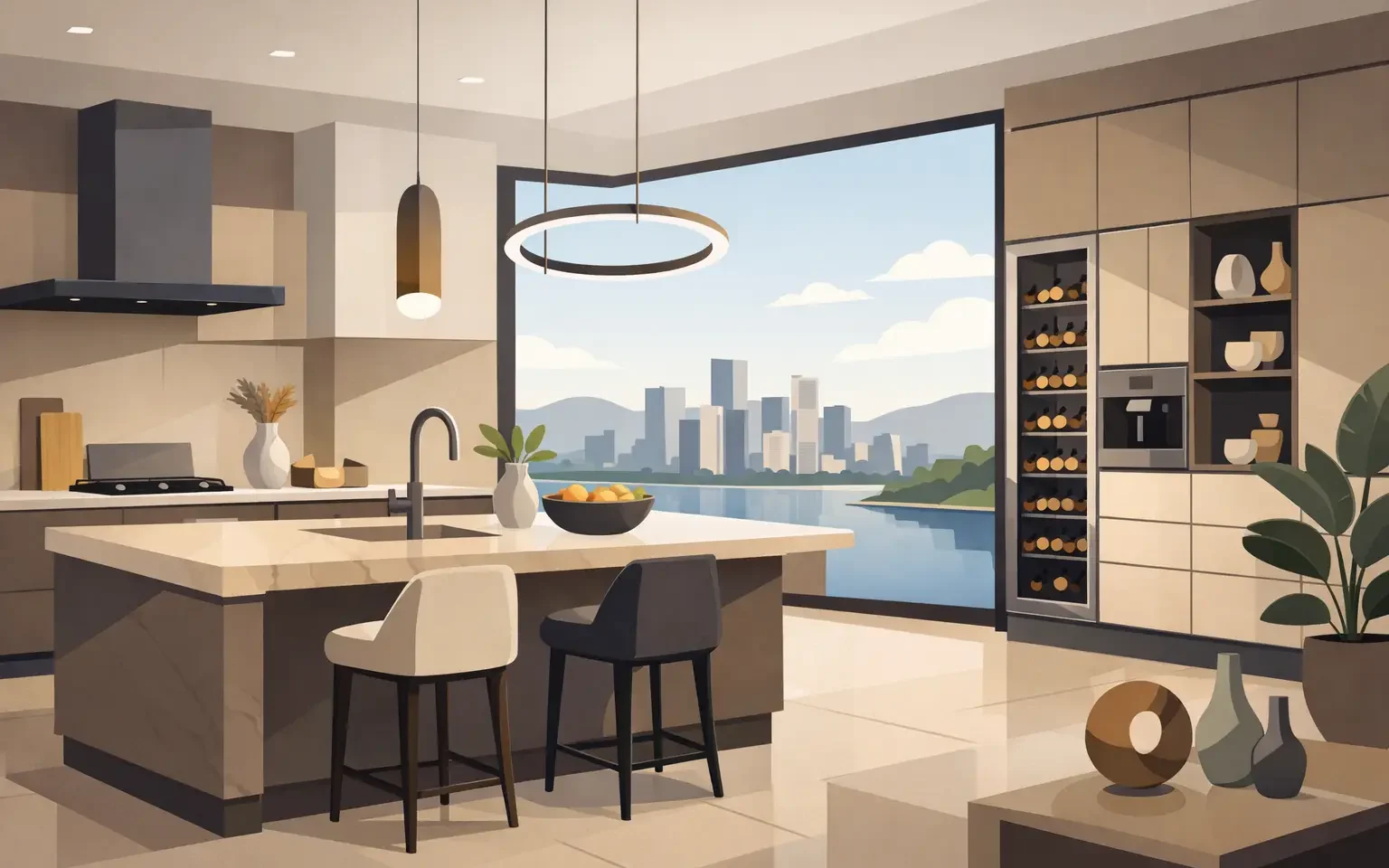
Luxury Kitchen Trends 2026 for Modern Homes
A luxury kitchen is no longer defined by a single dramatic finish or an oversized island. The most compelling luxury kitchen trends 2026 are built around a more lasting idea: a kitchen should look composed, perform beautifully every day, and feel specifically designed for the people who live there. For Houston homeowners investing in a primary residence or custom home, that means moving beyond generic layouts and selecting cabinetry, materials, and appliances as one considered system.
Luxury Kitchen Trends 2026: Tailored, Quiet, and Functional
The direction for 2026 is refined rather than flashy. Clean-lined European cabinetry remains central, but the look is becoming warmer, more architectural, and more personal. High-end kitchens are using fewer visual interruptions, better-integrated storage, and material combinations that bring depth without clutter.
This shift is especially relevant in open-concept homes, where the kitchen is visible from living and dining areas. Cabinetry must hold its own as furniture, while still accommodating the serious demands of cooking, entertaining, and family life. German-made kitchen systems are well suited to this balance because their precision engineering supports both minimal exterior design and highly organized interiors.
Warm woods meet matte neutrals
Cool gray kitchens have given way to softer, more dimensional palettes. In 2026, expect to see natural oak, walnut-inspired tones, smoked wood looks, and textured wood finishes paired with warm whites, sand, mushroom, taupe, and deep mineral colors. These finishes create a polished environment without making the room feel sterile.
Matte lacquer and super-matte surfaces continue to be popular for their quiet, contemporary appearance. They also offer a practical advantage: high-quality matte finishes can be more forgiving of fingerprints and daily use than highly reflective surfaces. The right choice depends on the home, however. A dark matte kitchen can feel exceptionally elegant in a light-filled room, while a smaller or lower-light space may benefit from pale cabinetry balanced with wood accents.
The strongest designs avoid making every surface match. A warm wood tall cabinet wall, for example, can be paired with a soft neutral island and a distinctive natural stone counter. The contrast gives the kitchen visual hierarchy while keeping the overall composition calm.
Sculptural stone with purposeful placement
Natural stone and stone-look porcelain are becoming more expressive. Veining, movement, and depth are welcome, particularly on islands, backsplashes, and integrated shelving details. Rather than covering every available surface, many luxury kitchens use one exceptional slab as a focal point.
A waterfall island remains a strong choice when the architecture supports it, but it is no longer the automatic answer. A stone-clad island can feel too formal or visually heavy in some homes. In those cases, a thin-profile worktop with a refined edge detail, or a wood and stone combination, may provide a more balanced result.
Porcelain is increasingly selected for homeowners who want the visual impact of stone with excellent resistance to heat, staining, and scratching. Natural quartzite and marble deliver unmatched character, but they require an honest discussion about maintenance. Luxury is not simply about choosing the most expensive material. It is about choosing a material that will age well within the way a household actually uses its kitchen.
The Hidden Utility Behind a Clean Kitchen
One of the defining luxury kitchen trends for 2026 is the disappearance of visual clutter. This does not mean reducing functionality. It means designing utility so thoroughly that it becomes nearly invisible when not in use.
Full-height cabinetry is being used to create uninterrupted architectural walls, often concealing refrigerators, pantries, ovens, and everyday storage behind coordinated fronts. Integrated appliances allow the kitchen to read as a cohesive interior rather than a collection of individual products. In a large open-plan home, this approach makes the transition from kitchen to living space far more elegant.
The details inside the cabinets matter just as much. Deep drawers with custom inserts, internal dividers, pull-out pantry systems, charging drawers, and tailored waste solutions reduce the friction of daily routines. A well-designed drawer system is more valuable than an oversized cabinet with unused space at the back. This is where European cabinetry demonstrates its long-term value: precise hardware, durable drawer construction, and configurable interiors make organization feel natural rather than imposed.
The working pantry and back kitchen
For homeowners who entertain frequently, a secondary preparation area is becoming a defining feature. A working pantry or back kitchen can accommodate small appliances, extra refrigeration, cleanup, coffee service, and pantry storage, allowing the main kitchen to remain orderly for guests.
This is not a requirement for every renovation. It depends on the home’s footprint and how the owners entertain. In a more compact kitchen, a dedicated appliance garage, concealed breakfast station, or tall pantry cabinet may achieve much of the same function without consuming an additional room. The important consideration is to identify which activities create countertop clutter, then plan storage and work zones around them.
Dedicated zones, not one oversized island
Large islands are still desirable, but their purpose is becoming more specific. Instead of treating the island as the only place for prep, dining, storage, and socializing, thoughtful kitchen plans create defined zones. A prep sink may sit near refrigeration and waste pull-outs; seating may be positioned away from the primary cooking path; and a beverage area may allow guests to help themselves without entering the cook’s workspace.
This approach is more comfortable for entertaining and more efficient for everyday living. It also prevents a kitchen from feeling oversized simply for the sake of scale. A properly proportioned island with excellent drawer storage often delivers more value than a larger island that compromises circulation.
Lighting That Feels Architectural
Lighting in a luxury kitchen should reveal materials, support practical tasks, and create atmosphere after sunset. The 2026 preference is layered lighting rather than a single statement fixture doing all the work.
Discreet under-cabinet lighting remains essential for food preparation, while interior cabinet lighting adds a tailored look to glass-front displays and open shelving. Recessed ceiling lights should be carefully placed around work areas rather than scattered in a grid with little relationship to the layout. Decorative pendants can still provide personality over an island, but they should complement the kitchen’s proportions instead of competing with the cabinetry and stone.
Warm, dimmable lighting is particularly important with wood finishes and richly veined surfaces. It gives the room depth and helps a modern kitchen feel inviting in the evening. Homeowners should also consider how daylight moves through the room before finalizing finish samples. The same cabinet color can appear entirely different in a bright west-facing kitchen than it does in a space with limited natural light.
Sustainability Through Longevity
Sustainability in luxury kitchens is moving away from short-lived claims and toward products made to perform for years. Cabinetry with durable finishes, reliable hinges, replaceable components, and timeless proportions is inherently more responsible than a lower-cost kitchen replaced after a brief cycle.
European manufacturing standards, material sourcing, and low-emission options deserve consideration, but longevity should remain the foundation of the conversation. A kitchen that homeowners continue to value a decade from now is a better investment than one designed around a passing visual trend.
That does not mean every kitchen must be neutral. Personal color, fluted glass, metal accents, and expressive stone can all be used with confidence. The key is to place trend-forward details where they can be refreshed more easily, while keeping the cabinetry layout and core materials grounded in quality.
A Better Standard for Custom Kitchen Design
The best luxury kitchens of 2026 will not look identical from home to home. They will share a commitment to thoughtful planning, high-end materials, and cabinetry engineered for real life, but each will reflect its owner’s routines and architecture.
At Häcker European Collection, the design process begins with those practical questions: how you cook, how you entertain, what you need to store, and how the kitchen should relate to the rest of your home. A consultation with an experienced designer can turn those answers into a refined, German-made kitchen plan that feels current now and enduring for years to come.

