
Lacquer Versus Laminate for Premium Cabinets
A cabinet door may look simple from across the room, but its finish determines much of how a kitchen feels, wears, and photographs over time. In the lacquer versus laminate decision, the right choice is rarely about one material being universally better. It is about matching the finish to your architecture, daily habits, desired color expression, and expectations for a high-end kitchen.
For homeowners planning a significant renovation or custom home, this choice deserves more attention than a quick sample-board comparison. Light, door profile, hardware, adjacent stone, and the precision of cabinet construction all influence the final result. A knowledgeable kitchen designer can translate those variables into a finish that is beautiful on installation day and practical for years ahead.
Lacquer Versus Laminate: The Essential Difference
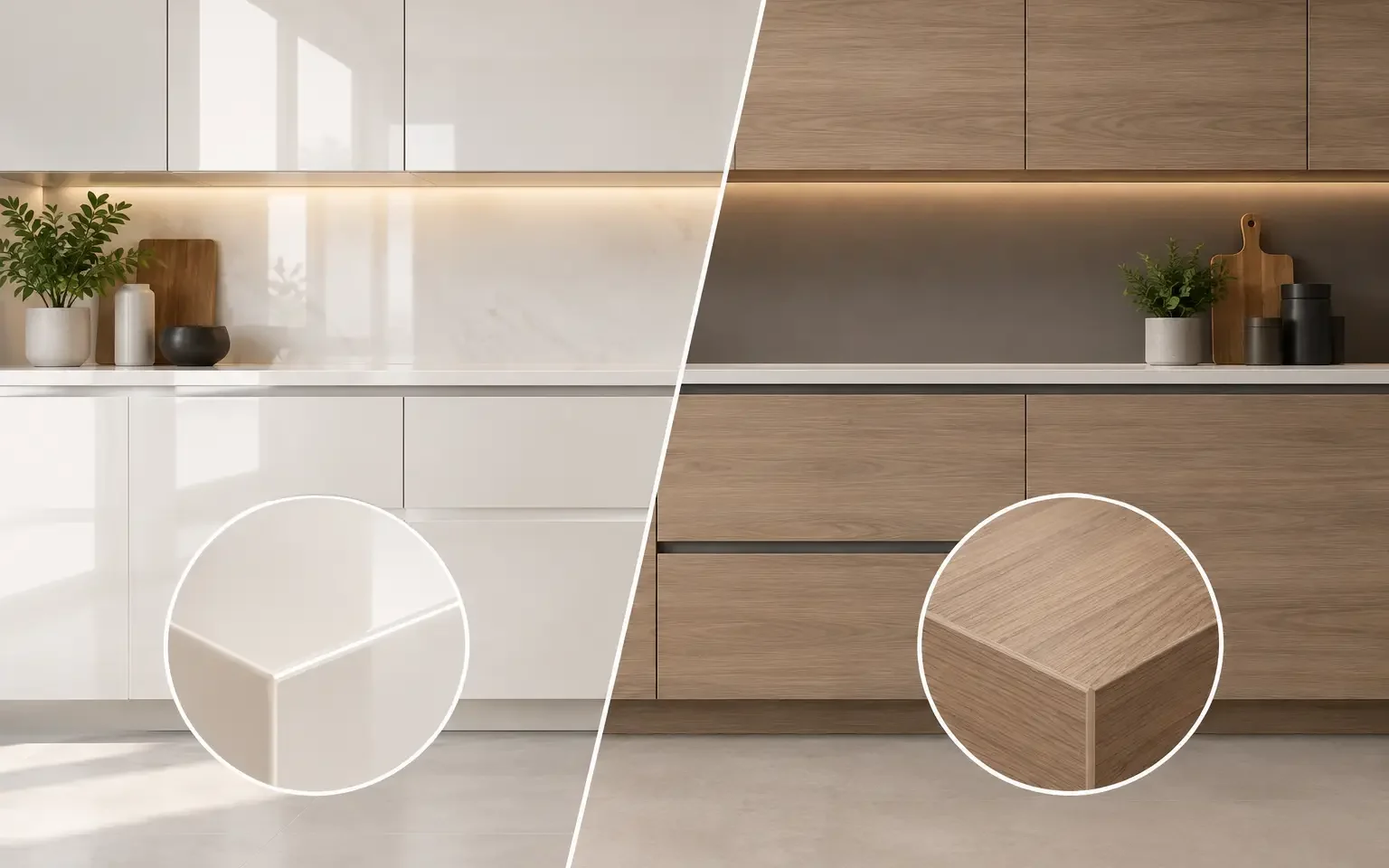
Lacquer is a coated finish applied to a cabinet substrate, typically in multiple layers, then cured to create an exceptionally smooth surface. Depending on the product and specification, it can range from a quiet matte to a reflective high gloss. Its appeal is visual purity: color appears rich, consistent, and integrated into the door rather than printed beneath a protective layer.
Laminate is a decorative surface bonded to a stable panel substrate. Premium laminates are engineered products, not the thin, generic surfaces many homeowners associate with older cabinetry. Contemporary European laminates can closely reproduce soft-touch painted finishes, finely grained wood, linen, stone, metal, or solid colors. Their performance and appearance vary considerably by manufacturer, thickness, edge treatment, and manufacturing standards.
Both finishes can be appropriate for modern European cabinetry. The better question is what you want the cabinetry to contribute to the room. Should it act as a crisp, color-forward architectural plane? Or should it bring tactile texture, practical resilience, and a highly controlled material look?
Why Lacquer Creates a More Tailored Look
Lacquer is often selected when the kitchen calls for visual refinement with minimal interruption. A matte lacquer in warm white, soft greige, charcoal, or a custom-inspired neutral has a depth that reads especially well in open-plan homes. It can soften the transition between cabinetry and wall surfaces, allowing the kitchen to feel composed rather than overly segmented.
High-gloss lacquer offers a different expression. Its reflective quality brings light into a compact or lower-light space and creates the sharply tailored appearance associated with certain contemporary European interiors. It is a considered choice, however. Gloss highlights fingerprints, water spots, and surface reflections more readily than matte finishes. In a family kitchen or a heavily used entertaining space, the appeal of gloss should be balanced against the level of visual maintenance the household considers acceptable.
Matte lacquer is generally more forgiving, particularly in sophisticated mid-tone and light neutral palettes. It provides a smooth, furniture-like effect without the mirror-like presence of gloss. This can be an excellent complement to natural stone, fluted glass, brushed metal, and architectural wood details.
Lacquer also offers strong color continuity. On a carefully made door, the finish can wrap edges with a clean, unified appearance. That matters on handleless kitchens, where uninterrupted planes and finely resolved reveals are central to the design. The result feels intentional at close range, not merely decorative.
The trade-off is that lacquer can be more vulnerable to impact, scratching, and visible marks than a high-performance laminate. It should be cleaned with a soft cloth and mild, nonabrasive products. It also benefits from thoughtful use around high-contact areas, such as near a dishwasher handle, a trash pullout, or a busy beverage station. Premium cabinetry is built for real life, but a refined finish still rewards proper care.
Where Laminate Excels in a Modern Kitchen
Laminate is often the more pragmatic luxury choice, especially when the goal is a kitchen that works hard without looking utilitarian. Quality laminate surfaces are highly resistant to everyday scratches, stains, and moisture. For active households, second kitchens, rental properties, or homes with frequent entertaining, that resilience can be a meaningful advantage.
Its design range is equally compelling. Wood-look laminates can deliver the warmth of oak, walnut, or smoked timber with remarkably consistent grain and easier maintenance. Stone- and metal-inspired laminates can introduce a contemporary material contrast without requiring a more delicate surface. Soft-touch matte laminates provide a calm, velvety appearance that suits minimalist cabinetry and can be highly effective in darker colors.
Laminate is also a strong option when uniformity is important. Large kitchens with extensive cabinetry, full-height pantry runs, integrated appliances, and storage walls benefit from a surface that remains consistent across many door and panel sizes. A well-designed laminate kitchen can feel highly architectural, especially when paired with slim profiles, coordinated interiors, and precise edge detailing.
The key distinction is quality. Lower-grade laminate may have repetitive patterns, less convincing texture, or edges that feel visually separate from the face of the door. High-end European laminate systems address these details through sophisticated décor technology, durable construction, and carefully engineered edge solutions. In a showroom, inspect the door from the side as well as the front. Run your hand across the surface. Compare a full-size panel under natural and artificial light. These are the moments when the difference becomes clear.
Durability, Repairs, and Daily Maintenance
No finish is completely maintenance-free. The practical difference lies in how each material responds to normal household use and whether its wear is likely to be noticed.
Laminate is usually the more forgiving finish for daily contact. It handles routine wiping, cooking splatter, and the minor abrasion of a busy kitchen well. It remains important to avoid harsh scouring pads, concentrated chemicals, and prolonged standing water at seams, but its day-to-day care is straightforward.
Lacquer requires a gentler approach. Soft microfiber cloths and mild cleaning solutions are appropriate; abrasive cleaners and aggressive polishing products are not. Minor scratches may be more visible, particularly on dark matte or glossy doors. Depending on the finish system and nature of the damage, professional touch-up or replacement of an individual front may be possible. Discuss this with your cabinetry provider before finalizing the specification, particularly if you have young children, pets, or a kitchen that sees intensive use.
Heat deserves attention with both materials. Cabinetry should not be exposed to direct, extreme heat from poorly positioned appliances or cookware. Proper appliance clearances, ventilation, and professional installation protect the cabinetry finish as well as the long-term performance of the kitchen.
Cost Is About More Than the Door Surface
Homeowners sometimes assume laminate is always inexpensive and lacquer is always premium-priced. In broad terms, lacquer frequently carries a higher cost because of its finishing process and the visual standard it must meet. Yet the actual investment depends on the cabinet line, construction, door style, selected color, panel requirements, and overall design complexity.
A premium laminate kitchen may be a more substantial investment than a basic painted kitchen, particularly when it includes integrated lighting, appliance panels, internal accessories, custom sizing, and professional installation. Conversely, choosing laminate in the right areas can allow more of the project budget to support a statement island, a natural-stone backsplash, improved storage hardware, or a fully integrated appliance plan.
Consider the finish in the context of the whole room, not as an isolated upgrade. The most successful kitchens distribute investment strategically. A lacquer island may create a tailored focal point, while laminate perimeter cabinetry offers durable performance. A textured laminate tall-unit wall can add warmth, paired with a lacquer base cabinet in a carefully selected color. Mixing finishes is often more visually sophisticated than applying one surface everywhere.
How to Choose Between Lacquer and Laminate
Start with the way you use your kitchen. If you want the deepest expression of a particular color, a polished furniture-like surface, or a pristine contemporary statement, lacquer may be the right fit. It is especially persuasive in design-led spaces where cabinetry is intended to feel like part of the architecture.
If your priorities include high daily durability, tactile texture, realistic wood effects, and low-stress maintenance, laminate deserves serious consideration. It is not a compromise when sourced from a respected European manufacturer. It is a deliberate material choice with its own design language.
Lighting should influence the decision. Review samples beside your flooring, countertop, backsplash, and wall color at different times of day. Houston’s strong daylight can reveal undertones and surface texture that are not obvious under showroom lighting alone. Also consider the visual scale of the kitchen. A dark, expansive lacquer surface can feel dramatic in a large room but demanding in a compact one; a textured laminate can provide warmth without overwhelming the space.
Finally, evaluate the cabinetry as a complete system. The quality of the core, hinges, drawer technology, edge treatment, and installation has as much bearing on the finished kitchen as the door face. German-made cabinetry is valued not only for its finish options, but for the engineering discipline behind the entire product.
A finish should support the way you live while honoring the design of your home. Bring your material samples, inspiration images, and practical concerns to a design consultation, then view lacquer and laminate at full scale before making the final selection. The right surface will not simply look impressive in a sample – it will make the completed kitchen feel distinctly yours.