
How to Design Luxury Closets With European Precision
A luxury closet should do more than hold clothing. It should reduce visual noise, support the way you get dressed, and bring the same architectural quality to a private space that you expect from a high-end kitchen or living area. Knowing how to design luxury closets starts with a simple shift in perspective: treat the closet as a custom interior, not an afterthought filled with standard shelving.
Italian-made wardrobe systems offer a particularly refined approach to this idea. Their clean proportions, integrated details, and carefully engineered interiors make it possible to create storage that feels calm, personal, and built into the home. The best result balances appearance with daily performance, from the placement of a hanging rail to the way a door opens in a narrow passage.
Start With the Room, Not the Cabinetry
Every successful closet plan begins with an accurate understanding of the room. Measure wall lengths, ceiling height, window and door locations, electrical outlets, soffits, and HVAC elements before selecting finishes or accessories. A beautiful wardrobe system cannot compensate for poor circulation or an obstructed drawer.
Consider how the closet will be used at its busiest. In a primary suite, two people may need to access separate zones at the same time. A reach-in closet may need doors that preserve floor space. A dressing room may have enough depth for a central island, but only if there is comfortable clearance around it.
A practical rule is to preserve a generous walkway rather than crowding the room with extra storage. More cabinetry is not always more luxurious. A composed layout with room to move, dress, and open doors comfortably will feel more intentional than a tightly packed plan.
Choose the right configuration
The architecture of the room usually points toward the best configuration. A single-wall closet works well in compact rooms or alcoves. An L-shaped plan makes strong use of corner space, while a U-shaped arrangement can create an immersive dressing room when the dimensions allow it. Parallel wardrobes are effective in long, narrow rooms, provided the aisle remains comfortable.
Open systems create an airy, boutique-like presentation and make daily items easy to see. Closed wardrobes offer a quieter visual field and protect garments from dust and sunlight. Many luxury closets combine both: closed storage for the majority of clothing, with select open bays for handbags, frequently worn pieces, or decorative objects.
How to Design Luxury Closets Around Your Wardrobe
Luxury is personal. A closet designed for a collector of tailored suits should not be organized like one intended for an active family with seasonal gear and casual clothing. Before a designer assigns compartments, take a genuine inventory of what needs to live in the space.
Count long garments such as dresses, coats, and gowns separately from shirts, jackets, and folded items. Note the number of shoes, handbags, belts, watches, jewelry, luggage pieces, and laundry needs. Then identify what deserves immediate access versus what can be stored higher, lower, or behind doors.
Double-hang sections are efficient for shirts, blouses, skirts, and trousers. Long-hang zones should be reserved for garments that truly need the height, rather than becoming an underused vertical void. Deep drawers suit knitwear, denim, and accessories, while shallow lined drawers are ideal for jewelry, sunglasses, and watches. Pull-out shoe shelves may be worth the investment for a substantial collection, but fixed angled shelves can be a cleaner option in a smaller footprint.
The goal is not to display everything. It is to give every category a considered home. When the daily wardrobe is easy to see and maintain, the room retains its sense of order without demanding constant effort.
Select Materials That Carry the Design
A premium closet should relate to the rest of the home while maintaining its own identity. Wood-look finishes, lacquered panels, textured melamine, smoked glass, metal frames, and mirrored surfaces can all feel elevated when selected with restraint.
For a modern European look, consider warm oak tones paired with matte lacquer doors, bronze-tinted glass, or dark metal accents. Lighter palettes can make a compact closet feel more open, while deeper finishes add depth and a tailored mood in a larger dressing room. A mix of materials generally has more visual interest than a single finish, but too many competing textures can make the cabinetry feel fragmented.
Door style matters as much as color. Hinged doors provide full access to the interior and work especially well when the room has sufficient clearance. Sliding doors are a strong solution for tight spaces and can create a broad, uninterrupted facade. Glass-front doors add display value, but they require disciplined organization. If the goal is a calmer room, opaque doors may be the better choice.
Look beyond the visible surfaces as well. High-quality hardware, precise edge treatment, durable drawer mechanisms, and adjustable interiors determine how the closet performs over years of use. These are the details that distinguish a considered wardrobe system from a decorative built-in.
Use Lighting as a Functional Finish
Lighting changes the experience of a closet more than almost any accessory. It helps you identify colors accurately, find items quickly, and appreciate the texture of the cabinetry. It also gives the room a more finished, architectural presence.
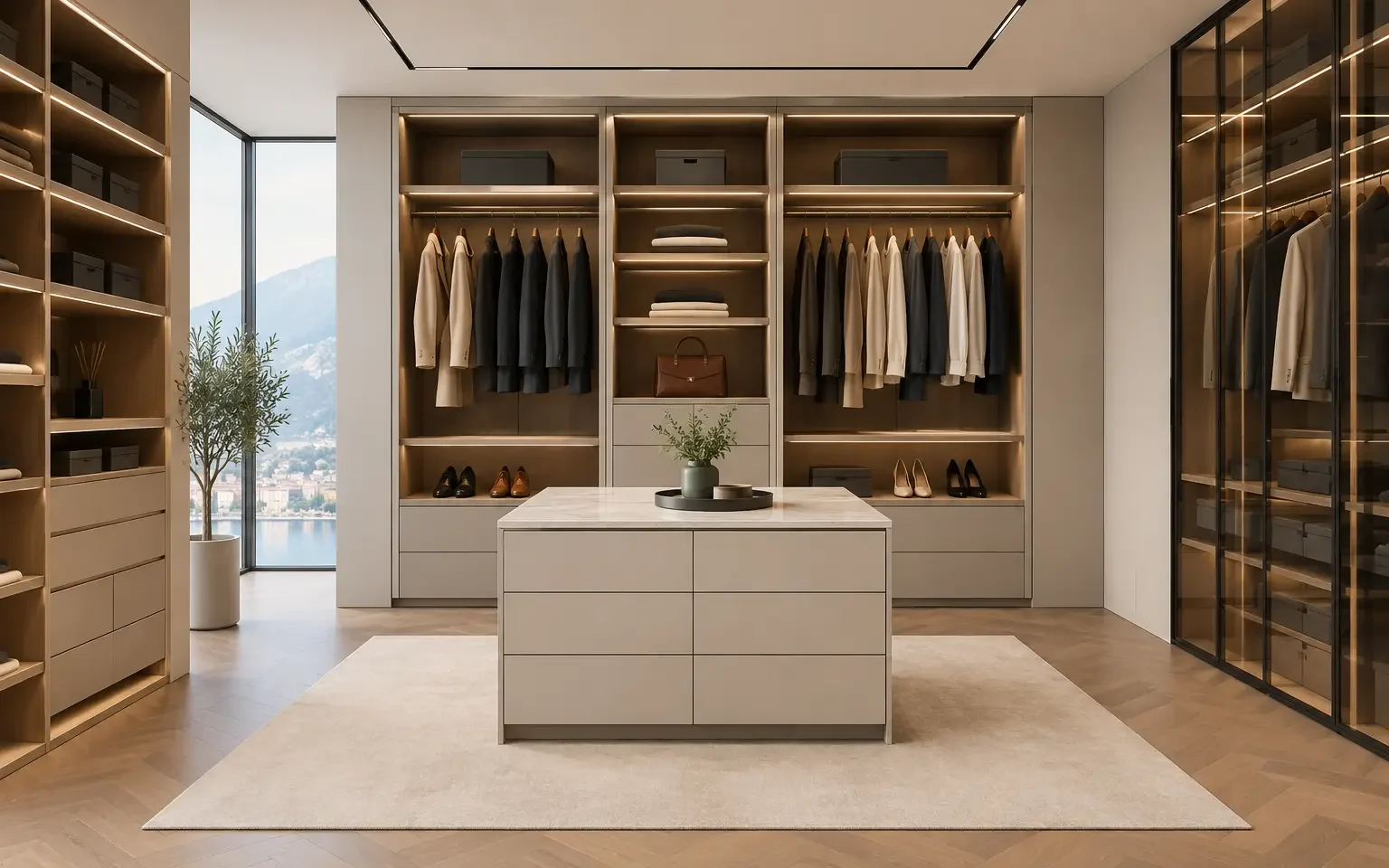
Layered lighting is usually best. General ceiling lighting provides overall illumination, while integrated LED lighting inside wardrobe bays, drawers, and shelves improves visibility exactly where it is needed. Vertical lighting near hanging sections can be especially useful because it illuminates the front of clothing rather than casting shadows from above.
Choose a warm, high-quality light temperature that flatters materials and skin tones without making white garments appear yellow. Motion-activated lighting can add convenience, particularly in drawers or glass-front sections. It should be discreet, however. The room should feel composed, not overly theatrical.
Add a Centerpiece Only When It Earns Its Space
A closet island can be one of the most useful elements in a dressing room. It creates a surface for packing, laying out an outfit, or placing accessories, while the drawers below can hold folded apparel or jewelry. Yet an island is not automatically a mark of luxury.
It works best when the room is large enough to maintain clear circulation on every side. In a compact space, a slim bench, a tailored ottoman, or a freestanding valet stand may offer the same sense of comfort without compromising movement. A seating element is especially valuable in a closet used for dressing, rather than simply storing clothes.
Mirrors deserve equal consideration. A full-length mirror should be placed where natural or layered lighting gives an accurate view of color and fit. If space permits, a mirror panel integrated into a door or wall can make the room feel larger without introducing an additional freestanding object.
Plan for Installation and Long-Term Flexibility
Custom closets are installed around real-world conditions, not showroom walls. Uneven floors, imperfect corners, trim profiles, outlet locations, and ceiling variations must all be addressed in the design and installation process. This is why a detailed field measurement and experienced installation team are essential to a polished result.
Flexibility also has value. Adjustable shelves allow a wardrobe to evolve as seasons, lifestyles, and storage needs change. Modular Italian-made systems can provide this adaptability while preserving a refined, fully integrated appearance. The most enduring layouts avoid overly specific compartments that become inconvenient when a collection changes.
At Häcker European Collection, closet planning is approached with the same discipline applied to high-end European cabinetry: understand the home, specify the right materials, and create a storage system that is beautiful to use every day. A showroom consultation can help translate inspiration into a layout, finish palette, and interior configuration suited to your space.
A well-designed luxury closet does not need to announce itself with excess. Its value is felt in the quiet confidence of doors that align, drawers that organize, lighting that guides, and a morning routine that begins with everything exactly where it belongs.