

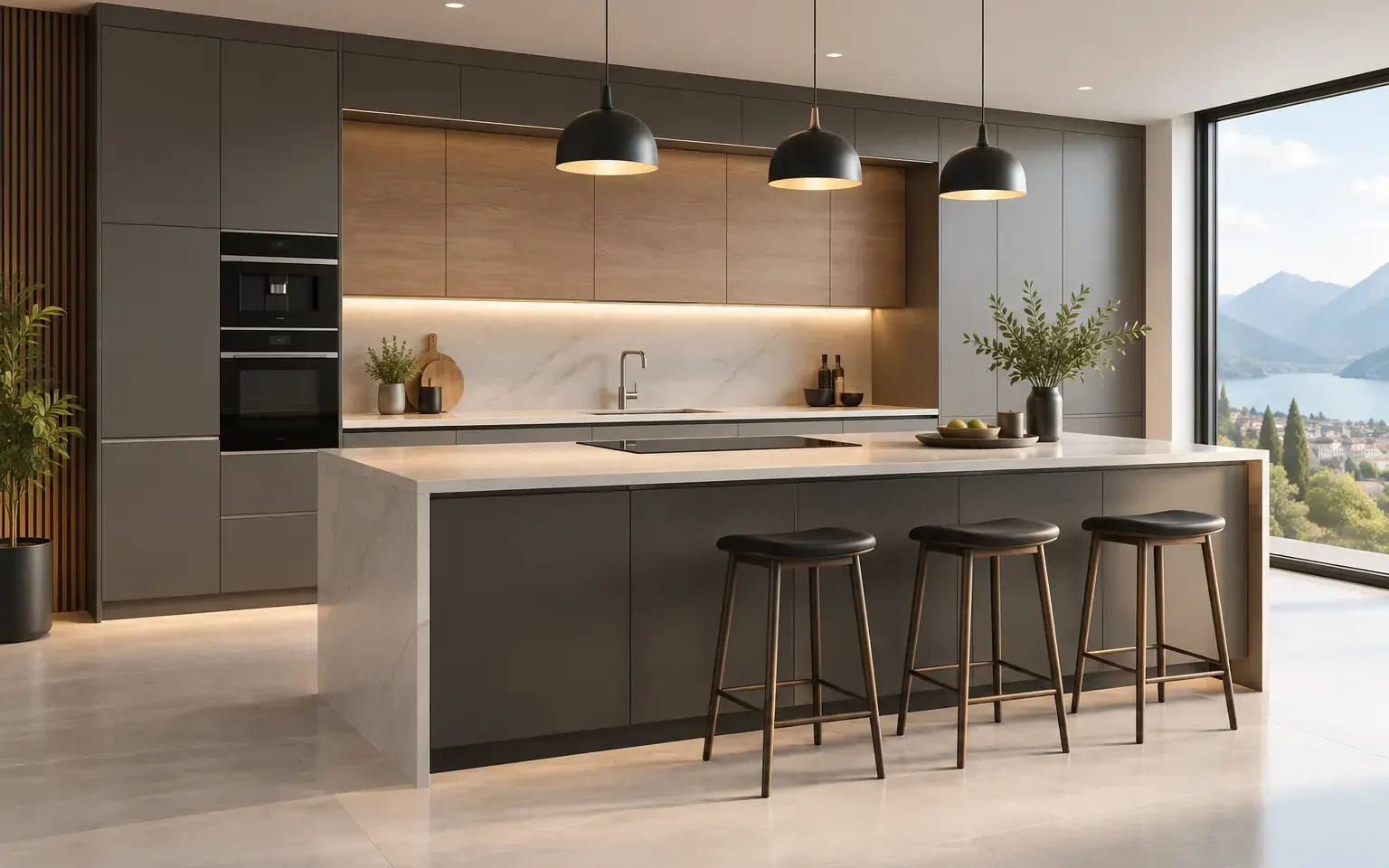
German Kitchen Cabinets Review for Luxury Homes
A kitchen can look expensive on installation day and still disappoint within a few years. Door alignment, drawer performance, interior organization, finish quality, and the precision of the installation all determine whether cabinetry continues to feel exceptional. This German kitchen cabinets review considers the details that matter most when a homeowner is planning a high-end renovation or custom home.
German-made cabinetry earns its reputation through engineered construction, disciplined manufacturing standards, and a distinctly modern approach to storage. It is not automatically the right choice for every project, but for homeowners who value refined design, customization, and long-term daily performance, it deserves serious consideration.
German Kitchen Cabinets Review: What Sets Them Apart
German kitchen cabinets are typically designed as a coordinated furniture system rather than a collection of individual boxes. Cabinet fronts, tall storage, drawers, internal fittings, appliances, lighting, and work zones are planned together. The result is a kitchen with visual continuity and a more purposeful layout.
The exterior is often what first attracts homeowners: clean slab doors, precise reveals, integrated handles, matte lacquer finishes, natural veneers, glass elements, and restrained color palettes. Yet the more meaningful difference is behind the fronts. Quality German cabinetry is engineered to make high-use areas more efficient, from deep drawers that organize cookware to tall pull-outs that bring pantry contents into view.
This design philosophy is especially valuable in open-plan homes, where the kitchen is part of the architecture and must hold its own beside living and dining spaces. A well-designed European kitchen can feel calm and tailored without sacrificing storage capacity.
Construction and Durability
Premium cabinetry should be judged by more than its door style. Look closely at the cabinet carcass, edge treatment, hardware, drawer systems, and the consistency of the finish. German manufacturers are known for tightly controlled factory processes, which can produce dependable dimensions and crisp alignment across a large installation.
Cabinet boxes are generally built from high-quality engineered panels selected for stability and durability. Edges are carefully finished to protect vulnerable areas from moisture and everyday wear. Drawers and hinges are designed for repeated use, often with soft-close mechanisms and adjustable hardware that allows fine tuning after installation.
That said, durability depends on the specific collection, finish, and project conditions. A lacquered door may offer a more polished appearance but require more mindful care than a textured melamine or laminate front. Wood veneers introduce warmth and natural variation, but they should be selected with an understanding that sunlight and age can subtly affect tone. A qualified designer can help match materials to the way a household actually lives.
Why precision matters in daily use
Small inconsistencies become visible in a modern kitchen. Uneven gaps, misaligned doors, or poorly planned fillers interrupt the clean geometry that makes contemporary cabinetry appealing. German cabinet systems are designed around precise tolerances, but the finished result still relies on accurate field measurement and skilled installation.
This is why product and service should be evaluated together. Even exceptional cabinetry can underperform when it is installed without careful coordination of flooring, walls, appliances, ventilation, plumbing, and countertops.
Design Flexibility Without a Custom-Built Look
One common misconception is that European cabinetry offers only a narrow, ultra-minimal aesthetic. In reality, the best German kitchen programs provide extensive flexibility within a disciplined system. Homeowners can create a quiet white kitchen, a dramatic dark-toned composition, a warm wood-forward space, or a layered combination of finishes and materials.
The customization is often architectural rather than ornamental. Tall cabinets can be planned around a refrigerator wall; an island can conceal storage on both sides; a coffee station can disappear behind pocket or folding doors; and integrated panels can allow appliances to recede into the composition. The kitchen feels custom because proportions, storage, and finishes respond to the room, not because every cabinet is built from scratch on site.
For Houston homes, this can be particularly useful in projects with generous square footage, large islands, and open entertaining areas. A thoughtful plan can prevent a large kitchen from feeling visually heavy. Tall cabinetry may be concentrated on one wall, while the island remains furniture-like and uncluttered.
Storage Is a Major Part of the Value
A premium kitchen should not require homeowners to choose between a beautiful presentation and practical storage. German systems are particularly strong in this area because drawers, pull-outs, internal dividers, waste solutions, corner mechanisms, and pantry configurations are considered early in the design process.
Rather than relying on deep base cabinets with hard-to-reach contents, many European kitchens favor wide, full-extension drawers. These make it easier to see and organize pots, dishes, dry goods, and small appliances. Interior accessories can be tailored for cutlery, spices, knives, plates, or recycling, depending on the household’s routines.
The best storage plan is not the one with the most accessories. It is the one that puts frequently used items close to where they are needed. Cooking tools belong near the cooktop, dish storage near the dishwasher, and everyday beverages near the refrigerator or coffee area. This level of planning has a direct effect on how the kitchen feels after the novelty of a renovation has passed.
What German Cabinetry Costs and Why
German-made kitchen cabinets occupy the premium segment. Pricing varies widely based on room size, door material, interior fittings, appliances, countertops, and installation conditions. A compact apartment kitchen with straightforward finishes is very different from a full custom-home kitchen with integrated refrigeration, specialty storage, and multiple cabinet zones.
The higher investment reflects more than the cabinets themselves. It can include advanced manufacturing, premium hardware, durable finishes, flexible planning options, and the degree of design coordination required to deliver a precise result. For a homeowner comparing bids, the fairest approach is to compare specifications, not only the bottom-line number.
Ask what is included in each proposal: design development, site verification, delivery, installation, appliance integration, internal accessories, trim details, and project management. A lower initial number can become less attractive if it excludes critical elements or leaves the homeowner to coordinate multiple trades.
The trade-offs to consider
German cabinetry is not the ideal answer for every budget or timeline. Imported products may involve longer lead times than locally stocked options, particularly when finishes or components are made to order. A premium design process also requires decisions early, since appliance specifications and site dimensions affect the cabinet plan.
The modern European look may not suit every architectural style, either. While warm woods and softer finishes can bridge contemporary and transitional interiors, homeowners seeking ornate, heavily detailed traditional cabinetry may prefer another direction. The right kitchen should feel appropriate to the home, not simply fashionable.
Choosing the Right Design Partner
The strongest German kitchen projects begin with an informed consultation. A designer should ask how you cook, entertain, store groceries, use small appliances, and move through the room. They should also review the building conditions, appliance plan, lighting, and adjacent spaces before finalizing a layout.
A showroom visit is valuable because it allows you to operate drawers, compare finishes under real light, and see how door profiles and handle choices affect the overall character of a kitchen. It also provides an opportunity to assess the level of detail behind the visible surfaces.
At Häcker European Collection, homeowners can work with a design team that brings German-made cabinetry, detailed planning, and installation coordination into one tailored process. That support can reduce uncertainty in a remodel where cabinetry is connected to nearly every other decision.
Is It Worth the Investment?
For homeowners who want a kitchen that combines modern aesthetics with engineered function, German cabinetry can offer compelling long-term value. Its strengths are not limited to clean lines or brand reputation. They are found in the accumulated details: doors that remain aligned, drawers that make storage easier, materials selected for their intended use, and a layout that supports the household every day.
The most useful next step is to bring preliminary room dimensions, inspiration images, and a realistic wish list to a professional consultation. Seeing the cabinetry in person and discussing how it can be tailored to your home will provide a clearer answer than any specification sheet alone.

