

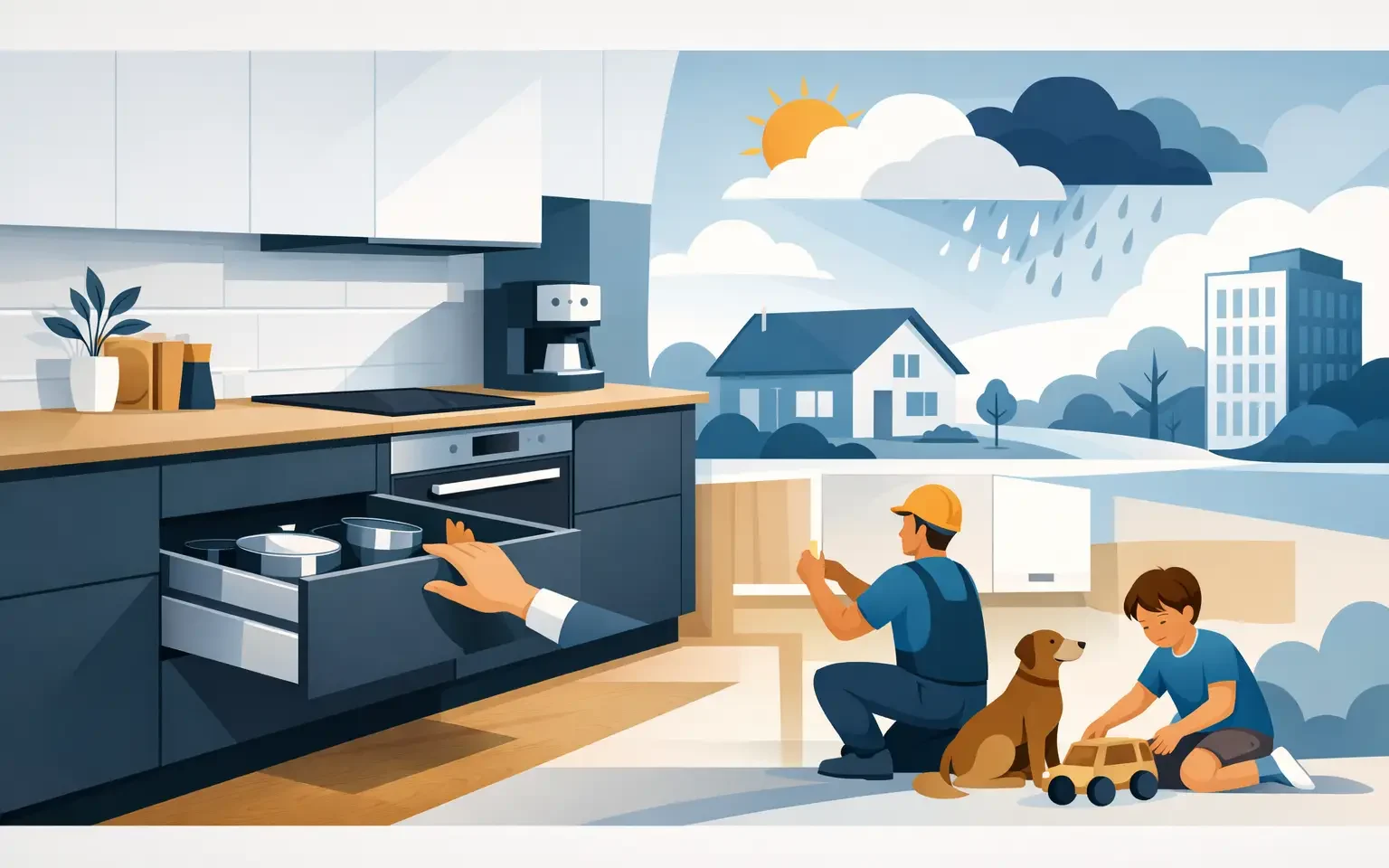
German Cabinet Durability: Built for Real Life
A kitchen can look immaculate on installation day and still reveal its weaknesses within a few years. Door edges begin to show wear, drawers lose their alignment, cabinet interiors absorb moisture, and finishes no longer feel as refined as they once did. German cabinet durability is designed to address this reality through a manufacturing approach that treats the kitchen as a high-use architectural system, not simply a collection of boxes and doors.
For homeowners investing in a primary residence, durability is not separate from luxury. It is what allows a modern kitchen to retain its visual clarity, quiet operation, and precise fit through daily cooking, entertaining, cleaning, and family life. The value of German-made cabinetry lies in the details that are easy to overlook in a showroom but unmistakable over time.
What Defines German Cabinet Durability?
German cabinetry has earned its reputation through disciplined engineering, controlled production, and rigorous quality standards. Premium manufacturers such as Häcker build their cabinets around repeatable precision: carefully specified panels, dependable hardware, exact drilling patterns, and production methods designed to maintain consistency from one cabinet to the next.
This matters because cabinetry works as an interconnected system. A door is only as reliable as its hinge mounting, the cabinet body supporting it, and the accuracy of the installation. A drawer may appear substantial at first, but its long-term performance depends on runner quality, load capacity, alignment, and how securely the cabinet is assembled. German-made kitchens are designed with these relationships in mind.
The result is not merely cabinetry that survives use. It is cabinetry that continues to operate with the clean, controlled feeling expected in a high-end kitchen.
Engineered Cabinet Bodies, Not Basic Boxes
The cabinet body is the foundation of a kitchen. It supports countertops, carries the weight of dishes and pantry goods, anchors hardware, and maintains the alignment of every visible front. Higher-quality German cabinet systems commonly use engineered wood panels selected for stability and manufactured to exact dimensions.
This construction helps resist the small movements that can affect lesser cabinetry over time. In a Houston home, where humidity and active indoor-outdoor living can place additional demands on interior materials, dimensional stability is especially valuable. Well-made cabinet components help doors remain properly spaced and drawers continue to glide as intended.
Durability also depends on protected edges and surfaces. Cabinet interiors, exposed edges, and sink-area components need to withstand cleaning, occasional spills, and the routine friction of everyday storage. A premium system considers these less visible areas as carefully as the exterior finish.
Precision Hardware Carries the Daily Load
A refined cabinet front is only part of the experience. The hinges, drawer runners, lift systems, and interior mechanisms determine how a kitchen feels every morning and evening.
German cabinet hardware is typically engineered for frequent use, with soft-close motion that is controlled rather than abrupt. Full-extension drawers make contents accessible from front to back, while stable runners help prevent the sagging or uneven movement often associated with heavily loaded drawers. Deep drawers used for cookware, dishes, or pantry storage place real weight on the system, making hardware quality a practical priority rather than a decorative upgrade.
There is a useful trade-off to consider here. Specialty interior accessories and mechanical storage solutions can bring impressive convenience, but they should be selected with purpose. The most durable kitchen is not necessarily the one with the most moving parts. It is the one where every drawer, pull-out, and lift mechanism supports the way the household actually cooks and stores.
Why Finish Quality Matters for Long-Term Performance
Cabinet finishes are often evaluated for color, sheen, and texture. Those qualities matter, particularly in a modern European kitchen where the visual effect depends on crisp lines and carefully balanced materials. Yet finish performance is equally important.
Premium German cabinetry offers a range of surfaces, including textured wood looks, matte lacquers, laminates, and other contemporary finishes. Each has different strengths. A high-quality laminate can be an excellent choice for households seeking a durable, low-maintenance surface with consistent color and strong everyday resistance. Matte finishes create a sophisticated, understated appearance, though some darker tones may require more attentive cleaning in high-touch areas. Wood-inspired finishes bring warmth and depth while offering a practical alternative to natural veneer in busy kitchens.
The right choice depends on lifestyle. A household with young children may prioritize easy-clean surfaces and integrated handles that reduce areas where residue collects. A client designing a formal entertaining kitchen may favor a more expressive lacquer or wood finish, while accepting a more intentional care routine. Luxury should feel personal, not prescribed.
Moisture Resistance Is Essential Near Water and Heat
No cabinet material is invulnerable to prolonged water exposure. Even exceptional cabinetry should not be left with standing water around a sink, dishwasher, or coffee station. What separates a better system is the way its materials, edges, construction, and installation details help reduce the risk of damage when normal kitchen accidents occur.
Design decisions play a role as well. Proper spacing around appliances, careful sealing at countertop transitions, ventilation where appropriate, and correctly installed plumbing all protect the cabinetry beneath. A durable kitchen requires both excellent manufacturing and professional execution in the home.
Testing and Standards Support the Reputation
German manufacturing is associated with systematic quality control for a reason. Cabinet components and hardware are commonly developed and tested to perform under repeated use, with production processes that emphasize accuracy, traceability, and consistency. This approach brings confidence to a major renovation decision: the cabinet seen in the showroom is intended to perform like the cabinet delivered to the home.
Sustainability also intersects with durability. Cabinetry that remains functional, visually current, and structurally sound for many years is less likely to be replaced prematurely. Responsible material sourcing and low-emission standards can further support a healthier, more considered home environment, particularly in kitchens where families spend substantial time.
For discerning homeowners, these qualities add up to a more meaningful form of value. The initial investment is directed toward a kitchen designed to stay relevant, rather than one that needs to be corrected, refaced, or replaced before its time.
Installation Determines Whether Quality Lasts
Even the finest German-made cabinet system cannot compensate for poor installation. Walls may be out of plumb, floors may vary, and existing homes often present conditions that need to be addressed before cabinetry is set. Accurate measuring, detailed planning, and experienced installation are therefore central to long-term performance.
Cabinets must be leveled, securely fixed, and adjusted with care. Door reveals should be consistent. Drawers should move freely. Panels and fillers should sit cleanly against walls and appliances. Countertop coordination, appliance specifications, and electrical and plumbing locations should be resolved before final installation whenever possible.
This is where a full-service design process is especially valuable. When the cabinetry, layout, finishes, appliance requirements, and installation details are coordinated from the beginning, the final kitchen is less likely to rely on last-minute compromises that affect function or appearance.
How to Protect Your Investment After Installation
Daily care for premium cabinetry is straightforward. Use a soft cloth and a mild cleaner suitable for the finish, then dry surfaces rather than allowing moisture to remain at seams or edges. Avoid abrasive pads, harsh solvents, and aggressive chemical cleaners that can dull or damage cabinet fronts.
Treat drawers and doors as precision components. Do not overload drawers beyond their intended use, hang heavily on open doors, or force a mechanism that is obstructed. If alignment changes over time, a professional adjustment can often restore proper operation before a minor issue becomes more noticeable.
Most importantly, choose a cabinet design that supports your real routines. Durable cabinetry performs best when storage is planned for the items it will hold, from heavy cookware to small appliances and pantry staples. Thoughtful organization reduces strain on the kitchen while making daily life more efficient.
A well-designed German kitchen should not ask you to admire it from a distance. It should invite use, hold its composure through the busiest parts of the day, and continue to look considered long after the renovation is complete. For homeowners planning a high-end kitchen in Houston, a consultation with an experienced designer can clarify which cabinet materials, finishes, and interior systems will deliver that lasting performance in their home.

