

Frameless Cabinets vs Framed Cabinets: Which Fits?
A kitchen can look polished in a showroom yet feel noticeably different once you begin using it every day. Door alignment, drawer access, usable storage, and the visual rhythm of the cabinetry all come back to one foundational decision: frameless cabinets vs framed cabinets. Neither construction is universally superior. The right choice depends on the architecture of your home, the look you want to achieve, and the level of precision expected from your kitchen remodel.
For homeowners investing in a modern, high-end kitchen, cabinet construction should be considered as carefully as finish, countertop material, or appliance selection. It affects how the kitchen performs for years to come.
What Is the Difference Between Frameless and Framed Cabinets?
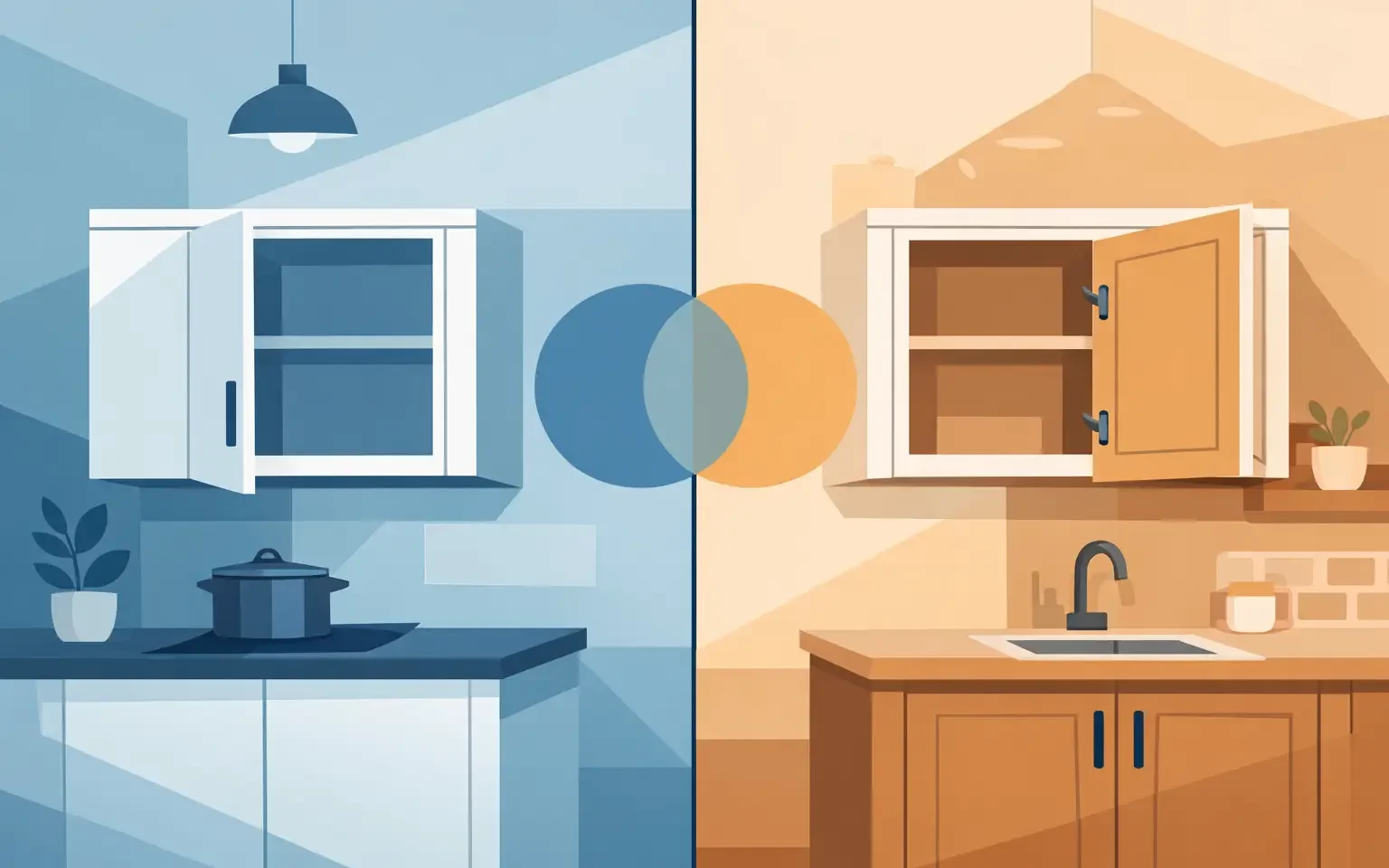
Framed cabinets, often associated with traditional American cabinetmaking, have a solid wood face frame attached to the front of the cabinet box. This frame creates a visible border around the cabinet opening and provides a surface for attaching doors and drawers. Depending on the door style, the frame may remain largely visible, partially visible, or nearly concealed behind full-overlay doors.
Frameless cabinets do not have a front face frame. Instead, the cabinet box itself provides structural support, while doors and drawers mount directly to the sides of the cabinet. This construction is common in European cabinetry and is sometimes called European-style or full-access cabinetry.
The distinction may sound technical, but it shapes nearly every visible and functional aspect of a kitchen. Frameless construction creates clean, continuous lines with narrow reveals between doors. Framed construction introduces more architectural detail and can be especially appropriate for classic or transitional interiors.
Frameless Cabinets vs Framed Cabinets for Modern Design
For a contemporary kitchen, frameless cabinetry is usually the natural fit. The lack of a face frame allows for broad, uninterrupted planes of cabinetry, precise door spacing, and a tailored built-in appearance. Slab doors, matte lacquers, textured wood veneers, glass fronts, and integrated handles all benefit from the disciplined geometry of frameless construction.
This is not simply an aesthetic preference. Premium German-made cabinet systems are engineered around tight tolerances and coordinated components. The result is cabinetry that can feel architectural rather than furniture-like, particularly when tall pantry units, appliance panels, and wall cabinetry are designed as one connected composition.
Framed cabinetry offers a different type of beauty. The face frame can lend depth and visual warmth, especially with Shaker doors, raised-panel profiles, painted finishes, or a more traditional millwork approach. In a historic home or a kitchen designed around classic detailing, the frame can feel intentional and appropriate rather than dated.
The key is alignment between construction and design direction. A highly minimal kitchen with handleless cabinetry and flush appliance integration generally benefits from frameless construction. A kitchen with decorative crown molding, furniture-style details, and inset doors may be better served by framed cabinetry.
Storage and Access: The Everyday Difference
Frameless cabinets are often valued for their full-access interiors. Without a face frame reducing the opening, drawers and pull-outs can use more of the cabinet width. The added usable space in any individual cabinet may be modest, but it becomes meaningful across a complete kitchen with multiple drawer bases, pantry pull-outs, and specialized interior organizers.
The wider opening also improves access. Large cookware, serving pieces, recycling systems, and deep drawer inserts are easier to reach without a face frame at the cabinet front. For homeowners who want an organized, high-function kitchen, this is one of the most practical advantages of European-style cabinetry.
Framed cabinets have a slight reduction in opening size because the face frame sits at the front of the box. This does not make them impractical, and skilled cabinetmakers can build excellent storage into framed systems. However, the frame is still a physical boundary that affects drawer width and pull-out clearance.
Storage planning matters more than construction alone. A well-designed framed kitchen will perform better than a poorly planned frameless one. The best layouts begin with how you cook, entertain, shop, and store rather than with a door style alone.
Durability Depends on Engineering, Not Just the Frame
A common assumption is that framed cabinets are automatically stronger because they include a hardwood face frame. In reality, cabinet durability depends on the quality of the cabinet box, the thickness and composition of the panels, joinery, back construction, hardware, and installation.
High-quality frameless cabinets are engineered with substantial side panels, durable edgebanding, precision-drilled connection points, and sophisticated hinge and drawer systems. Many premium European cabinet manufacturers use a standardized construction grid that supports accurate alignment and adjustable hardware. When properly specified and installed, this creates a very stable system designed for long-term daily use.
Framed cabinetry can also be exceptionally durable, particularly when built with quality plywood boxes, hardwood frames, and carefully fitted joinery. The issue is not whether a frame exists. It is whether the cabinet has been manufactured and installed to a standard appropriate for the investment.
For either style, examine the details that affect real performance: drawer load capacity, hinge adjustment, moisture-resistant materials around sinks and dishwashers, interior panel thickness, finish quality, and the experience of the installation team. A beautiful door cannot compensate for weak construction behind it.
Installation and Fit Require Different Expertise
Frameless cabinetry rewards precision. Because the door and drawer reveals are narrow and consistent, cabinet boxes must be leveled, plumbed, and aligned with care. Walls and floors in existing homes are rarely perfectly straight, particularly in renovation projects. A qualified design and installation team plans for those conditions with fillers, scribe details, careful sequencing, and accurate field measurements.
This precision is one reason a full-service process is valuable. Cabinetry should be coordinated with appliance specifications, countertop thickness, lighting, plumbing, flooring, and wall conditions before installation begins. A sophisticated design can quickly lose its refinement if these decisions are handled independently.
Framed cabinets can be somewhat more forgiving visually because the face frame creates a defined boundary at each opening. Still, quality installation remains essential. Uneven doors, misaligned drawers, and poor filler details are visible in any kitchen, regardless of cabinet construction.
Cost Considerations for a Premium Remodel
Price varies widely within both categories. A basic frameless cabinet line is not automatically comparable to a premium German-made system, just as a framed cabinet with decorative doors is not necessarily a luxury product. Materials, finish technology, hardware, customization, design support, and installation all influence the final investment.
Frameless cabinetry can deliver strong value in a high-end remodel because it supports customized storage, integrated appliances, clean paneling, and a cohesive modern presentation. Its manufacturing approach is also well suited to modular planning, allowing designers to create refined compositions from precisely engineered cabinet elements.
Framed cabinetry may be the better allocation of budget when the home calls for traditional craftsmanship, intricate door profiles, or custom furniture details. If you are restoring a period property, preserving architectural continuity may matter more than gaining a small amount of interior cabinet access.
Rather than comparing only price per cabinet, consider the complete outcome. Ask whether the system delivers the storage, appearance, finish quality, and service life you expect from your renovation.
Which Cabinet Style Is Right for Your Home?
Choose frameless cabinetry when you prefer a modern European aesthetic, wider drawer access, streamlined appliance integration, and precise contemporary detailing. It is especially compelling for open-plan homes, urban residences, new construction, and renovations where the kitchen is intended to function as a central design feature.
Choose framed cabinetry when you are drawn to classic American, farmhouse, transitional, or formal traditional interiors. It may also be the right choice when inset doors, decorative profiles, or a furniture-inspired kitchen are central to the design vision.
There are also middle-ground situations. A homeowner may want the efficiency of frameless cabinet interiors with a warm wood finish that softens the overall look. Another may choose full-overlay framed doors to achieve a cleaner appearance without fully committing to a European cabinet system. The most successful kitchens do not follow a trend blindly. They establish a clear design language and carry it through every decision.
At Häcker European Collection, the design conversation begins with how you want your home to look and work, then translates that vision into cabinetry, storage, finishes, and installation details that belong together. Bring your plans, inspiration images, and questions to a consultation, and let the construction choice support a kitchen that remains as satisfying to use as it is to see.

