

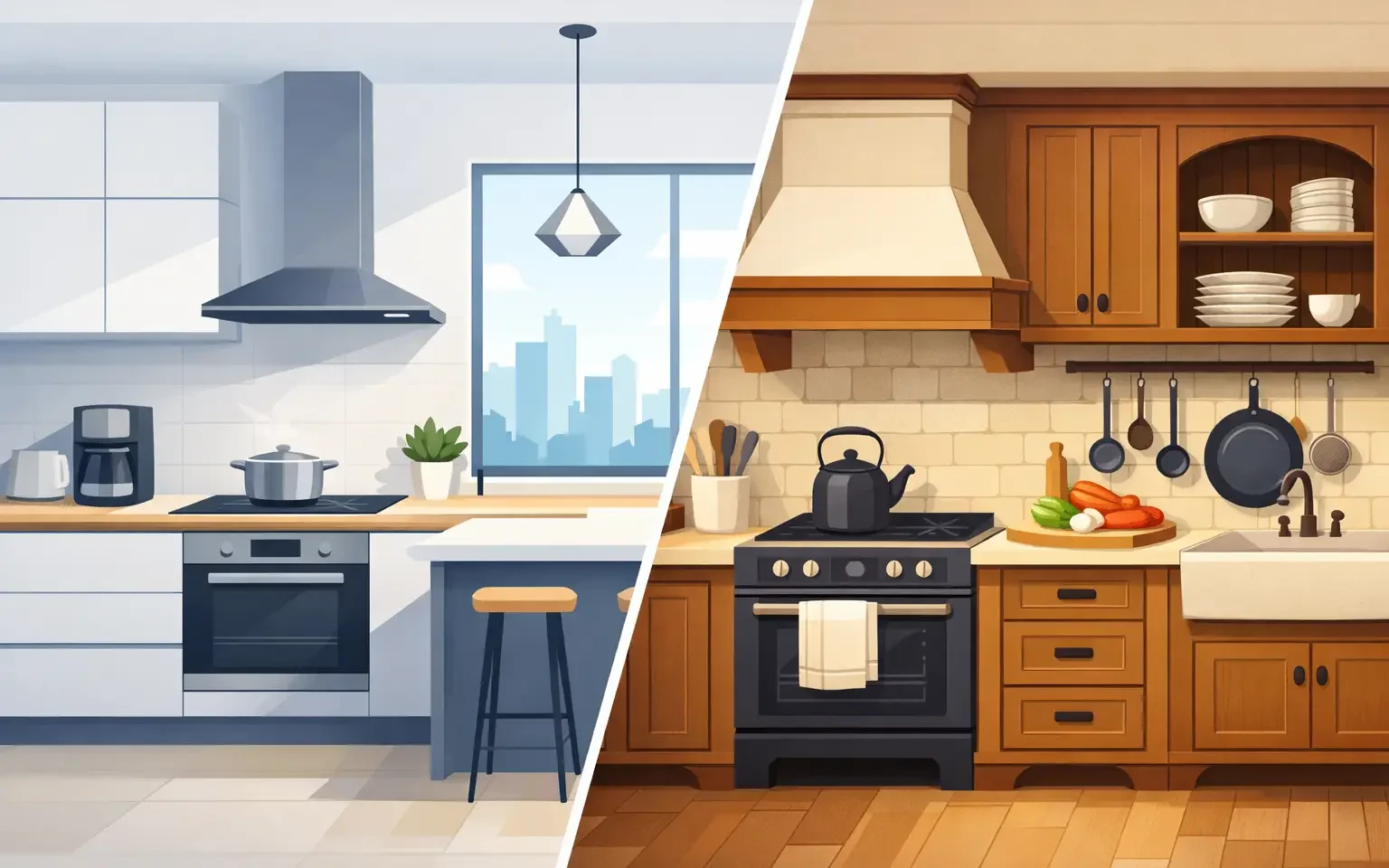
European Kitchen vs Traditional Kitchen Compared
A kitchen remodel often begins with a visual preference: clean, handleless cabinetry or detailed doors with a furniture-like presence. But the European kitchen vs traditional kitchen decision reaches far beyond appearance. It affects how the room is planned, how storage performs, what the cabinetry can accommodate, and how the finished space supports daily life for years to come.
For homeowners investing in an upscale renovation or custom home, the right choice is rarely about following a trend. It is about selecting a design language and construction approach that fits the architecture of the home, the way the household cooks and entertains, and the level of refinement expected from the finished project.
European Kitchen vs Traditional Kitchen: The Core Difference
A European kitchen is typically defined by contemporary design, precision-built cabinetry, streamlined proportions, and an emphasis on efficiency. Many European systems use frameless cabinet construction, where doors and drawers attach directly to the cabinet box. This allows for wider drawer interiors, clean reveals between components, and a highly integrated appearance.
A traditional kitchen usually draws from American, English, or classic European architectural references. It often features framed cabinetry, visible rails and stiles, raised or recessed panel doors, decorative molding, and hardware that becomes a focal point rather than disappearing into the design. The effect can be warm, established, and richly detailed.
Neither approach is inherently better. A European kitchen is often the stronger fit for clients seeking a modern, tailored interior with maximum usable storage. A traditional kitchen may be more appropriate for a home with historic character, formal millwork, or a preference for ornament and visual texture. The most successful projects consider the entire residence, not simply the kitchen in isolation.
Layout and Visual Composition
European kitchen design tends to treat cabinetry as an architectural surface. Tall pantry units, appliance walls, and long runs of base cabinetry can be aligned with exceptional consistency. Integrated appliances, flush panels, and restrained detailing allow the room to feel orderly even when it contains substantial storage and high-performance equipment.
This approach is particularly effective in open-concept homes, where the kitchen remains visible from the living and dining areas. A carefully designed wall of cabinetry can read more like custom furniture than a collection of individual cabinets. Matte lacquers, textured wood finishes, glass, metal accents, and slim worktops add depth without creating visual clutter.
Traditional kitchens generally build their composition through detail. Crown molding, hood surrounds, decorative end panels, glass-front cabinets, furniture-style islands, and contrasting finishes can create a layered, welcoming room. These elements provide character, especially in larger kitchens where a purely minimal scheme may feel too spare.
The trade-off is visual density. Traditional details require thoughtful proportion and disciplined editing. In a smaller kitchen, heavy moldings, numerous door profiles, and multiple finish changes can make the room feel busy. A European plan often creates more visual calm in compact or open spaces, while a traditional plan can deliver greater softness and ceremony when the architecture supports it.
Cabinet Construction and Everyday Storage
The distinction between cabinetry styles is not only about the door front. Construction affects capacity, durability, and the experience of using the kitchen every day.
European-style cabinetry frequently relies on a frameless system. Without a face frame at the front of the cabinet box, drawers and pull-outs can use more of the available interior width. Full-extension drawers, soft-close hardware, internal dividers, pull-out pantries, and specialized organizers create a place for cookware, spices, dishes, recycling, and small appliances.
German-made cabinetry is particularly respected for precise engineering and repeatable manufacturing standards. The best systems pair clean exterior design with practical interior planning: deep drawers for pots, organized cutlery inserts, internal drawers behind tall doors, and concealed mechanisms that keep the kitchen composed when closed.
Traditional cabinetry is often framed, with a solid face frame reinforcing the front of the box and shaping the cabinet opening. Quality varies widely by manufacturer and construction method. A well-built traditional cabinet can be exceptionally durable and beautiful, but its framing may slightly reduce the clear opening for drawers and pull-outs compared with a comparable frameless design.
For homeowners, the more useful question is not whether one style has more storage on paper. It is whether the storage is designed around real routines. A serious cook may need broad, deep drawers close to the cooktop. A family may prioritize accessible snack storage and an organized recycling center. A frequent host may benefit from a concealed beverage station, a serving pantry, or cabinetry that keeps countertop appliances out of sight.
Materials, Finishes, and Maintenance
European kitchens often favor smooth, controlled surfaces. Popular options include lacquered fronts, melamine and laminate finishes, wood veneers, textured laminates, glass, and finely finished wood-look surfaces. These materials can deliver a sophisticated palette from soft neutrals to deep charcoal, natural oak, or saturated contemporary color.
A high-end European finish is not automatically delicate. Many modern surfaces are selected for their resistance to daily wear, ease of cleaning, and consistent appearance across large cabinet runs. Still, each material has its own care requirements. High-gloss fronts show fingerprints more readily than matte finishes, while natural veneers offer warmth but benefit from appropriate cleaning products and a stable indoor environment.
Traditional kitchens commonly feature painted wood, stained wood, or decorative finishes that emphasize grain, profile, and craftsmanship. Painted cabinetry can feel timeless, but it may require touch-ups over time, especially on high-contact doors and around busy work zones. Stained wood can age gracefully, though color variation and grain are part of its character rather than defects to eliminate.
The best material choice depends on the desired mood and the household’s tolerance for maintenance. A home with young children, active entertaining, and heavy daily cooking may favor durable matte surfaces and simple door profiles. A homeowner drawn to patina and visual nuance may find that painted or natural wood traditional cabinetry rewards the added care.
Cost, Customization, and Long-Term Value
Both European and traditional kitchens can range from modest to very high-end. Price depends on cabinet construction, finish selection, interior accessories, appliance integration, countertop material, installation complexity, and the amount of custom work required.
European cabinetry often represents strong value in the premium market because the system is engineered for customization and efficient production. Cabinet heights, widths, depths, finishes, and internal configurations can be coordinated precisely without relying on extensive on-site modification. That precision is valuable when designing an appliance wall, a large island, or a full-height pantry composition.
Traditional cabinetry can become more expensive when a project calls for substantial ornament, custom paint matching, intricate hood details, decorative furniture pieces, or highly specialized millwork. Those elements may be exactly what a classic home needs, but they should be budgeted as architectural features rather than treated as standard cabinetry.
Long-term value also comes from design longevity. A kitchen does not need to be plain to remain relevant, nor does it need to imitate a past era to feel enduring. The goal is a composition with strong proportions, quality materials, dependable hardware, and a layout that continues to work as the household changes.
When a Transitional Kitchen Is the Better Answer
Many Houston homeowners do not need to choose between strict minimalism and fully traditional detailing. A transitional kitchen can combine the clarity of European planning with warmer, more familiar finishes. Consider flat or subtly textured wood cabinetry paired with a stone backsplash, a tailored island, and restrained hardware. Or use a modern frameless cabinet system with a softer neutral palette and a more classic light fixture.
This middle ground works especially well in homes that are being renovated rather than built from the ground up. It respects existing architecture while bringing the storage performance, appliance integration, and clean organization expected from a modern kitchen.
The important distinction is intentionality. A transitional kitchen should feel edited, not undecided. Limit competing door styles, choose a clear finish hierarchy, and ensure that every decorative element supports the overall architecture.
How to Choose the Right Direction
Begin with the home itself. A sleek contemporary residence may call for integrated panels, broad drawer banks, and a minimal material palette. A Mediterranean, colonial, or traditionally detailed property may benefit from framed doors, warmer woods, or a more expressive hood and island design.
Then consider how you live. If visual calm, concealed storage, and appliance integration are priorities, European cabinetry is likely to be compelling. If you value decorative detail, furniture-inspired features, and an established sense of warmth, traditional cabinetry may feel more personal. Clients who want both can create a carefully balanced transitional scheme.
A showroom consultation is valuable because proportions, finishes, drawer systems, and door construction are easier to judge in person than on a screen. At Häcker European Collection, a designer can help translate architectural style, functional needs, and investment goals into a kitchen plan that feels considered from the first cabinet to the final installation.
The right kitchen should not ask you to live around its design. It should bring order to the everyday, reflect the character of your home, and make each return to the room feel like a worthwhile investment.

