

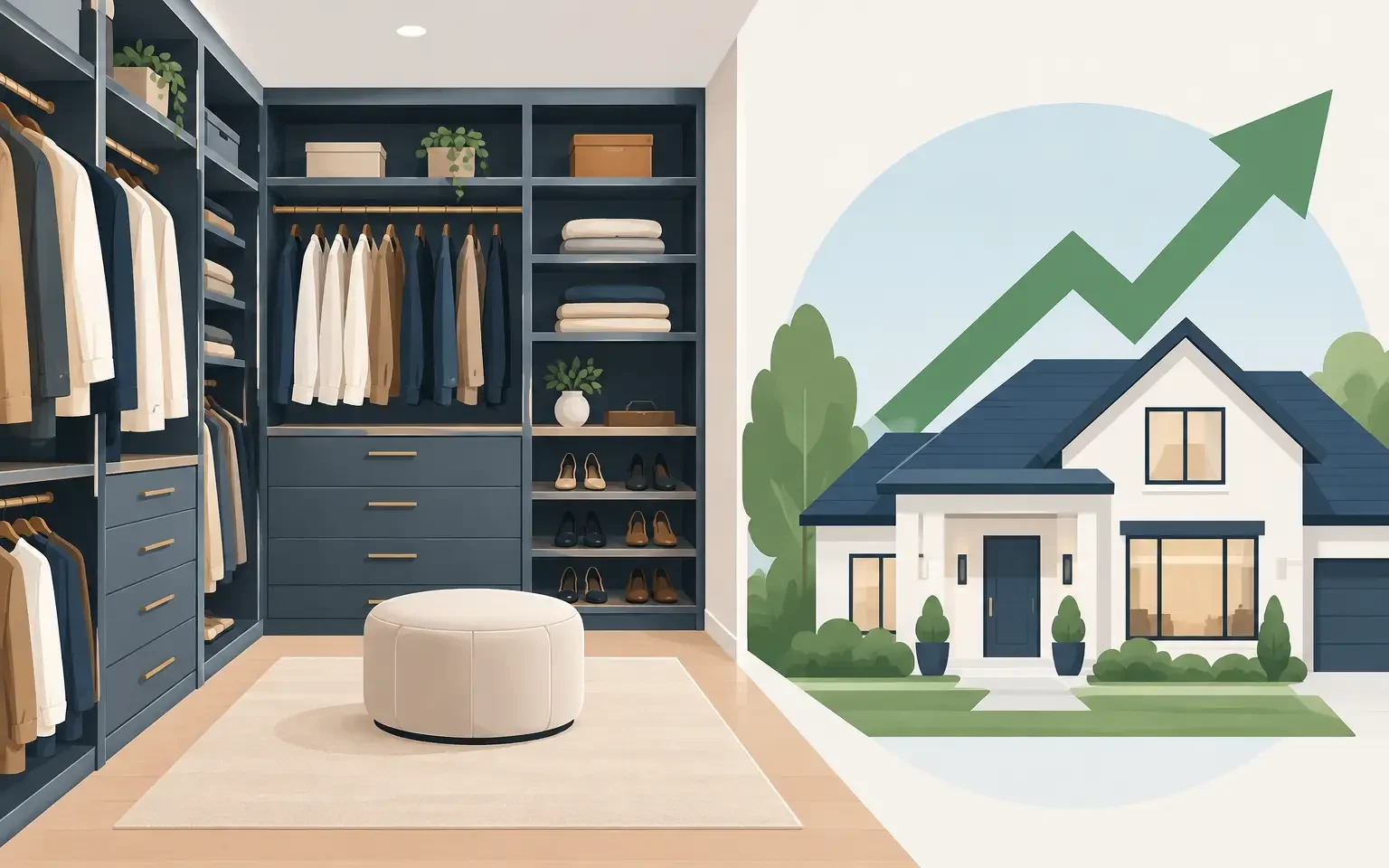
Do Custom Closets Add Value to Your Home?
A primary closet is often where a homeowner feels the difference between a house that merely has storage and one that supports daily life. So, do custom closets add value? In many cases, yes – especially when the system is thoughtfully designed, properly installed, and aligned with the level of the home. The value is not limited to a future sale. It begins with a more orderly, efficient, and considered way of living now.
For homeowners investing in an upscale renovation or custom home, a closet should be treated as part of the interior architecture. It is a functional space, but it also contributes to the quality, consistency, and perceived finish of the entire residence.
Do Custom Closets Add Value at Resale?
Custom closets can strengthen a home’s appeal to prospective buyers, particularly in competitive luxury and upper-middle-market neighborhoods. Buyers increasingly expect more than a basic rod and shelf in a primary suite. They notice whether storage is sufficient, whether the layout feels intentional, and whether materials complement the rest of the home.
That said, a custom closet should not be viewed as a guaranteed dollar-for-dollar resale investment. Appraised value is influenced by many factors, including location, square footage, comparable sales, overall condition, and the level of the surrounding market. A beautifully designed wardrobe system may not receive a separate line item in an appraisal, yet it can improve how buyers experience the home and distinguish it from similar listings.
In practical terms, a well-executed closet can help a property show better, feel more complete, and reduce the impression that a buyer will need to undertake additional improvements after closing. Those advantages can matter when buyers are comparing homes with similar layouts and price points.
The Value Begins With Everyday Function
The strongest argument for a custom closet is often not resale. It is the way a tailored system simplifies the daily routine. Generic closets are designed around broad assumptions. A custom solution is planned around the people using it: their wardrobe, accessories, seasonal storage needs, habits, and available footprint.
A considered design gives every category a place. Long garments receive proper hanging clearance. Shirts, jackets, and trousers can be arranged at appropriate heights. Drawers protect smaller items and create visual calm. Shelving can be proportioned for handbags, folded pieces, or shoes rather than forcing each item into a standard configuration.
This level of planning is particularly valuable in primary suites, where clutter can undermine an otherwise refined interior. A closet that makes dressing and organizing easier also makes the adjoining bedroom feel more composed. For busy professionals and families, that daily benefit is substantial.
Better Space Planning Can Outperform More Square Footage
A larger closet is not always a better closet. Poorly planned corners, oversized shelves, inaccessible upper storage, and inadequate hanging space can waste a surprising amount of room. Customizable closet systems allow the design to work harder within the existing envelope.
In a reach-in closet, this may mean creating distinct zones rather than relying on one continuous hanging rod. In a walk-in closet, it can mean balancing open display areas with enclosed storage, preserving circulation, and ensuring that each wall serves a clear purpose. The result is a space that feels generous because it is efficient, not simply because it is large.
What Makes a Custom Closet Feel High-End?
Not all custom closets create the same impression. The difference lies in the quality of the design, materials, hardware, and installation. In a premium home, a closet should feel integrated with the rest of the interior rather than like a modular add-on.
Italian-made systems such as Pianca bring a furniture-oriented approach to wardrobe design. Refined finishes, precisely engineered components, coordinated doors, drawers, and interior accessories create a more architectural result. When the exterior finish, interior organization, and adjacent bedroom furnishings work together, the closet becomes a continuation of the suite rather than a separate utility room.
Material selection also matters. Durable panels, well-finished edges, stable shelving, and reliable drawer mechanisms retain their appearance under everyday use. Premium hardware should operate quietly and consistently. These details may seem subtle during a showroom visit, but they are the features homeowners interact with every morning and evening.
Lighting is another opportunity to elevate the experience. Integrated lighting can improve visibility in deep wardrobes, drawers, and display compartments while adding a tailored, modern atmosphere. It should be planned early, however, especially when electrical work or controls need to be coordinated with a broader renovation.
Where Custom Closets Add the Most Appeal
Primary bedroom closets usually offer the clearest opportunity because they are closely tied to comfort, privacy, and a home’s perceived level of luxury. A well-designed walk-in closet can become one of the most memorable spaces in a home tour.
Secondary bedroom closets can also benefit from a thoughtful upgrade, particularly in custom homes or residences designed for long-term family living. Here, the goal may be durable, adaptable storage rather than a highly personalized wardrobe environment. Home offices, guest suites, mudrooms, and dressing areas can also gain value from custom organization when the design answers a specific need.
The right scope depends on the property. Installing an elaborate dressing room in a modest home with aging kitchens and baths may not be the best use of a renovation budget. Conversely, a generic wire-shelf closet can feel noticeably out of place in a newly remodeled, high-end primary suite. The most successful projects maintain a consistent standard throughout the home.
Design Choices That Protect Long-Term Value
Personalization is central to a custom closet, but a few choices help preserve broad appeal. Start with a layout that supports flexible use. Adjustable shelving, well-proportioned hanging sections, practical drawers, and concealed storage remain useful even if a future owner has different preferences.
Finishes should complement the home’s larger material palette. Warm wood tones, refined textured surfaces, soft neutrals, glass, and restrained metal details tend to age well when selected with the surrounding architecture in mind. Highly specific colors or novelty features can be beautiful, but they should serve a genuine design concept rather than a short-lived trend.
It is also wise to reserve some capacity for change. Wardrobes evolve with seasons, work routines, and life stages. A closet system that can be adjusted or expanded has more lasting utility than one designed too rigidly around a single collection of clothing.
Installation Is Part of the Investment
Even exceptional cabinetry can lose its impact if it is poorly measured or installed. Walls are rarely perfectly square, floors may vary, and lighting, outlets, doors, and HVAC elements all affect the final result. A professional design and installation process accounts for those conditions before materials are ordered.
The most refined closets are the product of coordinated decisions: accurate field measurements, careful space planning, finish selection, technical review, and precise installation. Doors should align properly, drawers should operate smoothly, and the system should meet the wall and floor with a clean, intentional finish.
This is where a showroom-based consultation offers real value. Homeowners can compare finishes and configurations in person, discuss the way they use their space, and work with a designer who understands both the aesthetic and technical requirements of a premium interior project.
A Custom Closet Is a More Complete Home
A custom closet may not transform a home’s resale value in isolation, but it can make the entire residence feel more finished, functional, and desirable. It communicates that the home has been designed around real life, with the same attention given to private spaces as public ones.
For a renovation or new build, the best time to consider a custom closet is before the final details are set. Bring your wardrobe, routines, and long-term plans into the design conversation, then let the space be shaped by how you want to live in it. A thoughtful Italian-made closet is not simply a place to store belongings. It is an investment in a home that works beautifully every day.

