

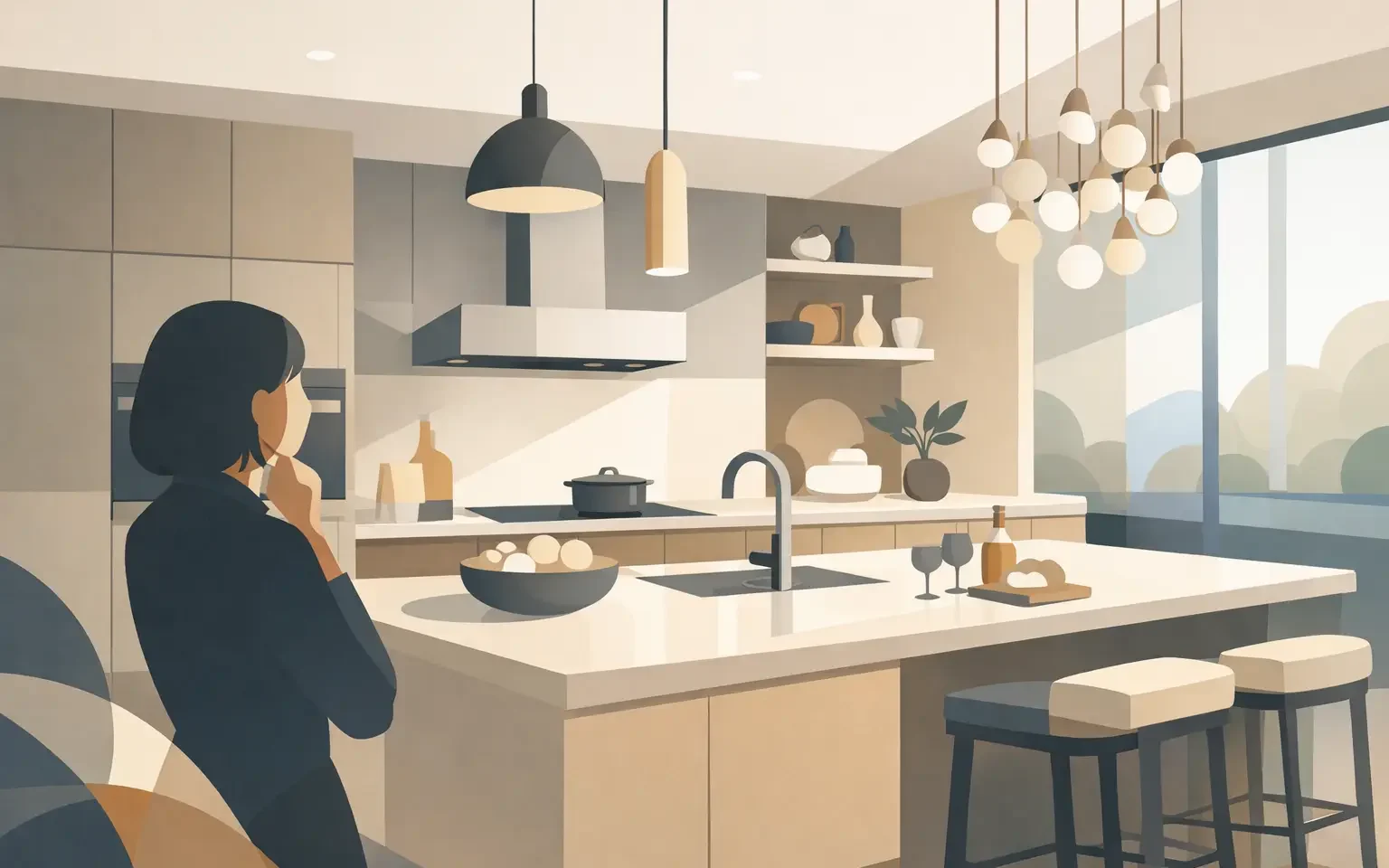
What Defines the Best Luxury Kitchen Design?
A luxury kitchen should make a demanding daily routine feel considered. Doors should close with confidence, storage should anticipate how you cook, and every finish should hold its character under real use. The best luxury kitchen design is not defined by a single statement island or an expensive appliance package. It is a disciplined combination of planning, material quality, cabinetry engineering, and installation.
For homeowners investing in a major renovation or custom home, the goal is not simply a kitchen that photographs well. It is a high-end space that performs beautifully for years, supports the way the household lives, and feels integrated with the architecture of the home.
Best Luxury Kitchen Design Starts With a Better Plan
The most successful kitchens are resolved before cabinetry is ordered. A thoughtful plan accounts for traffic flow, natural light, adjacent rooms, appliance clearances, and the routines that happen before and after cooking. This early work prevents a common luxury renovation mistake: selecting beautiful materials first, then forcing them into an impractical layout.
A designer will typically begin by understanding who uses the kitchen and how. A family that prepares meals every evening may prioritize a generous prep area, a large refrigerator, and deep pantry storage. Homeowners who entertain often may need a separate beverage zone, concealed cleanup space, and seating that does not interrupt the cook’s work area. A compact urban kitchen can still feel exceptionally luxurious, but it requires more precise storage planning and carefully scaled details.
The work triangle remains useful, but it is not the only planning principle. Contemporary kitchens often function through zones: refrigeration and pantry storage, preparation, cooking, cleanup, and serving. When these zones are arranged with enough landing space and unobstructed movement, the kitchen becomes calmer and more efficient.
Cabinetry Is the Foundation of a High-End Kitchen
Cabinetry occupies most of the visual field in a kitchen and carries the greatest share of daily wear. That is why premium cabinetry deserves more attention than decorative hardware or trend-driven accents. The difference is often felt rather than immediately seen: precise reveals, consistent finishes, stable interiors, reliable drawers, and doors that remain aligned over time.
German-made cabinetry is especially well suited to modern luxury kitchens because it brings engineering discipline to the visible design. Clean-lined door systems, refined proportions, integrated lighting options, and highly organized interiors allow the kitchen to appear minimal without sacrificing function. Full-extension drawers, internal dividers, pull-out systems, and concealed waste solutions keep the room composed even during busy mornings and large gatherings.
Material selection should reflect both the desired aesthetic and the level of use. Matte lacquer, textured wood, glass, ceramic-inspired surfaces, and sophisticated laminates can all be appropriate in a premium setting. The right choice depends on maintenance expectations, available light, and the character of the home. A pale matte finish can make a Houston kitchen feel open and cool, while natural wood tones bring warmth to a sleek architectural space. In active households, durable, easy-care finishes may offer better long-term value than delicate surfaces that require constant attention.
Customization Should Solve Real Problems
Customizable cabinetry is valuable when it improves the fit of the room. Ceiling-height storage can eliminate awkward gaps and increase capacity. A tailored pantry can organize dry goods and small appliances. Pocket or retractable doors can conceal a coffee station or work area when guests arrive.
Not every kitchen needs every specialized feature. Overfitting the design with novelty accessories can consume budget without improving the experience. The best investment is storage designed around the homeowner’s actual cookware, groceries, entertaining needs, and habits.
A Refined Palette Creates Lasting Appeal
Luxury does not require visual excess. Many of the most enduring kitchens rely on a restrained palette with variation in texture, depth, and light. Consider warm oak paired with soft neutral cabinetry, or deep charcoal doors balanced by pale stone and brushed metal details. These combinations feel layered without becoming busy.
The countertop and backsplash should be evaluated as a composition, not separate purchases. A dramatic natural stone can become the focal point when cabinetry is quiet and architectural. Conversely, a minimal porcelain or engineered surface can create a clean canvas for richly textured wood cabinetry. Full-height backsplashes often deliver a more tailored result than a short strip behind the counter, particularly when the slab pattern is selected with care.
Color should also respond to the home beyond the kitchen. A kitchen open to a living room benefits from a material language that relates to flooring, millwork, and furniture. A beautiful kitchen that feels disconnected from the rest of the house will not deliver the cohesive result expected from a premium renovation.
Appliances and Lighting Must Be Designed In, Not Added Later
Appliances are central to performance, but their visual treatment matters just as much. Integrated refrigeration, panel-ready dishwashers, flush-mounted cooktops, and carefully concealed ventilation help preserve the clean planes of a modern European kitchen. In some projects, a professional range becomes an intentional focal point. In others, understated integrated appliances better suit the architecture. Neither approach is inherently superior.
Ventilation is one area where aesthetics cannot outweigh technical requirements. The hood must be appropriately sized and specified for the cooking equipment, while ducting should be planned early with the renovation team. A quiet, effective ventilation solution protects interior finishes and makes the kitchen more pleasant to use.
Lighting deserves the same level of coordination. Ambient lighting establishes the room’s overall mood, task lighting supports work at countertops and cooktops, and accent lighting gives cabinetry depth after dark. Under-cabinet lighting, illuminated interiors, and pendant fixtures can all work together when controlled thoughtfully. The objective is not brightness alone. It is a kitchen that feels inviting while allowing precise, comfortable work.
Details Separate Premium Design From Decoration
Small decisions have an outsized effect in a luxury kitchen. The thickness and edge profile of a countertop, the alignment of cabinet doors, the finish of a faucet, and the placement of outlets all influence whether the room feels resolved. These details should support the design rather than compete for attention.
Hardware is a useful example. Handleless cabinetry offers a crisp, architectural appearance and makes sense in highly contemporary homes. Slim pulls can introduce tactile warmth and may be more practical for some households. The choice should be consistent with the door style, appliance detailing, and overall level of formality.
A well-designed island also requires restraint. It may serve as a prep surface, casual dining area, storage hub, or social center, but it does not need to perform every role at once. An oversized island can restrict circulation, while a smaller island with excellent proportions may make the entire room feel more generous.
Installation Protects the Investment
Even exceptional cabinetry and materials can underperform if installation is rushed or poorly coordinated. Walls may need correction, flooring transitions must be planned, appliance specifications must be verified, and countertop templates should follow accurate cabinet installation. These are not minor construction details. They determine the alignment, durability, and finished appearance of the kitchen.
A full-service design and installation process gives homeowners clearer accountability from the first consultation through final adjustments. It also helps prevent costly changes when cabinetry, appliances, plumbing, electrical work, and stone fabrication intersect. At Häcker European Collection, the process centers on pairing modern German-made kitchen cabinetry with detailed design guidance and professional project coordination, so clients can make confident decisions without managing every technical variable alone.
Before approving a final kitchen design, ask to see how storage is organized, where appliances will vent, how lighting will be controlled, and which finishes will receive the most wear. Those answers reveal more about quality than a polished rendering ever can.
The right luxury kitchen is not a collection of expensive selections. It is a space tailored to your home, your habits, and your standards. A consultation with an experienced kitchen designer can turn that expectation into a plan with the right proportions, materials, and performance from the start.

