

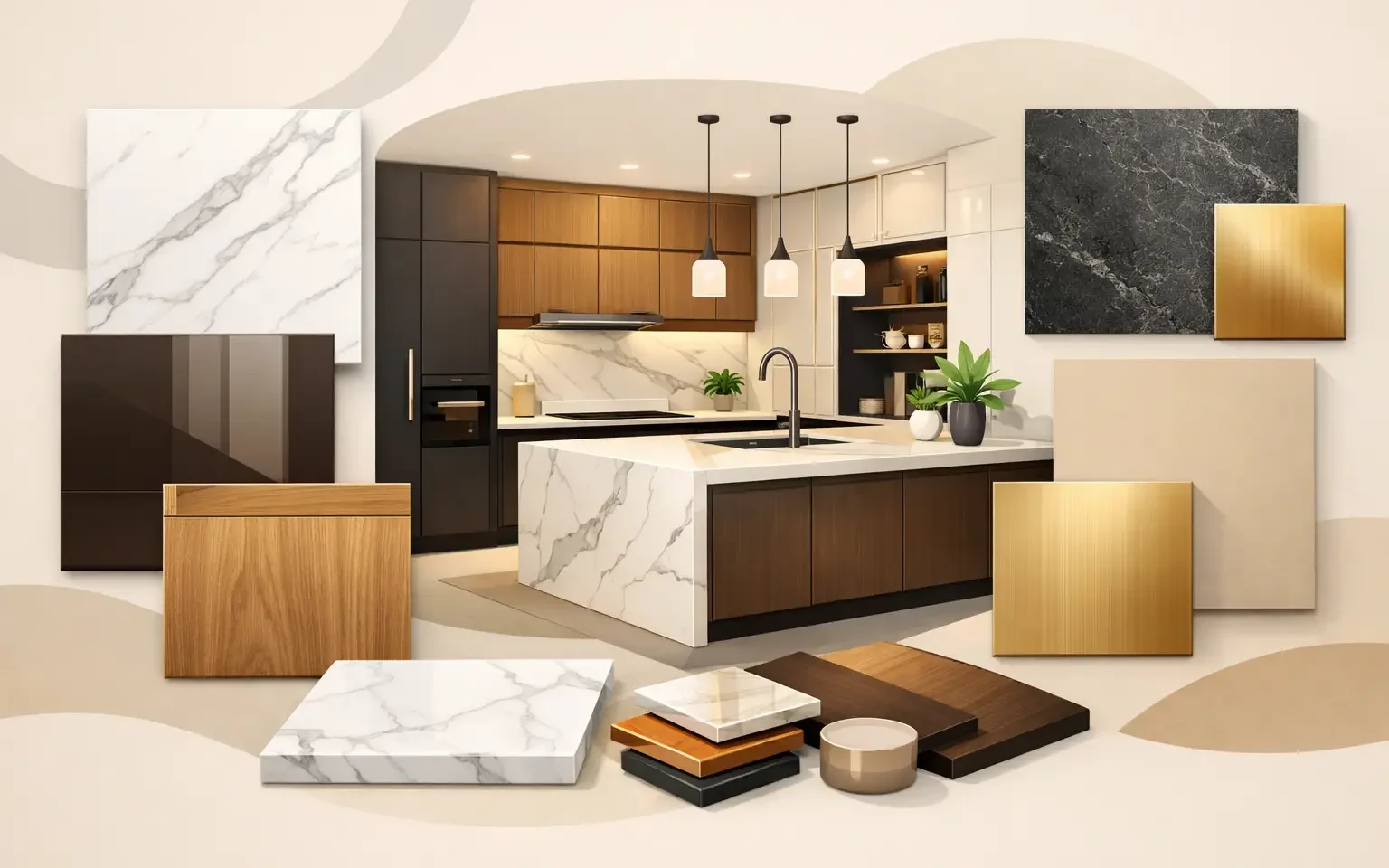
Best Luxury Kitchen Cabinet Materials for Homes
A luxury kitchen is experienced through touch as much as sight. The quiet close of a drawer, the consistency of a satin finish, and the way cabinet surfaces hold their color under Houston daylight all depend on material selection. The best luxury kitchen cabinet materials are not simply the most expensive ones. They are the materials that suit the architecture of the home, support daily use, and retain their refined appearance for years.
For a high-end renovation, it helps to look beyond the familiar labels of “wood” or “painted cabinets.” Modern European cabinetry is built as a coordinated system: a precision-engineered cabinet box, a carefully specified front material, durable edges, and hardware designed to perform over thousands of cycles. Each layer influences the finished kitchen.
What Defines the Best Luxury Kitchen Cabinet Materials?
Material quality starts with construction, not just the visible door. Premium cabinet carcasses are commonly made from high-density, low-emission engineered panels. These panels provide a stable, consistent foundation for hinges, drawer runners, shelves, and integrated storage. Unlike solid wood, which naturally expands and contracts with changes in humidity, quality engineered board offers excellent dimensional stability – a meaningful advantage in kitchens with large spans, tall cabinetry, and demanding climate conditions.
The exterior finish then establishes the visual character. A minimalist kitchen may call for super-matte lacquer, while a warm contemporary home may benefit from natural wood veneer. A tailored design can combine multiple materials, such as a lacquered island with wood-grain tall cabinets and a framed glass display unit.
Luxury should also be practical. The right material resists the marks, moisture, and repeated cleaning that come with real family life. It should feel intentional in relation to the countertops, flooring, appliances, and lighting, rather than competing for attention.
German-Engineered Melamine: A High-Performance Foundation
Premium melamine is one of the most capable and widely used materials in modern German-made cabinetry. It consists of a decorative surface layer bonded to an engineered board core under controlled manufacturing conditions. The result can replicate the depth of natural wood, the softness of textile-inspired surfaces, or the clean uniformity of solid colors.
This is not the thin, generic laminate often associated with entry-level cabinetry. High-end melamine panels are valued for their resistance to scratching, staining, and everyday moisture, as well as their consistent finish across cabinet doors, interiors, and panels. Quality edge banding is particularly important. When precisely applied, it creates a clean, durable perimeter that protects the core and gives each door a finished architectural look.
For homeowners who want a warm oak appearance or a deeply matte graphite kitchen without the maintenance considerations of natural wood or painted surfaces, premium melamine is an intelligent choice. It also offers strong value in large kitchen compositions where visual continuity matters.
Lacquered Cabinet Fronts for a Tailored, Modern Finish
Lacquer is a defining finish in high-end European kitchen design. It can range from soft matte to polished gloss, offering a depth and richness that makes cabinetry feel custom designed rather than selected from a standard catalog. Matte lacquered fronts are especially suited to contemporary kitchens, where their understated surface quality complements stone, metal, and integrated appliances.
A true lacquer finish requires careful production and finishing control. The quality of the substrate, the number of coats, curing process, and edge treatment all affect the final appearance. Better lacquered cabinetry has a uniform color and refined surface feel, with no visual interruption between the face and the edge.
The trade-off is simple: lacquer rewards appropriate care. Dark matte colors can show fingerprints more readily than textured melamine, and high-gloss finishes can reveal scratches if treated roughly. For a primary residence where design impact is the priority, lacquer remains one of the most sophisticated choices. Selecting the right sheen level can balance that visual statement with the realities of how the kitchen will be used.
Super-Matte and Anti-Fingerprint Surfaces
For homeowners drawn to the calm look of matte cabinetry, anti-fingerprint finishes deserve consideration. These advanced surfaces have a velvety appearance and help minimize visible handling marks, particularly on dark colors such as black, charcoal, navy, or deep green.
They are well suited to handleless kitchens, where doors and drawers are touched frequently. Their appeal is not only visual. A surface that stays cleaner-looking between wipe-downs supports the composed, uncluttered character that makes a modern kitchen feel luxurious.
Natural Wood Veneer Brings Depth and Warmth
Natural wood veneer is among the best luxury kitchen cabinet materials when the goal is authentic warmth with a disciplined, contemporary profile. Veneer uses a fine layer of real wood applied to a stable core, allowing the grain, texture, and natural tonal variation of timber to remain visible without relying on thick solid-wood door construction.
Oak, walnut, and smoked or stained wood veneers can bring remarkable depth to a kitchen. Rift-cut or quarter-cut veneers offer a more linear, architectural grain, while other cuts create a broader and more expressive pattern. The choice should relate to the scale of the room. A continuous vertical grain on tall cabinets can make ceilings appear higher, while horizontal grain can visually widen a long kitchen wall.
Because veneer is natural, no two doors will be identical. This is a feature, not a flaw, but it requires thoughtful planning. A skilled kitchen designer considers grain matching, direction, and transitions around appliances so the finished composition looks deliberate. Veneer is also best protected from prolonged standing water and harsh cleaning products. With sensible care, it develops a character that printed wood effects cannot fully reproduce.
Glass and Metal Details Create Visual Lightness
Glass-front cabinets are not usually the primary material for an entire kitchen, but they add an elevated layer to the design. Smoked, bronzed, clear, fluted, or tinted glass can transform a section of cabinetry into a display feature for glassware, ceramics, or collected objects. Internal lighting makes the effect even more compelling after dark.
Framed glass doors work particularly well in entertaining areas, coffee stations, and upper cabinets that would otherwise feel visually heavy. Smoked glass offers a more forgiving, discreet look than clear glass because it softens what is stored behind it.
Metal finishes may appear as slim frames, integrated pulls, shelving details, or accent panels. Bronze, black, stainless steel, and champagne-toned metals can connect cabinetry to faucets, lighting, and appliances. The most successful applications are restrained. A few precise metal or glass elements provide contrast without turning the kitchen into a collection of unrelated finishes.
Why Solid Wood Is Not Always the Premium Answer
Solid wood has a strong heritage in traditional cabinetry, and it remains appropriate for certain designs. It can be carved, profiled, stained, and refinished in ways that support classic or transitional interiors. However, it is not automatically the best choice for a modern luxury kitchen.
Wood moves in response to humidity and temperature. In a climate like Houston’s, that natural movement can affect wide solid-wood components over time. It can also make achieving the exceptionally flat, minimal door surfaces associated with contemporary European design more challenging.
For this reason, a quality veneer over a stable engineered core is often the more refined specification for modern cabinetry. It provides genuine wood character while supporting cleaner lines, reliable alignment, and long-term performance. The material should follow the design intent, not a preconceived hierarchy of what sounds most expensive.
Match the Material to How You Live
A household that cooks extensively may prioritize high-performance melamine or anti-fingerprint matte fronts around the main work zones. A homeowner building a calm, gallery-like kitchen may choose lacquered cabinetry with integrated appliances and discreet finger-pull channels. For an open-plan home, wood veneer can provide the warmth needed to connect the kitchen to living and dining spaces.
The cabinet material should also be considered alongside the layout. A dark finish can be striking on a large island with generous natural light, yet may feel dominant in a compact room. A pale lacquer can brighten a smaller kitchen but may need contrast through wood, stone, or metal to avoid looking flat. Sample viewing matters because a finish can appear very different under showroom lighting, natural daylight, and evening illumination.
At Häcker European Collection, the selection process is built around these relationships. Cabinet fronts, internal materials, hardware, countertops, and installation details are evaluated as one complete design rather than a series of isolated decisions.
A well-designed kitchen should not ask you to choose between beauty and durability. Begin with the feeling you want the room to create, then let a qualified designer guide the material choices around your layout, light, and daily routines. A personal consultation with a kitchen designer can turn those preferences into a material palette that will look considered from the first installation day to the years that follow.

