
Best Luxury Cabinet Accessories for Modern Kitchens
A beautiful kitchen can lose its appeal quickly when everyday tools, spices, and small appliances have nowhere appropriate to go. The best luxury cabinet accessories solve that problem quietly. They bring order to the interior of the kitchen while preserving the clean, architectural appearance that defines modern European cabinetry.
For a high-end kitchen renovation, accessories should not be treated as an afterthought. They influence how cabinets are dimensioned, where electrical service is placed, how doors open, and whether the kitchen feels effortless to use five years after installation. The right selections create a tailored workspace, not simply more storage.
What Defines Luxury Cabinet Accessories?
Luxury accessories are distinguished by more than polished metal or soft-close hardware. They are engineered into the cabinetry, selected for a specific cooking routine, and designed to withstand frequent use without visual clutter or mechanical compromise.
In a German-made kitchen, this often means full-extension drawer systems with precise adjustment, interior fittings finished to complement the cabinet, integrated lighting, and mechanisms that move smoothly under weight. The result is storage that feels considered from every angle, including the ones guests never see.
The most successful accessory plan is personal. A serious home cook may prioritize pantry pull-outs and drawer dividers for cookware. A household that entertains may benefit more from concealed beverage storage, charging drawers, and an organized serving zone. There is no universal package that suits every home.
The Best Luxury Cabinet Accessories to Consider
1. Full-Extension Drawers With Interior Organization
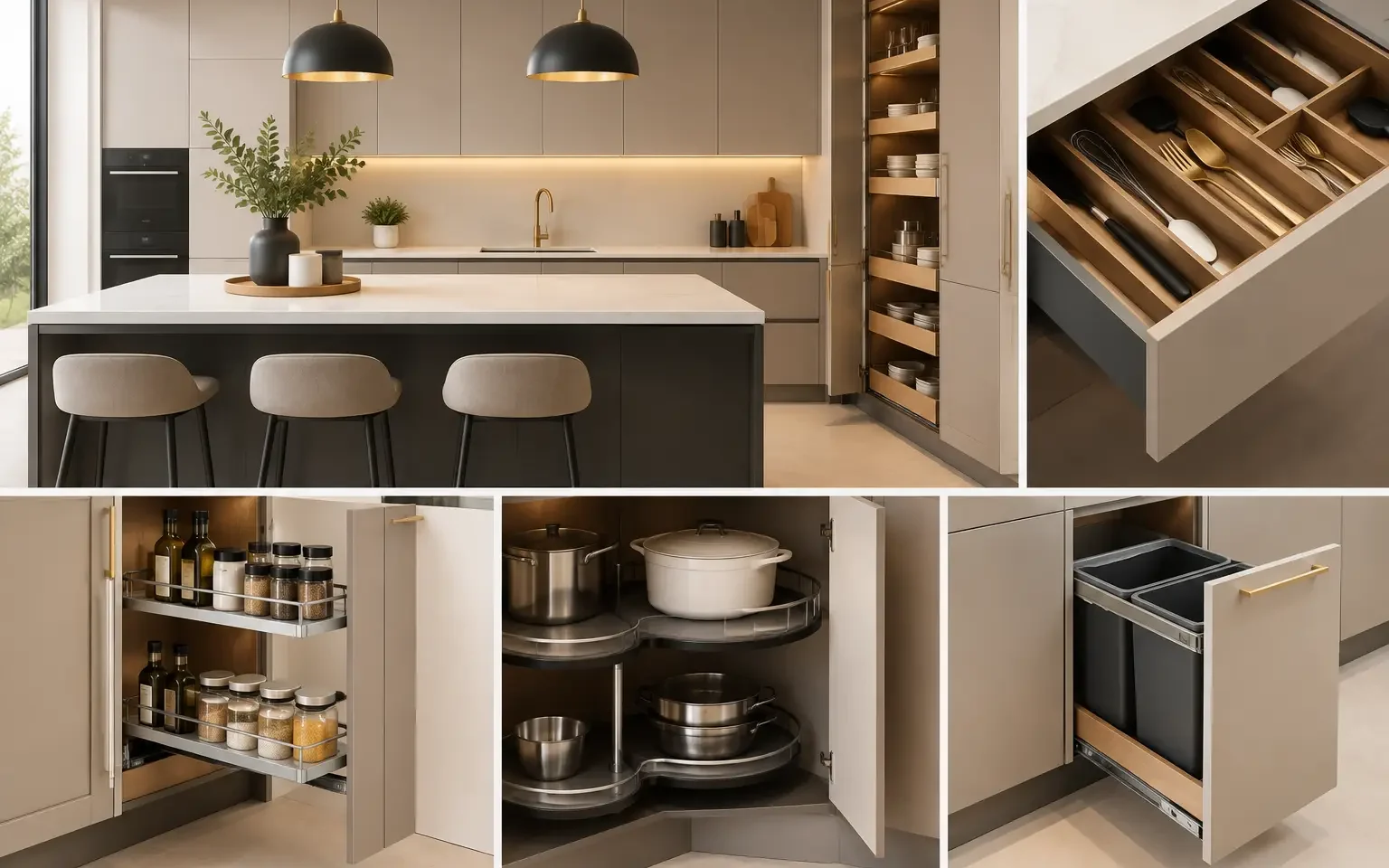
Deep drawers are among the most valuable upgrades in a modern kitchen. Unlike a traditional base cabinet with a fixed shelf, a full-extension drawer brings the entire contents forward. Pots, plates, pantry staples, and serving pieces remain visible and accessible without bending into a dark cabinet.
The luxury difference is in the interior. Adjustable dividers, wood or metal inserts, anti-slip liners, and dedicated sections for lids or utensils prevent a large drawer from becoming a catchall. For homeowners who want a restrained, uncluttered kitchen, internal organization is often more useful than adding another wall cabinet.
Specify higher load capacity for drawers that will hold cookware, stoneware, or bulk pantry goods. A lighter mechanism may be sufficient for linens or cutlery, but it is not the right choice for a heavily used cooking zone.
2. Precision Cutlery and Knife Inserts
A shallow drawer near the dishwasher or prep area is the ideal location for a customized cutlery insert. Premium systems use configurable trays that keep flatware, cooking utensils, knives, and specialty tools separated and easy to return to their place.
A knife insert deserves particular consideration. Loose knives damage drawer interiors and create an unnecessary safety concern. A fitted insert protects the blades, keeps counters clear, and gives the drawer a more finished appearance. Materials should complement the kitchen’s overall palette, whether that means a refined dark finish, natural wood, or a contemporary matte composite.
3. Integrated Waste and Recycling Centers
A well-designed waste center is not glamorous, but it is essential to the function of a luxury kitchen. Installed below the main prep surface, it allows food waste, recycling, and general trash to be sorted where they are generated.
Look for a pull-out system with separate, removable bins and a stable frame. The cabinet should open fully and close softly, even when bins are full. For larger households, a wider cabinet with multiple compartments is usually preferable to a narrow solution that requires constant emptying. If composting is part of the routine, plan for a dedicated bin from the beginning rather than trying to add one later.
4. Corner Cabinet Systems That Eliminate Dead Space
Corners can either be productive storage or a frustrating void. The correct solution depends on the kitchen layout, cabinet depth, and what needs to be stored. Pull-out shelving systems, articulated corner mechanisms, and curved trays can bring contents outward rather than forcing homeowners to reach into inaccessible space.
These mechanisms are particularly valuable in compact luxury kitchens, where every cabinet must earn its footprint. In a larger kitchen, however, a corner may be better used for a standard drawer run or left as a structural cabinet zone. A mechanism should be selected because it improves the plan, not simply because it is available.
5. Pantry Pull-Outs and Tall Cabinet Storage
A tall pantry cabinet can replace the visual bulk of a walk-in pantry while offering exceptional visibility. Interior pull-outs, adjustable shelves, spice racks, and shallow door storage make it easy to see ingredients at a glance.
For a polished result, organize tall storage by function. Dry goods, breakfast items, baking supplies, and entertaining pieces should each have a defined area. Full-height pull-outs are a strong choice when the pantry needs to feel like a single integrated unit. Individual interior drawers may be better for clients who want more separation and a quieter, furniture-like experience.
Consider ventilation and appliance requirements if a tall cabinet will hold coffee equipment, a microwave, or other heat-producing appliances. Cabinet storage must support the appliance manufacturer’s clearance guidance as well as the overall design intent.
6. Concealed Charging and Small-Appliance Storage
Countertops are often compromised by the devices and appliances that accumulate there. A concealed charging drawer creates a designated home for phones, tablets, and cords, keeping technology accessible without placing it on the island or kitchen table.
Appliance garages and pocket-door cabinets can serve a similar purpose for toasters, blenders, and coffee equipment. They are most effective when planned around real daily habits. A household that uses an espresso machine every morning may need a dedicated cabinet with convenient power and adequate clearance. An appliance that is used once a month may be better stored in a lower drawer.
7. Integrated Cabinet Lighting
Lighting inside drawers, tall cabinets, and glass-front storage brings a level of refinement that is immediately noticeable. It also has a practical purpose: items are easier to locate, particularly in deep drawers and pantry cabinets.
The best installations use discreet LED lighting that activates when a drawer or door opens. Warm color temperatures tend to flatter wood, lacquer, and textured finishes better than harsh cool light. Lighting should feel built into the cabinetry, not applied afterward as a decorative strip.
Planning Accessories Around How You Live
The strongest accessory plan begins before cabinetry is finalized. Start by identifying the areas where friction occurs now. Perhaps sheet pans are stacked awkwardly, spices disappear behind other pantry items, or a family charging station has migrated to the kitchen counter. Those details reveal where specialized storage will add meaningful value.
Next, consider the kitchen in zones. The preparation zone benefits from knives, cutting boards, waste storage, and utensil drawers. The cooking zone needs cookware, oils, spices, and trays within close reach. The cleanup zone requires practical storage for flatware, dishes, and cleaning products. A pantry zone should support the way groceries are unpacked and used.
This approach prevents the common mistake of selecting accessories one by one without considering their relationship to the overall layout. A premium cabinet system can accommodate remarkable customization, but every feature should support a daily task or protect a long-term investment in the home.
Choose Quality Where It Matters Most
Not every cabinet requires a specialized insert. Investing in a smaller number of high-performing accessories is usually more effective than filling every cabinet with mechanisms that see little use. Prioritize drawers used several times a day, pantry storage, waste management, and any area where accessibility is a concern.
Hardware quality matters as much as the accessory itself. Look for smooth movement, reliable soft-close action, durable finishes, and mechanisms rated for the weight they will carry. Precise installation is equally important. Even excellent European hardware will not perform as intended if cabinetry is not properly leveled and adjusted.
At Häcker European Collection, accessory planning is part of the larger design conversation. German-made kitchen cabinetry offers the structure and precision needed to integrate storage, lighting, and interior fittings in a way that feels intentional rather than added on.
A designer can help distinguish between a feature that looks impressive in a showroom and one that will improve your morning routine, dinner preparation, and cleanup for years to come. Bring a list of the items you use most often to your consultation – it is often the fastest route to a kitchen that feels genuinely custom.