
Best Kitchen Drawer Organizers for Custom Kitchens
A beautifully designed kitchen can still feel incomplete when every drawer becomes a catchall. The best kitchen drawer organizers do more than separate utensils: they make daily routines quieter, faster, and more considered. In a high-end kitchen, interior organization should carry the same level of intention as the cabinetry fronts, finishes, and hardware.
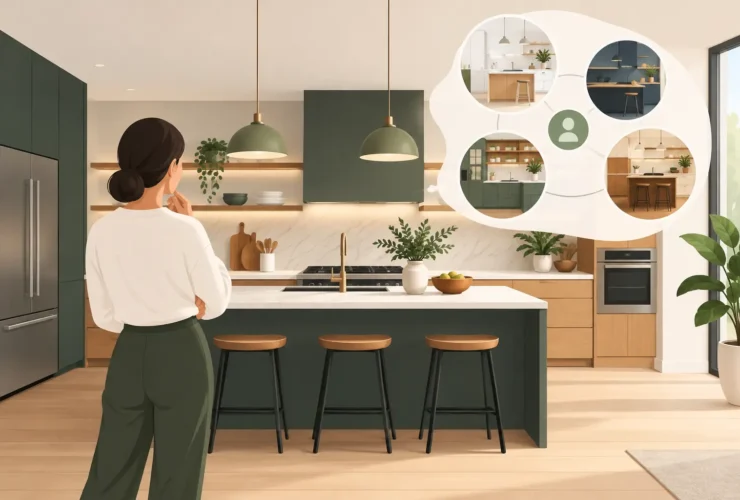
For homeowners planning a kitchen renovation or custom home, the right approach begins well before installation. Drawer interiors should be designed around how the household cooks, entertains, stores, and cleans. A standard insert may create temporary order, but a customizable internal system creates lasting function.
What Makes a Drawer Organizer Worth Choosing?
The finest organizers are integrated into the cabinetry rather than added as an afterthought. They fit precisely within the drawer box, preserve usable storage space, and complement the quality of the kitchen itself. Materials matter as well. Solid wood, premium engineered finishes, aluminum dividers, and easy-clean liners deliver a more refined result than thin plastic trays that shift every time a drawer opens.
Function must also align with proportion. A shallow drawer near the cooktop has different requirements than a deep drawer beneath a prep surface. The most successful kitchens use several drawer types, each with an interior tailored to its contents.
European cabinetry is particularly well suited to this level of planning. Its drawer systems are engineered for smooth movement, substantial load capacity, and precise internal divisions. This allows a designer to create storage that feels visually restrained while accommodating the practical realities of a busy household.
The Best Kitchen Drawer Organizers by Function
Cutlery and everyday utensils
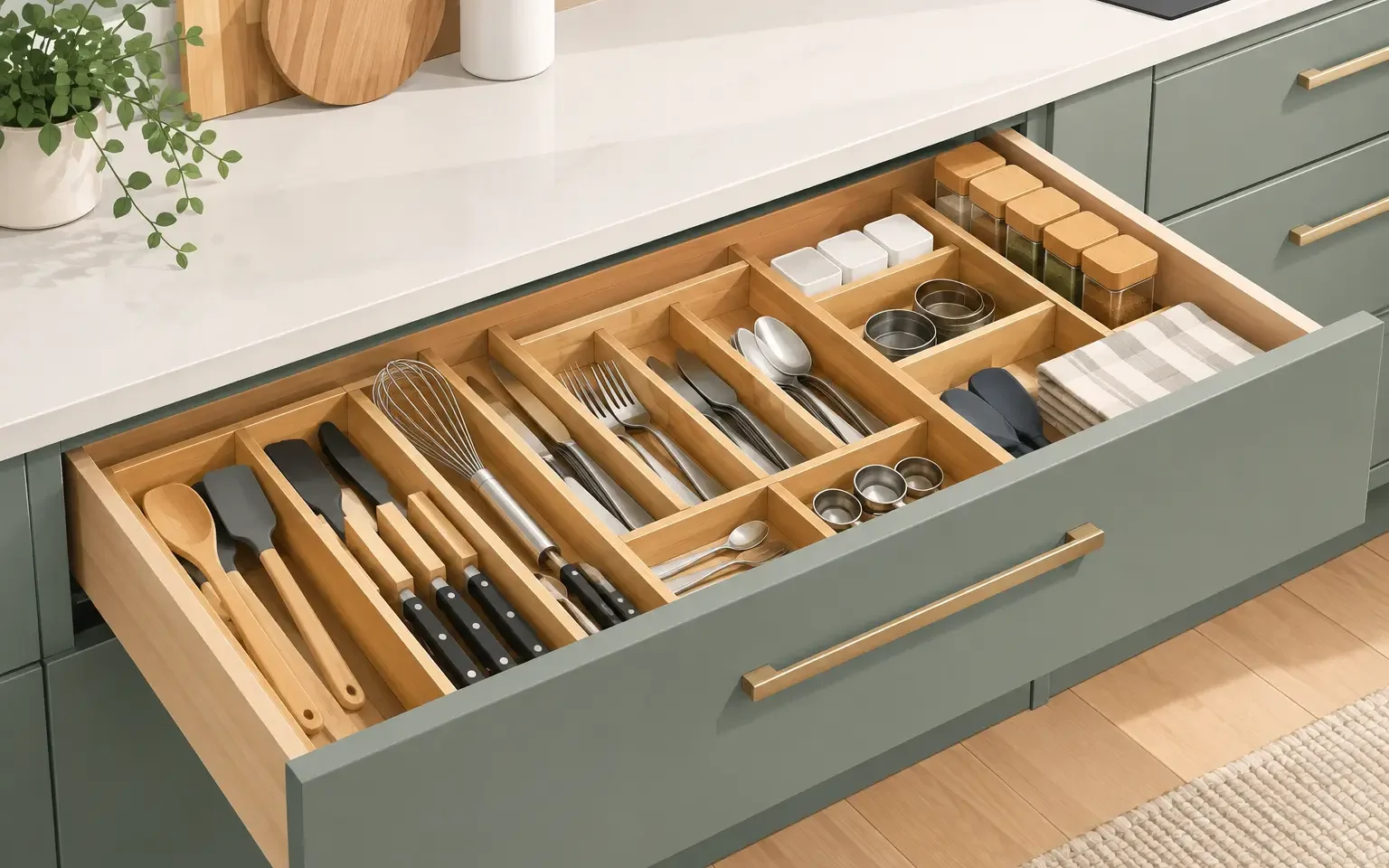
A cutlery insert is often the first organizer homeowners consider, yet it deserves more attention than a basic molded tray. Look for adjustable compartments that accommodate both everyday flatware and larger serving pieces. A well-proportioned insert keeps forks, knives, spoons, and specialty utensils visible at a glance without wasting the drawer’s full width.
For a more elevated presentation, wood inserts offer warmth against contemporary lacquer, veneer, or matte cabinetry. Darker finishes can create a tailored contrast in a light kitchen, while pale wood can soften a darker, architectural palette. The best choice depends on the overall interior scheme and the level of maintenance a household prefers.
Cooking utensil organizers
Long utensils, whisks, tongs, peelers, and measuring tools rarely fit comfortably in a conventional cutlery tray. A dedicated utensil drawer near the range or primary prep area keeps these essentials organized where they are used. Wide, shallow compartments are generally more useful than narrow slots because they allow tools to lie flat and remain easy to retrieve.
Some homeowners prefer vertical dividers for frequently used spatulas and ladles. This can work well in a deeper drawer, but it is less effective for an expansive collection of tools. The choice should reflect cooking habits, not a generic organizing trend.
Knife storage inserts
A knife insert is one of the most practical upgrades available in a custom kitchen. It protects blades, reduces visual clutter on the countertop, and keeps sharp tools safely contained. Angled knife blocks or horizontal blade slots work particularly well in a shallow drawer near the prep zone.
Before specifying one, consider the actual knife collection. A household with several chef’s knives, serrated blades, cleavers, and specialty tools needs more than a compact eight-slot block. Customizable organizers allow the interior to evolve without forcing every knife into a fixed configuration.
Spice drawer organizers
Spices are often stored in upper cabinets, where labels disappear behind one another. A shallow drawer with tiered inserts is a more efficient alternative, especially when located near the cooktop. Jars rest at an angle, making labels readable from above and helping the cook identify what is needed immediately.
This solution is best for homeowners who use a consistent set of spices and are willing to maintain a uniform jar size. If spices are bought in varied containers or frequently purchased in bulk, a drawer may become untidy quickly. In that case, a deeper pullout or a designated pantry zone may be the better fit.
Deep drawers for pots, pans, and lids
Deep drawers are among the defining features of a modern European kitchen. Rather than kneeling to search through a lower cabinet, homeowners can access cookware from above. Dividers and peg systems keep stacks of plates, bowls, pots, and containers from sliding when the drawer opens.
For cookware, adjustable vertical dividers are often more valuable than fixed compartments. They can separate sauté pans, baking sheets, lids, and griddles while adapting as a collection changes. Pot lid organizers deserve their own consideration: storing lids upright along one side of a deep drawer can eliminate one of the kitchen’s most persistent sources of clutter.
Food storage and container inserts
Plastic and glass food containers are useful, but their lids can overwhelm a drawer without structure. A dedicated organizer with movable partitions can separate rectangular containers from round pieces and reserve a narrow section for lids. This is especially effective near the refrigerator, dishwasher, or kitchen island where leftovers are typically packed.
Do not over-customize this drawer too tightly. Food storage collections change more frequently than flatware or cookware. Leave enough flexibility to accommodate new containers, larger serving pieces, and the occasional oversized lunchbox.
Design the Drawer Plan Around Kitchen Zones
The difference between a well-organized kitchen and an over-organized one is location. Every item does not need a specialized compartment, but frequently used items should live close to the task they support.
At the cooking zone, prioritize utensils, spices, oils, pans, and lids. At the prep zone, consider knives, cutting boards, mixing tools, and food wraps. A cleanup zone benefits from drawers for dish towels, detergents, dishwasher tablets, and recycling bags. Near a coffee station or entertaining area, smaller drawers can hold tea, filters, napkins, cocktail tools, or serving accessories.
This zoning approach is especially valuable in larger kitchens, where beautiful cabinetry can otherwise create unnecessary steps. It also informs drawer widths and depths early in the design process, when changes are practical rather than costly.
Materials and Details That Elevate the Interior
Interior fittings should feel consistent with the caliber of the cabinetry. Premium wood organizers bring a furniture-like character to the drawer. Aluminum systems offer a crisp, contemporary appearance and exceptional durability. Non-slip bases are useful for preventing glassware, dishes, or utensils from shifting, while removable inserts simplify cleaning.
Soft-close hardware is equally important. An organizer cannot compensate for a drawer that feels unstable or lacks smooth operation. Quality runners and precise installation ensure that heavy drawers remain composed even when loaded with cookware, dishes, or pantry items.
At Häcker European Collection, drawer organization can be considered as part of the complete cabinetry plan, not as an accessory chosen at the end. This helps ensure the interior function supports the same modern, German-made standard as the visible design.
Common Mistakes to Avoid
The most common mistake is choosing organizers before establishing what will be stored. Measure utensils, cookware, serving pieces, and containers first. A visually appealing insert that does not fit the household’s actual items becomes a limitation rather than an improvement.
Another mistake is allocating all storage to cooking tools while overlooking less glamorous essentials. Drawer space for linens, charging cables, pet supplies, children’s items, or paperwork may be appropriate depending on how the kitchen is used. A family kitchen and a streamlined entertaining kitchen need different priorities.
Finally, avoid filling every inch with a fixed divider. Some open drawer space is useful for seasonal tools, oversized items, and changing routines. The best systems create order without making the kitchen feel rigid.
A thoughtful drawer plan turns daily storage into a quiet luxury: everything has a place, every movement feels considered, and the kitchen remains as composed after dinner as it did before guests arrived. During the design process, bring a realistic inventory of the items you use most often. It gives your designer the information needed to shape cabinetry around the way you actually live.