
Best Kitchen Cabinet Finishes for Modern Homes
A cabinet door can look exceptional in a showroom and still be the wrong choice for a busy family kitchen. The best kitchen cabinet finishes are not simply the most dramatic or expensive. They are the finishes that suit the room’s light, layout, use patterns, and desired level of maintenance while preserving a composed, high-end appearance for years.
For a Houston renovation or custom home, that decision also needs to account for humidity, abundant natural light, and the realities of daily living. A refined finish should feel considered at first glance, but it should also perform confidently around fingerprints, cooking activity, and regular cleaning.
What Defines the Best Kitchen Cabinet Finishes?
A cabinet finish is the visible surface treatment of the door, drawer front, and panels. It determines color, reflectivity, texture, and much of the kitchen’s visual character. Yet its value goes beyond aesthetics. The construction beneath the surface, the application process, edge detailing, and material quality all influence durability.
Premium European cabinetry is especially precise in this area. German-made cabinet systems are engineered around consistent material specifications, controlled production, and sophisticated surface technologies. Rather than treating the finish as a decorative afterthought, quality manufacturers develop it as part of a complete furniture system.
The right selection depends on a few practical questions. Does the kitchen receive strong direct sunlight? Is a low-maintenance surface a priority? Do you want the warmth of authentic wood, or the architectural clarity of a solid matte color? Will the cabinetry be paired with natural stone, metal accents, or a highly patterned backsplash? These answers narrow the field quickly.
Matte Lacquer for a Quiet, Architectural Look
Matte lacquer is one of the most compelling choices for contemporary kitchens. It creates a smooth, low-sheen surface that absorbs light rather than reflecting it sharply, giving cabinetry a calm, tailored presence. Warm white, greige, taupe, soft gray, deep green, and charcoal all feel particularly sophisticated in this finish.
A high-quality matte lacquer finish offers depth that is difficult to replicate with standard painted cabinetry. It works beautifully in open-plan homes because it reads as furniture, allowing the kitchen to connect naturally with adjoining living spaces.
Matte surfaces do require appropriate care. Darker colors can show hand oils more readily than pale tones, although modern anti-fingerprint technologies substantially improve everyday usability. Use a soft, damp cloth and nonabrasive cleaner, and avoid harsh chemicals that may dull the surface over time.
Matte lacquer is an excellent option for homeowners who want a modern kitchen with visual softness. It pairs well with honed stone, brushed metal, and natural oak accents.
High-Gloss Lacquer for Light and Visual Impact
High-gloss cabinetry reflects light, making it particularly effective in compact kitchens or rooms with limited daylight. Its polished surface can create a crisp, gallery-like effect, especially in white, pale gray, or soft neutral tones. In the right setting, gloss feels unmistakably European.
The trade-off is visibility. Reflections, fingerprints, and small smudges tend to be more apparent than on matte surfaces, particularly with darker colors. A high-gloss finish is best suited to clients who appreciate its pristine appearance and are comfortable with more frequent wiping.
Use it selectively when a full-gloss kitchen feels too formal. Gloss cabinetry on an island, paired with matte perimeter cabinets, can introduce contrast without overwhelming the room. It is also an effective complement to streamlined, handleless door styles where uninterrupted planes are part of the design intent.
Wood Veneer for Natural Warmth
For homeowners who want authentic material character, wood veneer remains one of the best kitchen cabinet finishes available. A real wood veneer surface showcases grain variation, tonal movement, and the subtle irregularity that gives a kitchen depth. Oak, walnut, and smoked or stained woods are especially suited to refined modern interiors.
Veneer is not the same as a lesser-quality imitation. In premium cabinetry, veneer is carefully selected, matched, and applied over an engineered core to achieve stability while retaining the beauty of genuine wood. The result is more controlled than solid wood in a kitchen environment, where temperature and humidity change throughout the year.
Wood veneer is highly versatile. Light oak can soften a minimal white kitchen, while walnut creates a more dramatic, furniture-inspired statement. Vertical grain often emphasizes ceiling height and a contemporary look; horizontal grain can make a long wall of cabinetry feel more expansive.
Because natural wood varies, samples should be viewed as a guide rather than an exact promise. This variation is part of its appeal, but it should be considered early when matching cabinetry with flooring or existing architectural woodwork.
When veneer is the stronger choice
Choose veneer when warmth and material authenticity are central to the design. It is particularly successful on tall pantry walls, islands, and integrated storage, where cabinetry can act as a visual bridge between the kitchen and living area.
Premium Laminate for High-Performance Design
Modern laminate has advanced far beyond the thin, artificial surfaces many homeowners remember. High-end laminate and melamine finishes can offer refined matte colors, realistic wood interpretations, concrete effects, textile-inspired textures, and highly durable everyday performance.
This category is practical without looking utilitarian. It resists many common kitchen concerns, including staining, fading, and routine wear, making it well suited to active households. Textured laminates can also disguise fingerprints and minor marks more effectively than a perfectly smooth dark finish.
The key is quality. Premium laminate cabinetry should have clean, precise edges, consistent color, and a convincing surface texture. Poorly made laminate is often identifiable at the edge banding or where the material meets the door profile. Well-engineered European systems create a far more polished result.
Laminate is often the right choice for homeowners who prioritize a disciplined modern aesthetic and straightforward maintenance. It can also make it possible to reserve more of the budget for statement stone, integrated appliances, or custom interior organization.
Textured and Super-Matte Surfaces
Textured cabinet finishes bring tactility into a kitchen, an increasingly important consideration in minimalist interiors. Linen-like patterns, subtle linear textures, woodgrain embossing, and soft-touch super-matte surfaces prevent a clean-lined kitchen from feeling flat.
Super-matte finishes deserve special attention. Their velvety appearance feels contemporary and luxurious, yet many are designed with anti-fingerprint properties that make them more forgiving than conventional dark matte paint. Black, graphite, deep blue, and forest green become more livable when the surface technology supports daily use.
Texture should be balanced with the rest of the room. If the countertop has strong veining or the backsplash is highly expressive, a quiet cabinet finish provides needed restraint. Conversely, a restrained slab countertop may benefit from a lightly textured cabinet door that adds visual interest without introducing another color.
Choosing Color and Finish Together
Color and finish should never be selected independently. The same shade of white can feel cool and crisp in gloss, soft and architectural in matte lacquer, or tactile and casual in a textured laminate. Similarly, walnut veneer can read formal with polished stone or relaxed with a warm, honed quartzite.
Start with the room’s permanent elements. Flooring, window orientation, wall color, and countertop selection will have a stronger impact than a small door sample viewed alone. Ask to see larger finish samples beside the actual stone and under the lighting planned for the room.
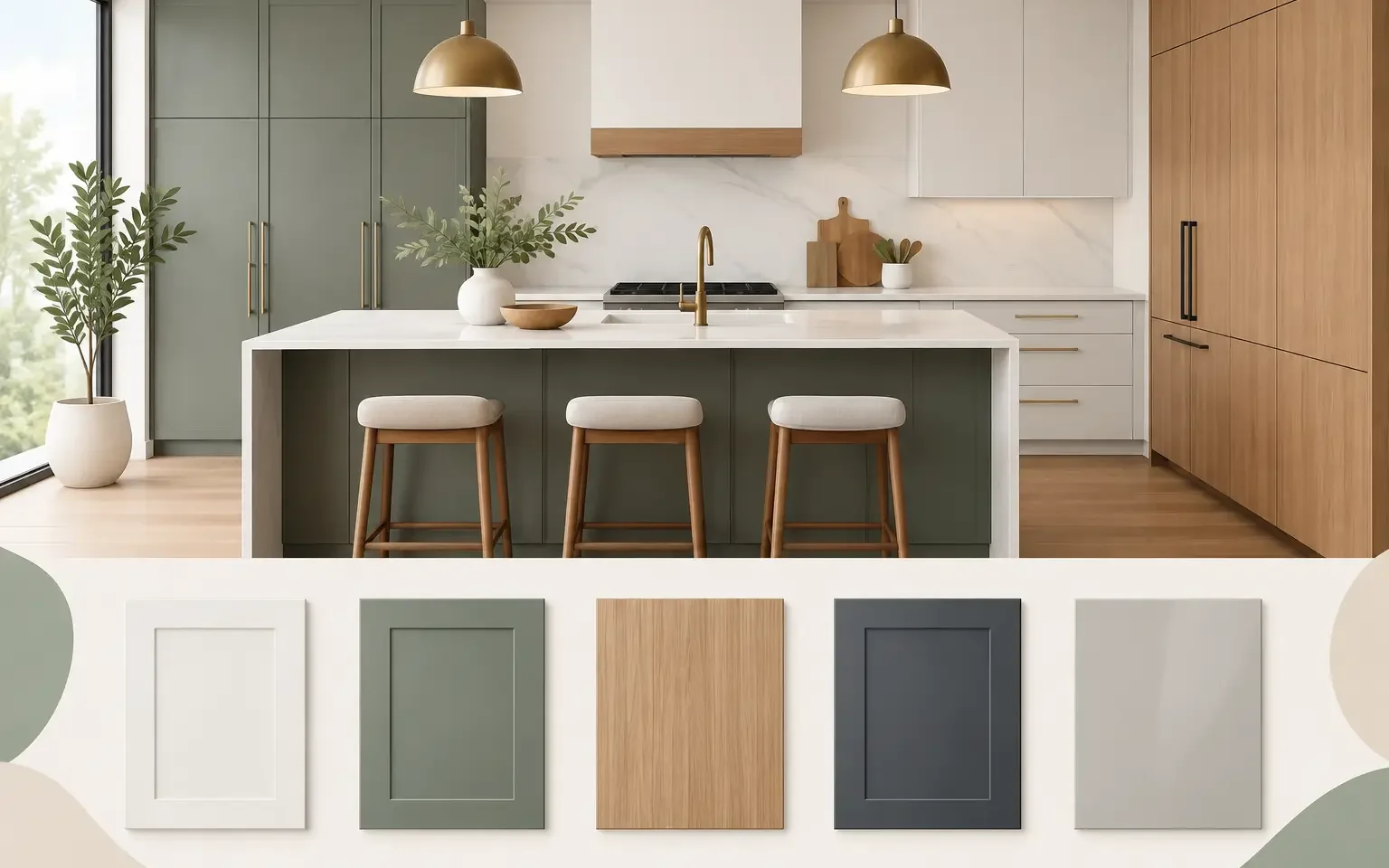
For many high-end kitchens, a mixed-finish approach produces the most tailored result. A pale matte lacquer for perimeter cabinetry, a wood veneer island, and a darker textured finish for tall storage can create hierarchy without relying on excessive ornament. The goal is contrast with discipline, not variety for its own sake.
Durability, Maintenance, and Long-Term Value
No finish is entirely maintenance-free, but some are more suited to particular lifestyles. Light matte laminates and textured surfaces are often the easiest for households that want a polished look with minimal attention. High-gloss doors deliver strong visual brightness but ask for more frequent cleaning. Natural veneer requires thoughtful care and an appreciation for material variation.
Cleaning should be simple: a soft microfiber cloth, warm water, and a mild cleaner approved for the surface. Avoid abrasive pads, waxes, steam cleaners, and aggressive degreasers. These can damage sheen levels, coatings, or edges over time.
Long-term value comes from choosing a finish you will still appreciate after the novelty of a trend has passed. Neutral matte tones, authentic wood, and quietly textured surfaces tend to age with particular grace. More expressive colors can be exceptional when used in a way that complements the architecture and reflects the homeowner’s point of view.
A cabinet finish should make the kitchen feel resolved, not merely decorated. During a design consultation, Häcker European Collection can help you compare full-scale samples, materials, and door styles in context, so the final selection supports both the way you live and the level of design you expect.