
Are Lacquer Cabinets Durable? A Clear Answer
A lacquer-front kitchen can bring a level of depth and refinement that laminate and painted cabinetry rarely match. But are lacquer cabinets durable enough for a busy family kitchen, frequent entertaining, and the everyday demands of a primary residence? When the cabinetry is properly engineered and the finish is professionally applied, the answer is yes – with a few practical considerations.
The word “lacquer” is sometimes used loosely in the cabinet market. Quality matters greatly. A high-end European lacquer finish is not simply a coat of paint on a door. It is a carefully controlled, multi-stage finish system applied to a stable cabinet front, then cured and polished to create a smooth, consistent surface. The result is a modern kitchen finish that can look exceptional for many years when selected and maintained appropriately.
What Makes Lacquer Cabinets Durable?
Lacquer cabinetry is valued for its exceptionally smooth appearance, rich color, and ability to create either a soft matte surface or a striking high-gloss statement. Its durability comes from the entire construction process, not the finish alone.
Premium cabinet manufacturers begin with a stable, high-quality substrate. The surface is prepared, sealed, and finished in controlled factory conditions, where temperature, humidity, application thickness, and curing time can be managed precisely. Multiple layers may be used to establish depth of color and a protective surface that stands up to daily use.
This differs from many lower-cost painted cabinet doors, which may be finished with fewer coats or less sophisticated curing methods. Those doors can be more susceptible to uneven texture, chipping around edges, and visible wear over time. A factory-finished lacquer door from an established German-made cabinetry program is designed for consistency across every panel, drawer front, and door.
Durability also depends on the cabinet itself. Precision hinges, properly aligned drawers, moisture-resistant construction, and expert installation all reduce stress on door fronts and edges. A beautiful finish deserves an equally considered cabinet system behind it.
Are Lacquer Cabinets Durable in a High-Use Kitchen?
For most households, lacquer cabinets are more than capable of handling normal kitchen activity. They resist routine wiping, light splashes, fingerprints, and the occasional bump better than many homeowners expect. A matte lacquer can be especially practical in an active kitchen because it softens reflections and often makes minor surface marks less noticeable than a mirror-like gloss finish.
That said, lacquer is not indestructible. Like natural stone, hardwood flooring, or a finely finished piece of furniture, it benefits from reasonable care. Sharp impacts can chip any painted or lacquered surface, particularly at exposed corners. Abrasive scrubbers, harsh degreasers, and solvent-based cleaners can dull or damage the finish. Prolonged contact with water near seams or hardware should also be avoided.
The practical question is not whether lacquer can survive a real kitchen. It can. The better question is whether the homeowner is comfortable treating cabinetry as a premium architectural finish rather than a purely utilitarian surface. For clients who appreciate a refined, tailored look and are willing to use appropriate cleaning methods, lacquer is an excellent long-term choice.
Matte Versus High-Gloss Lacquer
Both finishes can perform well, but they create different maintenance experiences.
Matte lacquer offers a quiet, contemporary appearance that works beautifully in warm modern kitchens, minimalist spaces, and designs with natural wood accents. It is generally forgiving of fingerprints and can make everyday use feel more relaxed. However, very dark matte colors may still show oils or hand marks near frequently touched doors.
High-gloss lacquer reflects light dramatically, helping a kitchen feel larger and more luminous. It is often selected for sleek, architectural interiors where the cabinetry itself is intended to make a visual statement. The trade-off is that high-gloss surfaces reveal fingerprints, smudges, and fine scratches more readily, especially in deep colors. This does not mean the finish is fragile. It simply means its reflective surface makes surface activity easier to see.
For a family kitchen, many homeowners choose a sophisticated matte lacquer for tall cabinets and lower units, then introduce gloss selectively where its visual impact is worth the additional upkeep.
The Factors That Affect Long-Term Performance
A lacquer cabinet’s service life depends on several decisions made before the kitchen is installed. Finish quality is one factor, but it is not the only one.
First, consider placement. Cabinetry immediately adjacent to a high-heat range, steam oven, or poorly vented cooktop needs thoughtful planning. Heat and moisture are manageable when appliances are correctly specified and ventilation is designed properly, but they should never be treated as an afterthought. A capable kitchen designer will account for clearances, panel materials, appliance specifications, and the workflow of the room.
Second, consider color. White, warm gray, taupe, and soft neutral lacquer finishes tend to be timeless and forgiving. Deep black, navy, and charcoal offer a more dramatic luxury look, but may reveal dust, fingerprints, and small marks more readily. This is an aesthetic consideration as much as a maintenance one.
Third, assess the quality of installation. Misaligned doors can rub against adjacent panels. Improperly adjusted hardware can place unnecessary pressure on cabinet fronts. In a premium kitchen, the final adjustment process matters. Doors should open and close cleanly, drawer reveals should remain consistent, and integrated handles or edge profiles should feel precise in daily use.
Finally, choose a manufacturer with proven finishing standards. High-end European cabinetry is often engineered as a complete system, with the door finish, cabinet construction, hardware, and installation specifications developed to work together. That integration is one reason premium cabinetry typically delivers a more dependable long-term result than assembled, mixed-source alternatives.
How Lacquer Compares With Other Cabinet Finishes
Lacquer occupies an appealing middle ground between exceptional design expression and practical performance. It is often more visually refined than standard painted cabinetry and offers a broader range of precisely controlled colors and sheen levels. Its smooth, non-porous surface is easy to wipe down when cared for properly.
Laminate is typically more resistant to heavy abrasion and can be an excellent option for highly active households, rental properties, or utility-focused spaces. Modern laminates have improved substantially and can look remarkably sophisticated. Still, they generally do not offer the same visual depth, color clarity, or tailored feel as a premium lacquer finish.
Wood veneer brings natural variation, warmth, and tactile character. It can be highly durable, but it responds differently to light, humidity, and aging than a lacquered front. Veneer is ideal for homeowners who want genuine material expression, while lacquer is often preferred when the design calls for a clean, consistent color field.
Thermofoil and lower-cost painted doors may initially resemble lacquer from a distance, but their long-term performance and repairability can differ significantly. Edges, seams, and heat exposure are common areas where less premium finishes can reveal their limitations.
Caring for Lacquer Cabinet Doors
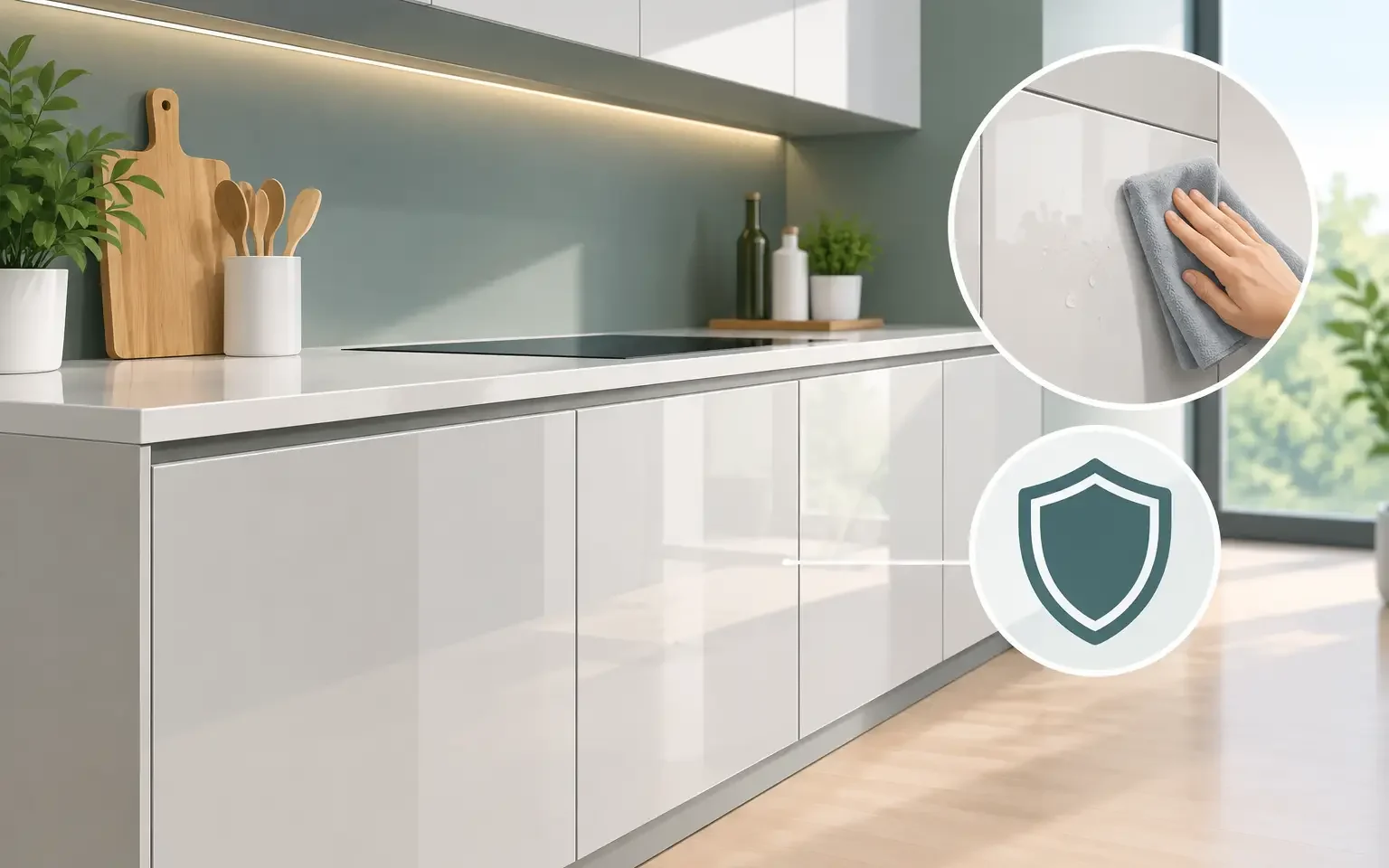
Good care is straightforward and does not require specialty products. Use a soft microfiber cloth lightly dampened with water, then dry the surface with a clean cloth. For cooking residue, use a mild, non-abrasive cleaner suitable for finished cabinetry, applied sparingly to the cloth rather than directly to the door.
Avoid scouring pads, powder cleansers, steel wool, ammonia, bleach, and aggressive degreasers. These products can create micro-scratches, alter the sheen, or weaken the finish over time. It is also wise to wipe away splashes promptly, particularly around the sink, dishwasher, and cooking zone.
Small marks may be less visible on matte finishes, while high-gloss cabinetry benefits from gentle, consistent cleaning to preserve its clarity. If a significant chip or scratch occurs, consult the cabinetry supplier or a qualified finish professional before attempting a repair. An improper touch-up can be more noticeable than the original damage.
A Durable Finish Should Also Suit the Way You Live
Lacquer cabinetry is an investment in a particular kind of kitchen: polished, customizable, and distinctly modern. It is well suited to homeowners who want a precise color palette, clean geometry, and the elevated finish associated with premium European design.
At Häcker European Collection, the selection process begins with how the kitchen will be used, not simply which door looks best under showroom lighting. A well-designed cabinet program considers finish performance alongside storage needs, appliance placement, lighting, and installation details.
The right lacquer finish can remain a defining feature of a home for years. Choose it for its visual sophistication, specify it with care, and give it the measured attention any high-end material deserves.